You type in a domain that sounds perfect. Maybe it matches a product idea, maybe it would fit a niche site, maybe it’s the clean brand name your client should have bought six months ago.
Then you get the dreaded placeholder. A bland page. A few ads. A tiny note saying the domain parked by GoDaddy.
Many people stop there. That’s a mistake.
A parked domain isn’t automatically junk. It’s more like finding a boarded-up storefront on a busy street. Sometimes it’s a worthless shell. Sometimes it’s a neglected property sitting on top of old traffic, strong backlinks, or a brand name somebody forgot to develop. The trick is knowing which one you’re looking at.
So You've Landed on a Parked Domain Now What
The first job is simple. Don’t confuse inactive with useless.
A GoDaddy parking page usually means the owner registered the domain but hasn’t attached a real site to it. They may be holding it, monetizing leftover traffic, waiting for a buyer, or just neglecting it. What you see on the front end tells you almost nothing about the asset itself.
That matters because this isn’t some tiny edge case. GoDaddy Parking has over 79 million identified customer websites, including nearly 45 million live websites, according to BuiltWith’s GoDaddy Parking usage data. At that scale, parked domains aren’t a weird corner of the web. They’re a giant shadow inventory of digital real estate.
What the parked page tells you
A parked page tells you three practical things right away:
- The domain is registered: Someone owns it right now.
- The domain isn’t being developed into an active site: At least not on the web layer you’re seeing.
- There may be intent behind the inactivity: Holding, selling, monetizing, or protecting the name.
That last point is the one investors miss.
If I land on a parked domain with a strong exact-match phrase, clean branding, or obvious commercial intent, I don’t shrug and leave. I start asking better questions. Who owns it? Has it been used before? Is it close to expiry? Did it once host a real project?
Your next move
Treat the parked page like a locked front door, not a dead end.
Use this quick triage:
Check whether the domain is available for purchase
It usually isn’t if you’re seeing a parking page, but expiry timing can change everything. If you need a refresher on domain lifecycle timing, this guide on how to see when a domain expires is a useful place to start.Look at the name itself
Is it brandable, local, keyword-rich, or commercially relevant? A bad domain with a parking page is still a bad domain.Assume the value is hidden in the history
The parked page isn’t the asset. The old backlinks, prior use, age, and past intent are the asset.
Practical rule: Never judge a parked domain by the landing page alone. Judge it by what lived there before, who’s holding it now, and whether the name still has a future.
That mindset alone saves a lot of bad buys and helps you spot the occasional gem everybody else scrolls past.
Why That Awesome Domain Is a Parking Lot Not a Website
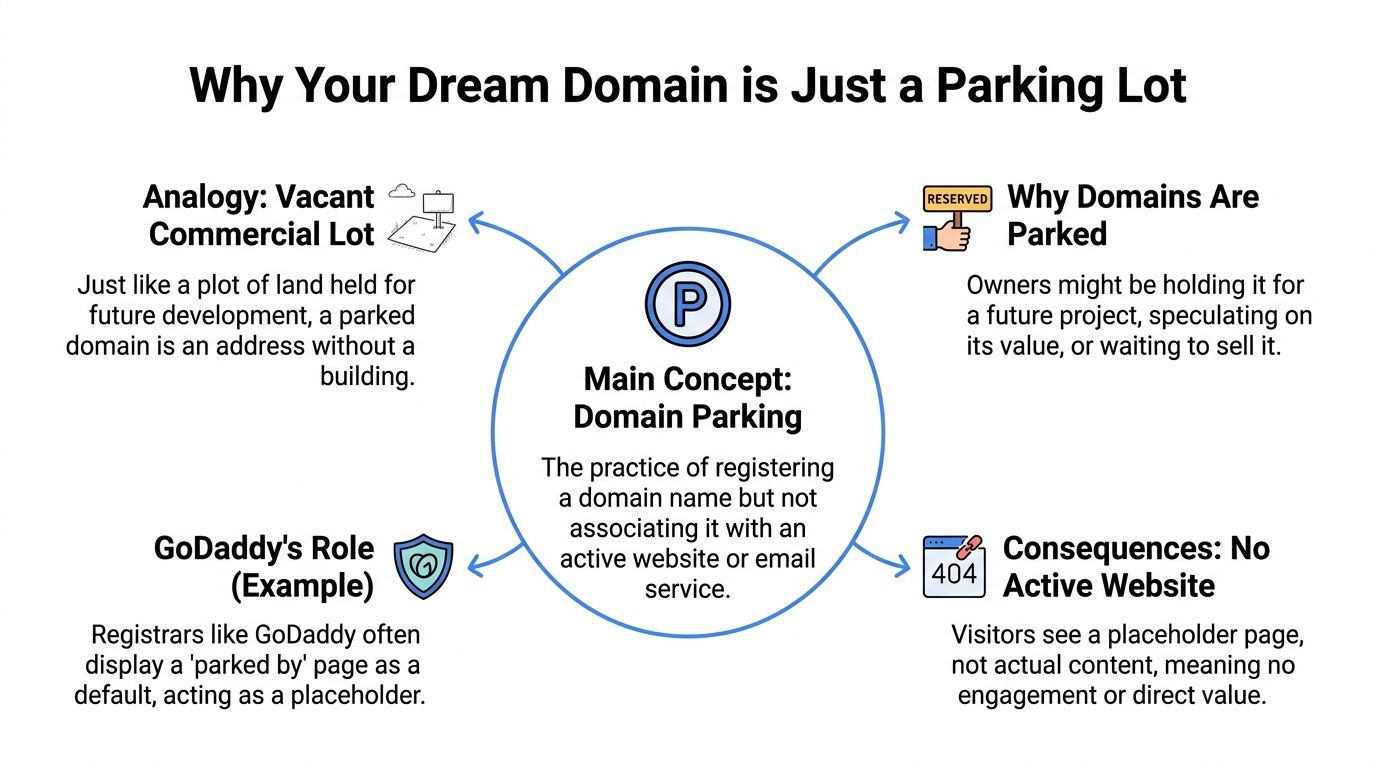
A parked domain is the online version of an undeveloped commercial lot.
Someone bought the address. They haven’t built the store yet. They may throw up a sign, maybe rent out billboard space, and wait until the timing or the offer feels right. That’s all domain parking is.
The three common reasons owners park domains
They want passive revenue
Some owners park domains because the name still gets visitors. That traffic might come from old links, direct navigation, old mentions, or people typing the domain by instinct.
Domain parking has real scale. APNIC found that 58.5 million of 334 million analyzed domains were parked, which is 17.5% of the total, and GoDaddy held the top spots with 28.69 million domains on Free Parking and 2.70 million on CashParking in that analysis of parking services across the market, as reported in the APNIC blog on the prevalence of domain parking.
For monetized parked domains, owners may watch metrics such as:
- Clicks: How often visitors interact with ads.
- Impressions: How many times the parked page is seen.
- CPC: The value of each ad click.
- RPM: Revenue per thousand impressions.
Those numbers matter because they hint at whether the domain still attracts type-in or residual traffic. A domain with no development but steady parking activity can still have market value.
They’re saving it for later
A lot of founders and investors buy first and build later.
Maybe the project isn’t funded yet. Maybe the buyer grabbed the name before a competitor could. Maybe they’re still deciding whether the domain should become a SaaS brand, content site, local lead gen property, or resale asset.
This is common with short names and category-defining phrases. The owner doesn’t need a live site today to justify holding the address.
They’re blocking someone else from using it
Brand protection is the least exciting reason, but it’s everywhere.
Companies park domains to lock down variants, misspellings, alternate extensions, and campaign names. No blog. No storefront. Just a reserved address that prevents confusion or copycats.
What works and what doesn’t in parking
Parking works well when the domain has one of these traits:
| Situation | Parking makes sense |
|---|---|
| Strong direct-navigation name | It may earn from leftover visits |
| Premium brand term | Owner can hold for resale or future use |
| Defensive registration | It prevents others from grabbing it |
Parking doesn’t work well when the owner expects it to magically create value. It won’t.
A parked page doesn’t build brand trust. It doesn’t improve SEO. It doesn’t create customer demand by itself. At best, it preserves optionality and maybe squeezes a little revenue out of existing traffic.
A parking page is a holding pattern, not a growth strategy.
That distinction matters if you’re evaluating whether the owner is sitting on a smart asset or just sitting.
SEO Gold Mines vs Digital Ghost Towns
A parked domain can be a sleeping asset. It can also be a burned-out shell with fancy metrics glued to the hood.
That’s the split every SEO and domain buyer needs to understand.
The gold mine version
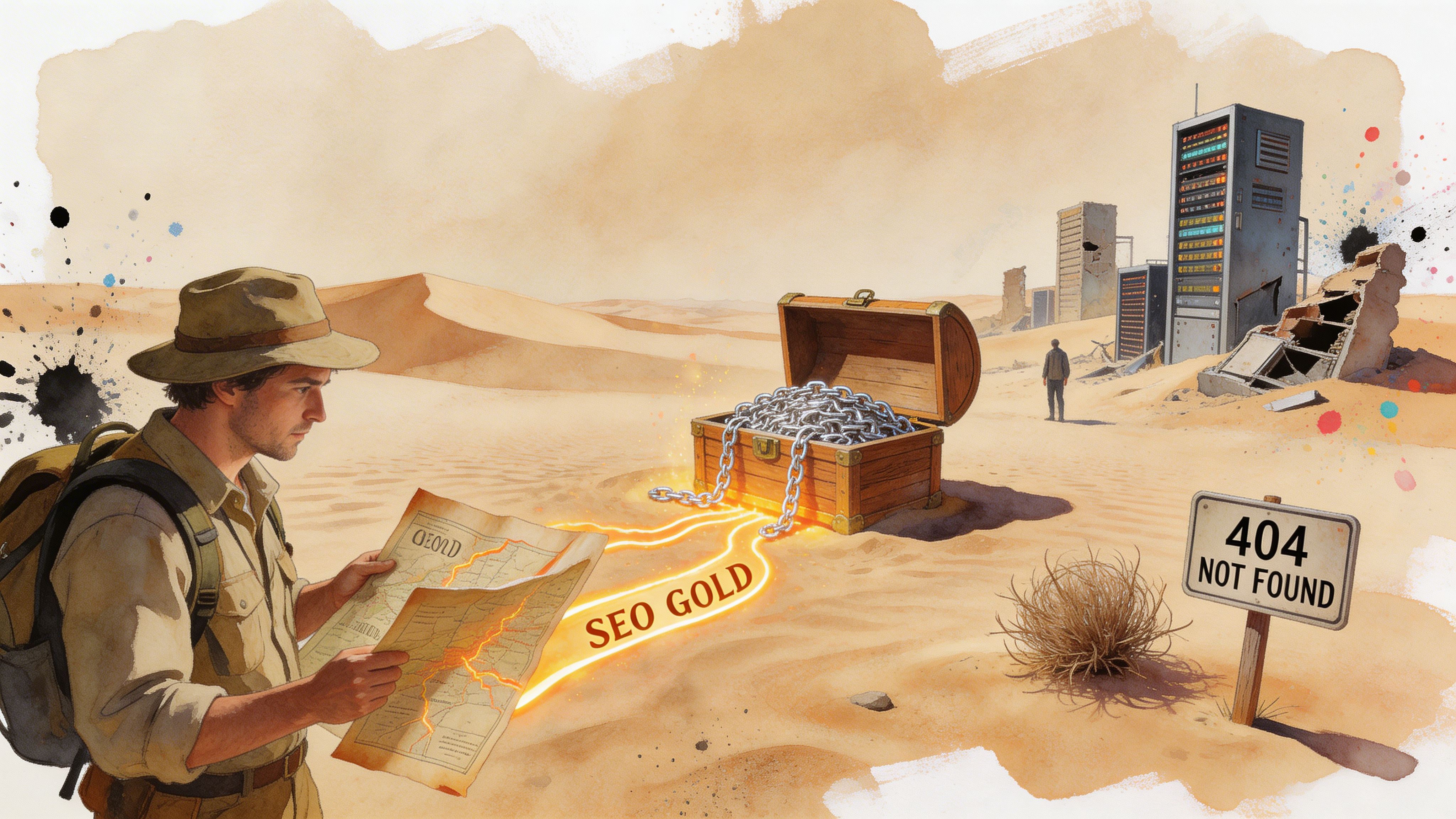
The good parked domain usually had a real life before parking.
Maybe it was a company site, a blog, a local service business, an affiliate project, or a tool. The site went dark, but some useful signals stayed behind. Good referring domains. Relevant mentions. Brand searches. Maybe a clean topical footprint.
That kind of domain can be worth reviving, redirecting carefully, or rebuilding on.
The parked page itself has no magic. The opportunity comes from what the domain earned before it became a placeholder.
The ghost town version
The bad parked domain is all surface and no substance.
GoDaddy explains that parked domains function as ad landing pages with hosting disabled and typically have zero organic search traffic, which means strong-looking trust metrics can reflect old authority rather than current performance. That distinction is the core warning in GoDaddy’s guide to what domain parking is.
That’s why inexperienced buyers get trapped.
They see authority metrics and assume the domain still carries SEO power. But the live asset is dead. The site has no content, no ranking footprint, and often no clean topical relevance left. In some cases, the backlinks that remain are low quality, off-topic, or leftovers from a messy history.
The mistake people make with metrics
A parked domain can wear a nice suit while carrying terrible baggage.
Here’s how I separate signal from noise:
- Trust metrics are historical clues, not proof of current strength: They tell you the domain may have mattered once.
- Organic traffic matters differently here: A parked page won’t usually rank like a real site, so current search visibility tells you almost nothing unless you inspect historical performance.
- Topical fit is everything: A domain with old authority in finance won’t help much if you want to relaunch it as a pet blog.
- Link quality beats link count: Ten clean, relevant links can beat a pile of irrelevant leftovers.
If a parked domain looks powerful, ask whether the power belongs to the domain’s past or its future.
That’s the whole game.
A better way to think about revival
There are two jobs after acquisition. First, verify whether the history is clean enough to trust. Second, rebuild in a way that matches the domain’s old identity closely enough to preserve relevance.
If you need a broader refresher on rebuilding a legitimate search footprint after acquisition, this guide on how to increase organic search traffic is a useful companion because it focuses on the kind of foundational work parked-domain buyers often skip.
Quick comparison
| Domain type | What it looks like | What it usually means |
|---|---|---|
| Old parked domain with relevant clean backlinks | Quiet but promising | Potential rebuild candidate |
| Parked domain with random links and no topical consistency | Inflated on paper | Likely junk |
| Parked domain with strong name but no meaningful history | Brand play only | Value depends on naming, not SEO |
A parked domain is never valuable just because it’s old. It’s valuable when the history, relevance, and future use case line up.
How to Play Detective and Verify a Domain's History
The parked page is the curtain. The useful information sits behind it.
If you want to buy smart, you need to inspect the paper trail, the DNS trail, and the content trail. This is the part where domain investing feels less like shopping and more like forensic work.
Start with ownership and timeline
Before you even think about backlinks, learn the basic life story.
Check:
- Current registrar and status: You want to know who controls it and whether it’s active, parked, pending deletion, or already moving through expiry.
- Registration age: Older can be useful, but only when paired with clean use.
- Ownership clues: Sometimes privacy hides the owner, sometimes marketplace clues don’t.
For a practical workflow, this guide on how to check domain history lays out the key records worth reviewing before you touch your wallet.
Then inspect the DNS clues
Here, the “domain parked by GoDaddy” label becomes more concrete.
GoDaddy notes that its parking infrastructure uses specific IP addresses, including 34.102.136.180 and 34.98.99.30, and that when a domain’s A record points there, it’s a definitive sign the domain is parked with GoDaddy. GoDaddy also notes these parked domains can still carry valid SSL certificates, which can make them look more legitimate than they are on a casual check, according to its article on how GoDaddy parking supports TLS certificates at scale.
That last part catches people off guard.
A valid padlock in the browser doesn’t mean the domain hosts a real business. It can still be parked.
A simple investigation checklist
I keep the review process boring on purpose. Boring is profitable.
Pull archived snapshots
See what used to be on the domain. Real company site? Thin affiliate pages? Spam? Empty for years?Review backlink context
Don’t just count links. Open the linking pages and check whether they make sense.Check historical DNS and redirects
A parked domain with odd redirect patterns deserves extra caution.Compare the old topic to your future use
Relevance drift is where a lot of rebuilds go sideways.Look for signs of repeated churn
Constant repurposing often leaves a messy footprint.
Field note: The best domain investigations usually end with a simple verdict. Clean and relevant. Clean but off-topic. Messy and avoid.
Bring in a fuller audit mindset
A parked domain purchase isn’t just a branding decision. It’s an SEO acquisition decision too.
That’s why a broader resource on how to perform a thorough SEO audit can help. The same habits that uncover technical and off-page problems on live sites also help you catch weak spots in expired or parked domains before they become your problem.
For a visual breakdown of domain research thinking, this video is worth a look:
What casual buyers miss
They stop after seeing one green metric.
That’s like buying a house because the mailbox looks new.
You want the full chain of evidence. Archive history. DNS clues. Link quality. Topic fit. Ownership timing. Any one signal can fool you. The combination is what tells the truth.
Your Strategic Playbook for Parked Domains
Different goals call for different moves.
A founder who owns the domain wants one thing. A buyer stalking a future drop wants something else. Confusing those two paths leads to bad decisions, wasted outreach, and ugly timing mistakes.
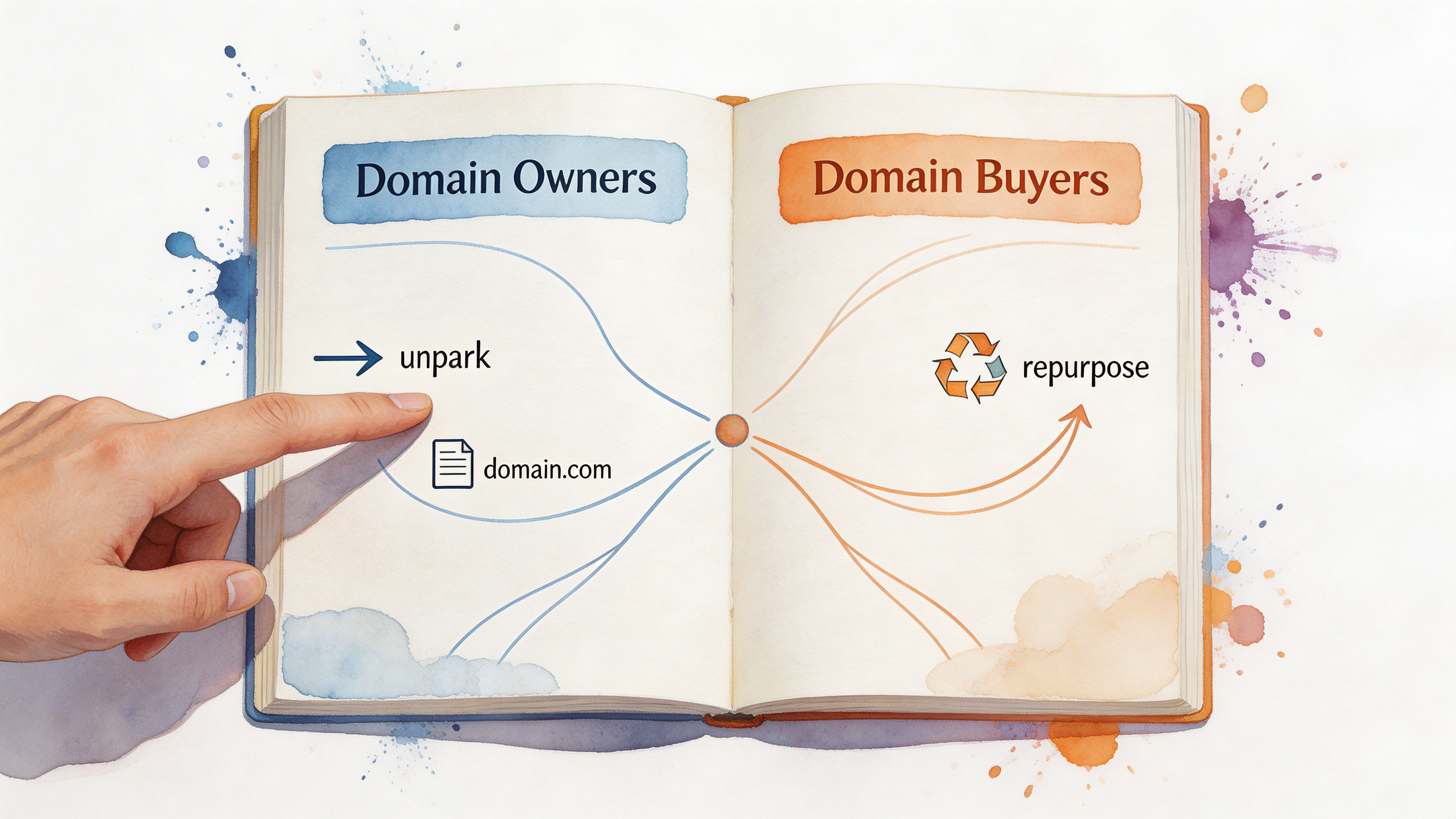
If you own the parked domain
Most owners have one of three real choices. Build, sell, or keep holding.
Build it properly
If the domain is yours and you’re done staring at the parking page, replace the placeholder with something intentional. A real site, a clean landing page, or a proper sale page beats a generic parked page almost every time.
What tends to work:
- A focused landing page: Good if you’re validating demand or collecting leads.
- A real site tied to the domain’s original relevance: Best when you want to preserve old topical signals.
- A clear for-sale page: Better than letting visitors guess.
What usually doesn’t work:
- Leaving it parked forever while expecting the name to appreciate on autopilot
- Building something unrelated to the domain’s history and hoping search engines won’t notice
- Using a cluttered placeholder as your only sales strategy
If you’re still deciding whether parking is the right temporary move, this article on parking domains with GoDaddy gives a practical look at the mechanics and trade-offs.
Sell it with intent
If you want to exit, don’t rely on passive luck.
Make it easy for buyers to understand what they’re looking at. Highlight the name’s branding angle, prior use if it was respectable, and any legitimate reasons the domain stands out. Keep the presentation clean. Serious buyers don’t need hype. They need clarity.
A parked page with random ads rarely communicates value well.
If you want to buy the domain
Buying a domain parked by GoDaddy usually comes down to two paths. Direct acquisition or expiry tracking.
Path one is direct outreach
Sometimes the owner is open to selling now. You identify the holder, make contact, and negotiate.
This works best when:
- The domain is highly strategic for your business.
- You don’t want to gamble on the expiry cycle.
- The owner appears inactive but reachable.
The downside is simple. Owners of strong names often know what they have, and weak outreach usually gets ignored.
Path two is patience
Experienced buyers often do better here.
Instead of chasing every parked name directly, monitor expiry windows and wait for domains that slip through the cracks. Some names will move from parked to expired to dropping. That’s when speed matters.
For domains still in the lifecycle and likely heading toward release, the practical place to watch is the expiring domains list. You can narrow it with time filters like Today, 3 Days, 7 Days, 14 Days, 30 Days, or All depending on how early you want to get in front of possible drops.
For names that have already dropped and can be registered right away, scan the available domains list. Those same time filters help when you want fresh opportunities instead of old leftovers.
Which path fits your situation
| Goal | Best move |
|---|---|
| You own the name and plan to use it | Unpark and launch something intentional |
| You own the name but want liquidity | Put up a clear sale strategy |
| You want the name right now | Try direct outreach |
| You want value and don’t mind waiting | Track expiry and drops |
Good domain investing feels less like treasure hunting and more like stalking timing, context, and advantage.
The best parked-domain plays usually aren’t dramatic. They’re disciplined. You either improve an asset you already control, or you wait until a promising one becomes obtainable on terms that make sense.
Dodging the Bullets Common Parked Domain Pitfalls
A lot of beginners treat parking like a neutral placeholder. It isn’t always neutral.
Long-term parking can leave residue. Sometimes that residue is minor. Sometimes it follows the domain around like cigarette smoke in a jacket.
The spam magnet problem
The ugliest parked domains collect junk.
That can mean irrelevant referring domains, ad-page associations, strange mentions, or low-grade link patterns that make the domain look dirtier than it first appears. If you only look at aggregate metrics, you can miss the rot.
According to the Google Sites support thread cited in the verified data, 60% to 70% of long-term parked domains show residual spam signals after being unparked, and around 40% drop in estimated value due to irrelevant referring domains from ad-filled parking pages in the source referenced at this support discussion about domains showing parked by GoDaddy.
That isn’t a small warning. It’s a practical one.
The value sink
Brandability can erode while a domain sits.
Not because the letters change, but because the context around the domain degrades. A once-clean name can pick up a cheap feel if visitors only ever see ad clutter. If old backlinks point to nonsense and the archived site history turns chaotic, buyers start discounting the asset mentally.
That’s why some parked names are worth more as names than as SEO assets. The brand may still be usable even if the history is too messy to trust.
The redirect ruse
Some domains look harmless because the current page is simple and clean.
The mess sits in the historical redirects. A name might have bounced through ad networks, affiliate hops, throwaway pages, or weird intermediate uses before landing on a plain parking page. If you don’t inspect the old technical behavior, you can inherit a problem disguised as a blank slate.
Three filters that save money
When I’m trying to avoid getting burned, I keep it to three questions:
Was this domain ever a real site worth reviving?
If not, the SEO angle may be fantasy.Do the old links make topical sense?
If the profile looks random, it usually is.Would I still want this domain if the metrics disappeared?
That question exposes overpaying fast.
A parked domain can hide risk better than an active site because the page tells you so little.
That’s why due diligence matters more here, not less. A live site at least leaves evidence in plain view. A parked one forces you to dig.
Frequently Asked Questions About Parked GoDaddy Domains
Can I buy a domain just because it says domain parked by GoDaddy
No. The parked page usually means the domain is already registered.
You can try contacting the owner if they’re open to offers. If they aren’t selling, your practical alternative is to monitor whether the domain eventually expires and drops.
Does a parked domain still have SEO value
Sometimes, but not because of the parked page itself.
Any SEO value usually comes from the domain’s earlier life, such as relevant backlinks or a clean topical history. If the domain has been parked for a long time or has a messy archive trail, the value may be weaker than the headline metrics suggest.
Why does the domain still look parked after changes were made
DNS and hosting changes don’t always show up instantly across every resolver and browser.
A domain can also appear more “active” than it really is because parked domains may still present valid SSL certificates, which makes casual checks misleading. When that happens, verify the current records, confirm the intended host is connected properly, and give propagation time to settle before assuming the change failed.
Should I rebuild on a parked domain or redirect it
It depends on the fit.
If the old topic aligns closely with your new use, rebuilding usually gives you more room to preserve relevance and assess what authority still exists. If the fit is weak, a redirect can create more problems than benefits. In that case, a fresh build on a cleaner domain is often the smarter move.
Is a parked page a bad sign for brand buyers
Not automatically.
For pure branding, the quality of the name matters more than the placeholder. For SEO or authority use, the parked page should push you into investigation mode. A strong brand with a weak history may still be worth buying. A mediocre name with a messy history usually isn’t.
If you hunt domains seriously, NameSnag is built for exactly this kind of work. It helps you sift through expired and expiring domains, spot cleaner opportunities faster, and skip a lot of the manual digging that turns parked-domain research into a time sink.
Find Your Perfect Domain
Get access to thousands of high-value expired domains with our AI-powered search.
Start Free Trial