
DNS in track stands for Did Not Start. It means an athlete was entered in an event but withdrew before the race began.
You've probably seen this play out often enough. You pull up a results page, spot a big-name runner, and instead of a time, place, or split, you get three letters: DNS. That tiny acronym can feel oddly dramatic. One second the athlete is on the start list, the next they've vanished into official-results limbo.
The twist is that DNS also means something completely different in the online world. In tech, it usually refers to the Domain Name System, which is why the phrase “what does DNS stand for in track” gets so much confusion baked into it. One DNS means an athlete never made it to the starting gun. The other DNS helps your website make it to the browser. Same letters. Very different kind of race.
That Confusing DNS on the Results Sheet
A typical fan moment goes like this. You check heat results, see a favorite listed, maybe even watched warmups, then the official sheet posts and there it is: DNS. No finish time. No foul notation. Just a clean, cold shorthand that says the athlete didn't start.
In track and field, DNS means Did Not Start. The athlete was entered in the event, appeared on the start list, and then did not begin the race. That's the whole answer, but in practice, it carries more context than people expect.
Why It Catches People Off Guard
DNS often looks mysterious because the athlete may have been fully expected to compete. They might have traveled, checked in, warmed up, and still ended up not starting. From the outside, it can seem sudden. From the inside, it's usually a last-minute call made to avoid a worse outcome.
Race result acronyms are brutally efficient. Useful for officials, confusing for everyone else.
There's also the acronym collision problem. Outside sports, many readers know DNS as the internet term, not the track term. That overlap is real, and it's one reason this question keeps popping up.
The Short Version You Can Remember
If you want the easy memory trick, use this:
- DNS: They were supposed to race, but never began.
- Think of it as: RSVP'd yes, then didn't show up.
- What it does not mean: They didn't quit mid-race, and they weren't removed for breaking a rule.
That distinction matters because track has a whole alphabet soup of result codes, and each one tells a different story.
The Anatomy of a Did Not Start

A Did Not Start status is more specific than people think. It doesn't mean the athlete ignored the event. It means they were officially entered and then withdrew before the race began. In meet administration terms, that's an important distinction because start lists, seeding, lane assignments, and heat structure are built around who is expected to show up.
What Counts as a DNS
An athlete can be marked DNS whether the withdrawal happens well before the gun or very close to it. Sometimes the decision comes after warmups. Sometimes it happens after a medical check. Sometimes a coach or athlete decides the body just isn't there that day.
The cleanest mental model is this: if the athlete never starts the race, the result sheet can't treat them like a finisher, and it also can't treat them like someone who started and dropped out. That's where DNS lives.
Practical rule: If there's no legal start by that athlete, it's DNS.
Why Some Events See More DNS Than Others
Not all track events carry the same DNS pattern. According to CoachXPro's breakdown of DNS, DNF, and DQ in track, World Athletics standardizes DNS as “Did Not Start,” and DNS rates average around 2.5% in long-distance events like the 5,000m and 10,000m, compared with 0.8% in sprint events like the 100m and 200m. That tracks with what coaches and athletes already know. Endurance events put a different kind of stress on the body, and late withdrawals are more common when an athlete feels a problem that could become much worse over several laps.
That difference matters when you're reading a result sheet. A DNS in a sprint can signal a sharp, immediate issue. A DNS in a longer event may reflect accumulated fatigue, a tactical withdrawal, or a body-check decision that happened at the last responsible moment.
What Works and What Doesn't
Coaches usually get better outcomes when they treat a possible DNS as a performance-management decision, not a pride contest.
- What works: Pulling the athlete when something feels wrong before the gun.
- What works: Protecting a championship schedule when multiple rounds are involved.
- What doesn't: Treating every start as mandatory, even when the athlete is compromised.
- What doesn't: Assuming “toughing it out” is always the brave choice.
Sometimes the smartest race of the day is the one that never starts.
DNS vs DNF vs DQ Decoding Race Results
Track result sheets love shorthand. Fans do not always love shorthand back. The three codes that create the most confusion are DNS, DNF, and DQ, and they are not interchangeable.
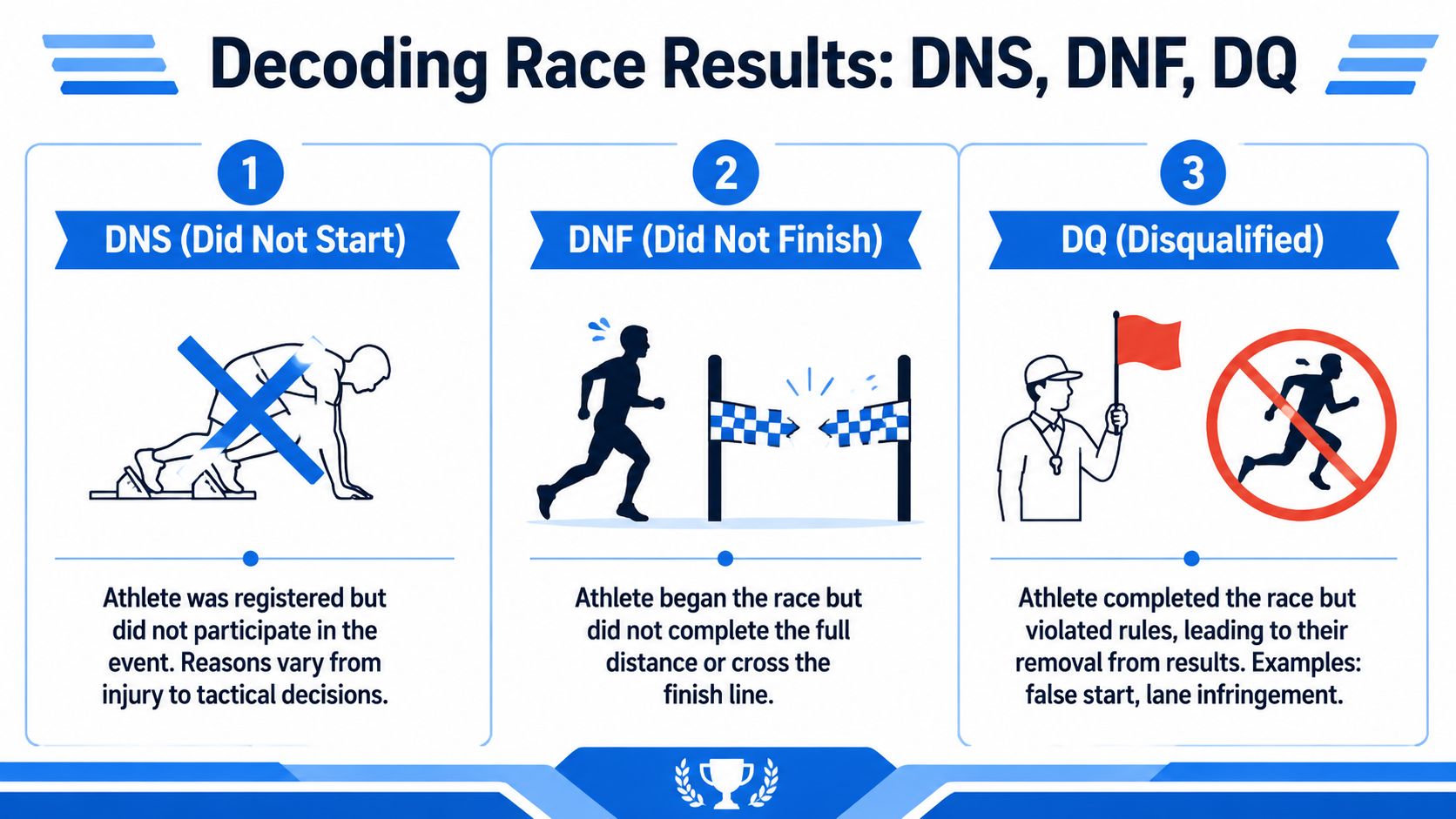
DNS vs DNF vs DQ at a Glance
| Acronym | Full Name | What It Means | Example Scenario |
|---|---|---|---|
| DNS | Did Not Start | Athlete was entered but never began the event | Runner scratches before the gun due to a tight hamstring |
| DNF | Did Not Finish | Athlete started but did not complete the event | Distance runner stops midway through the race |
| DQ | Disqualified | Athlete violated a rule and was removed from results | Sprinter false starts or commits a lane infringement |
The Easiest Way to Separate Them
Think about the timeline of the race.
- Before the start: DNS
- After the start but before the finish: DNF
- After a rules violation is recognized: DQ
That timing framework clears up most confusion instantly.
Why Fans Mix These Up
The codes all describe a race that didn't end in a normal finish, so they can blur together if you don't follow the sport closely. But each one tells a different story.
A DNS says the race never began for that athlete. A DNF says it began, but the athlete couldn't complete it. A DQ says the athlete's participation doesn't stand because of a rule issue.
A DNS is absence. A DNF is interruption. A DQ is invalidation.
That difference matters if you're following form, injury patterns, or championship progression. A DNS can point to a pre-race issue. A DNF can hint at a problem exposed under race stress. A DQ usually points to execution or rule compliance.
Practical Examples You'll Actually See
Here are the common real-world versions:
- DNS example: An 800m runner checks in, feels calf pain during strides, and scratches.
- DNF example: A 10,000m athlete starts, reaches several laps, then steps off the track.
- DQ example: A hurdler finishes but is later removed for a rule violation.
Once you read result sheets this way, the codes stop feeling cryptic and start reading like compressed stories.
Behind the DNS Causes and Consequences
A DNS can happen for several reasons, and not all of them are dramatic. Sometimes it's a clear injury. Sometimes it's illness. Sometimes the athlete and coach make a strategic call that the risk isn't worth it, especially in multi-round meets or packed championship schedules. And sometimes life barges in with a personal emergency and ignores the start list entirely.
The Main Reasons Athletes End Up DNS
- Late physical issue: Tightness, pain, or a flare-up that doesn't feel safe once warmups begin.
- Sudden illness: Enough to make racing unwise, even if the athlete was planning to start.
- Tactical withdrawal: A coach may protect an athlete for another event or later round.
- Non-sport disruption: Travel issues, personal emergencies, or administrative problems can also lead to a scratch.
At major events, this isn't some freak occurrence. According to Marathon Handbook's review of what DNS means in track, approximately 1.2% of the 10,500 scheduled athletes at the 2024 Paris Olympics were marked DNS, or roughly 126 athletes. The same source notes that this was consistent with 1.1% at the 2020 Tokyo Olympics, which suggests DNS is a steady part of elite competition rather than a rare anomaly.
Why the Consequences Matter
For the athlete, a DNS can be emotionally rough because there's no race to salvage. No gritty finish. No miracle comeback. Just a blank where a performance should have been.
For teams and federations, a DNS can ripple outward. A relay pool changes. A scoring opportunity disappears. Qualification plans shift. In some situations, the smarter long-term move is still to withdraw, but that doesn't make the decision painless.
If you want the web version of DNS explained clearly, NameSnag has a useful primer on what a DNS record is. Different world, same acronym, much less Lycra.
The Other DNS Your Website Cant Do Without
For a lot of readers, DNS doesn't first mean track. It means the Domain Name System, the part of internet infrastructure that translates domain names into the destinations computers can find. Cloudflare's explainer on what DNS is is a solid reference, and it also highlights why the acronym creates confusion in the first place. Searchers often use “DNS” without context, even though sports and tech are talking about completely different things.
The Funny Parallel Between Track and Domains
In track, Did Not Start means the athlete never got into the race.
Online, a weak domain setup can create a business version of the same problem. You can have a good offer, a good design, and a good plan, but if the name is unavailable, confusing, or poorly managed, your project stumbles before it really begins. Different mechanics, same ugly outcome. No clean start.
That's why it helps to understand both meanings of DNS. If you work in SEO, publishing, affiliate sites, or startup branding, the acronym collision isn't just trivia. It reflects two systems where getting to the starting line matters.
Where to Learn the Tech Side Fast
If you want a beginner-friendly refresher on the internet meaning, What is DNS from mailX gives useful context without disappearing into jargon quicksand.
For a more specific look at the records involved in managing a domain, NameSnag's guide to DNS entries is a practical next read.
The sports DNS tells you a race didn't begin. The web DNS helps your site begin at all.
That overlap is what makes this acronym oddly memorable. One DNS explains an absence on the track. The other prevents an absence on the web.
From the Finish Line to Your Domain Name
If you came here asking what does DNS stand for in track, the answer is simple: Did Not Start. The athlete was entered, but the race never began for them. It's different from DNF, where they started but didn't finish, and different from DQ, where a rules violation wipes the result.
The more interesting part is how the same acronym lives a second life online as the Domain Name System. That's not just a cute coincidence. In both worlds, getting the start right matters. Athletes need to make it to the line healthy and ready. Site owners need a domain setup that lets the project launch.
If your work extends beyond watching meets and into building sites, stores, or content networks, it's worth understanding the whole chain from naming to registration to setup. For example, if you're planning a larger WordPress network, IMADO's Multisite guide is a useful operational resource. And if you want a clean explanation of the ownership step itself, NameSnag's article on domain name registration lays out the basics clearly.
A bad result in track can end with DNS. A bad launch online can feel exactly the same.
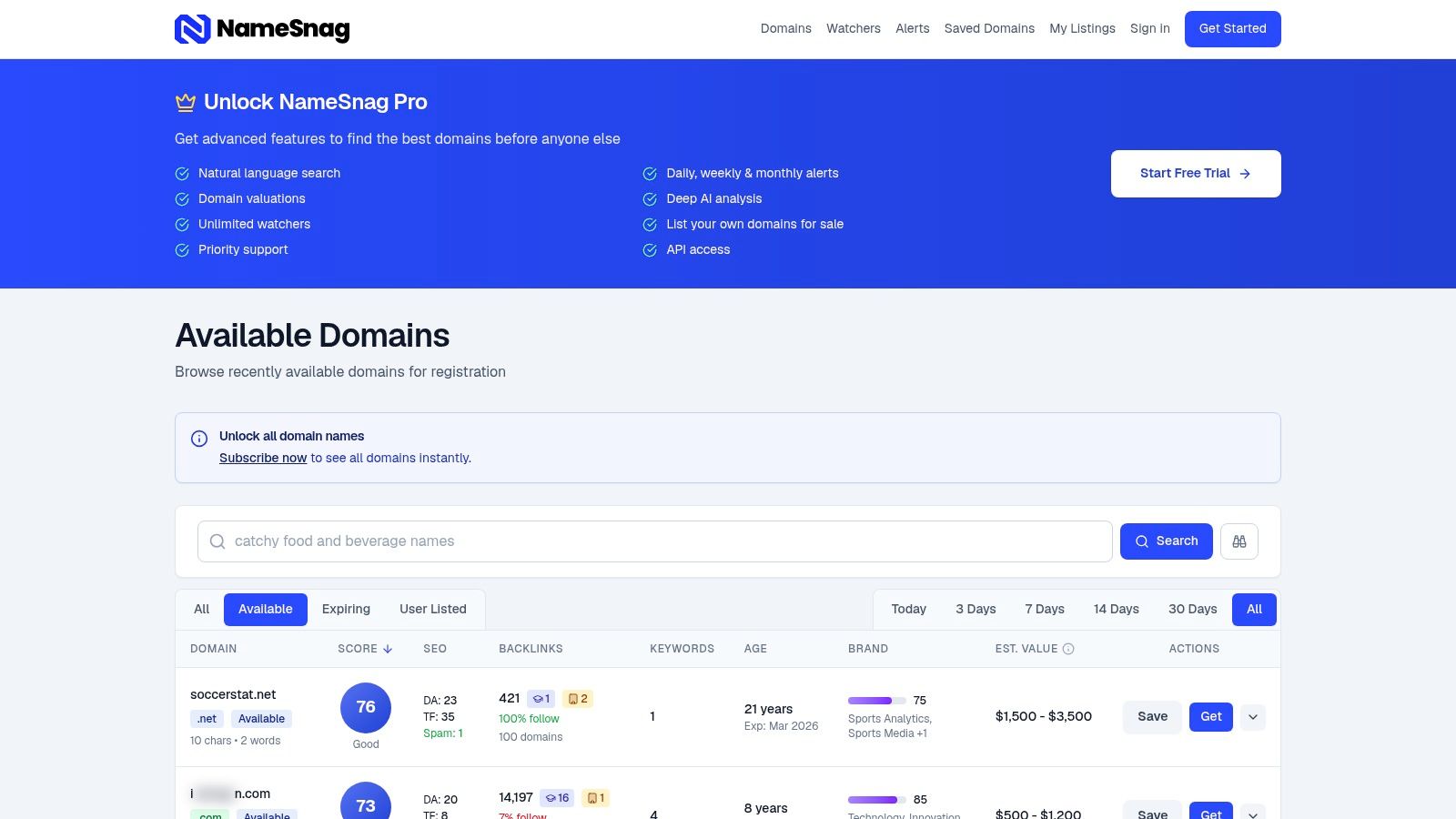
If you're naming a new project, give it a proper start with NameSnag. You can browse available domains that can be registered right away, or check expiring domains that may drop soon, with time filters for Today, 3 Days, 7 Days, 14 Days, 30 Days, and All.
Find Your Perfect Domain
Get access to thousands of high-value expired domains with our AI-powered search.
Start Free Trial