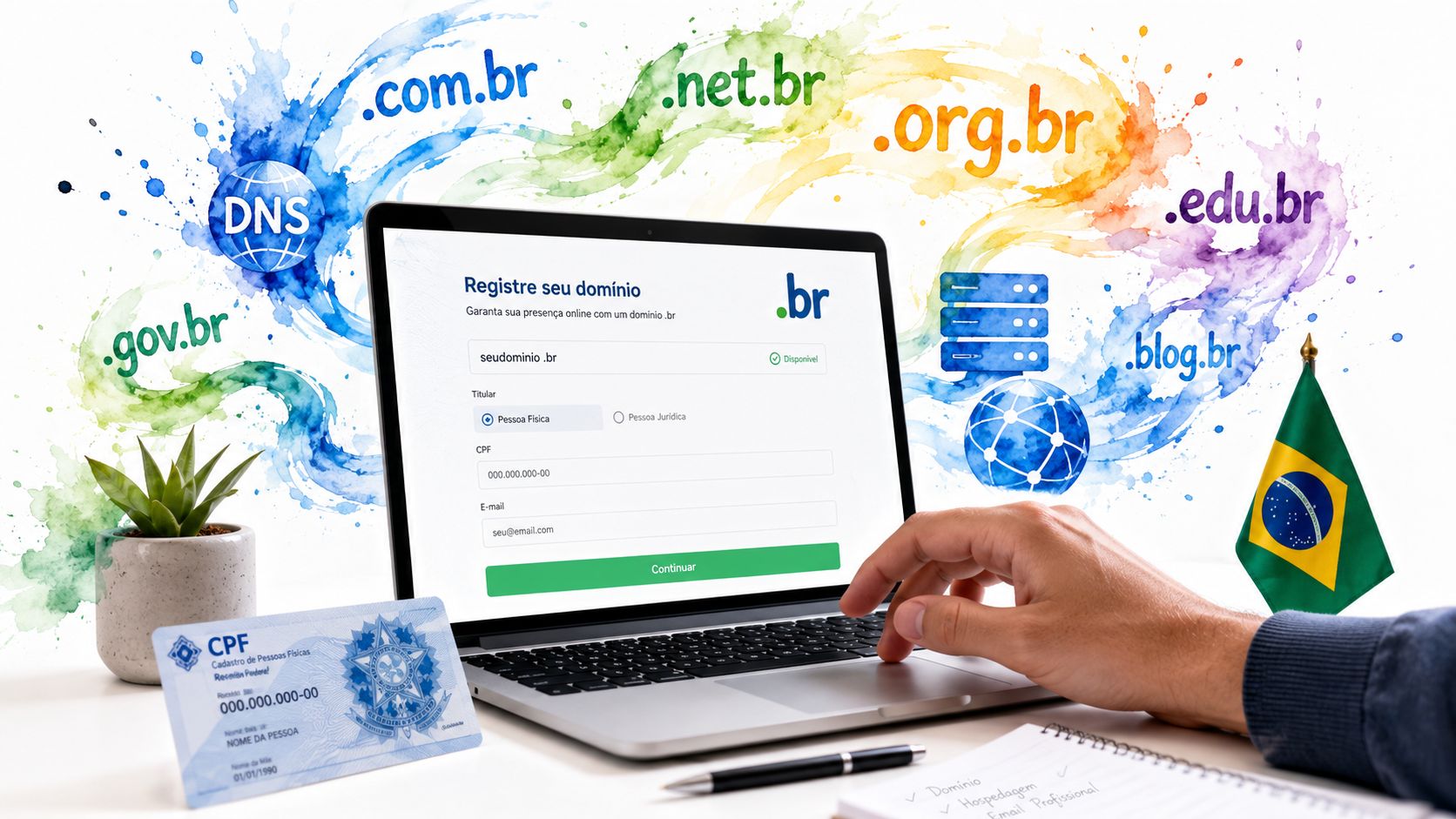
You're probably here because the easy version of entering Brazil just died in your browser tab.
You found the perfect brand name. You typed it into a registrar. Then Brazil hit you with CPF, CNPJ, local contact rules, namespace categories, and a registration flow that feels less like buying a domain and more like applying for a permit. That frustration is normal. It also scares off a lot of casual buyers, which is exactly why the .br market is more interesting than it looks.
I've always liked domain markets that make lazy buyers quit early. The extra friction usually means less random competition, fewer junk grabs, and more openings for people who can follow the rules. Brazil fits that pattern well. If you want local trust, better brand fit for Brazilian users, or cleaner investor opportunities in a less crowded corner of the market, br domain registration is worth learning properly.
Why You Should Care About .BR Domains
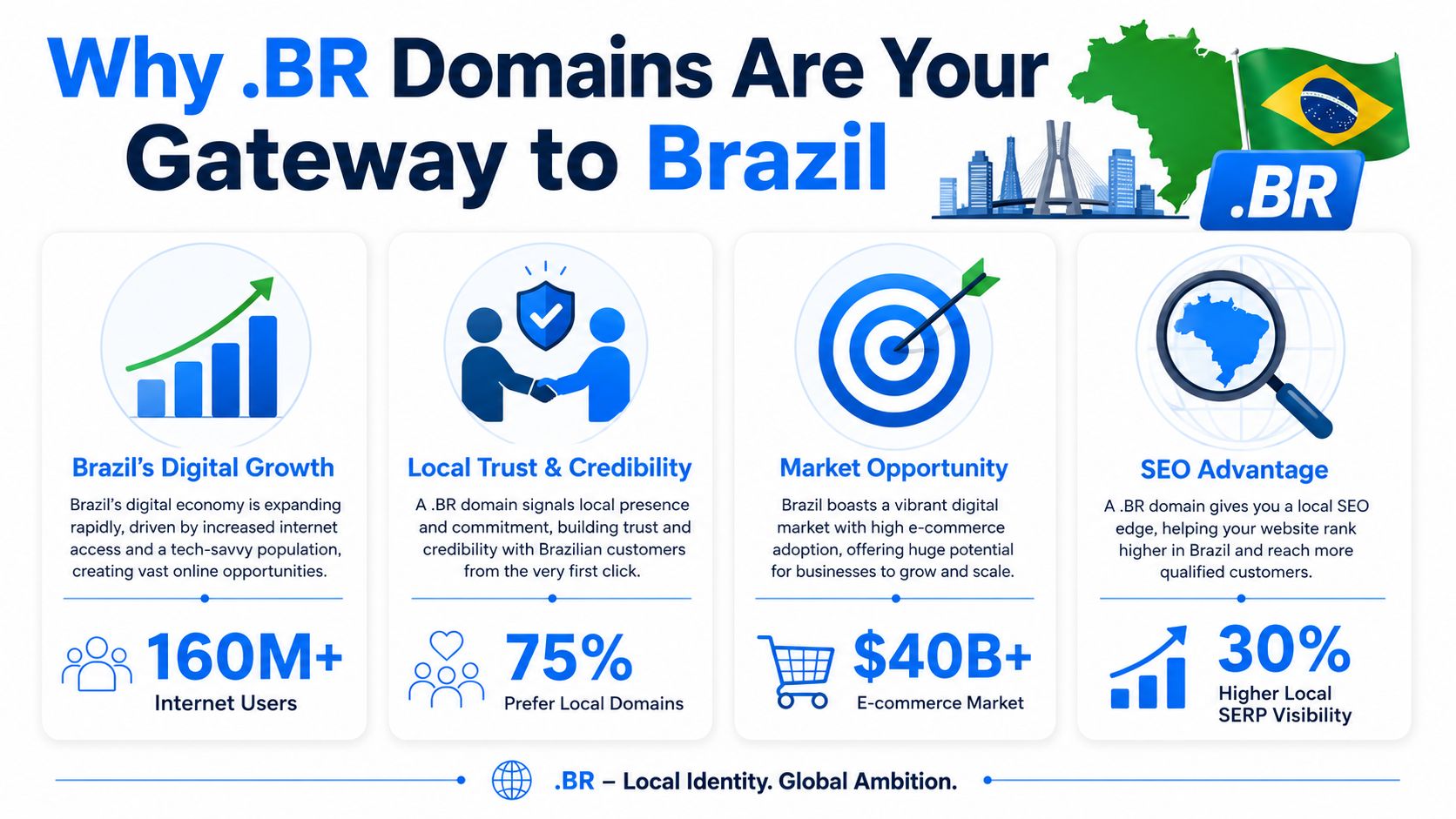
Brazil isn't some niche country-code side quest. The .br namespace is one of the biggest country-code spaces on the internet. As of September 30, 2024, it accounted for about 5.4 million domain names and sat among the global top 10 TLDs by registrations in a dataset totaling 362.3 million domains worldwide. That puts .br at roughly 1.5% of the world domain base, which is a serious footprint for a national extension, according to Openprovider's domain market overview.
More important than raw size is how concentrated Brazil's web identity is around its own namespace. The same source notes that over 60% of registered domains in Brazil use .br-related namespaces. For anyone doing local SEO, brand launches, or domain investing, that tells you something simple. Brazilian users are used to seeing .br. That familiarity matters.
The bureaucracy is annoying and useful
Those reviewing the registration rules often conclude, “This market is a pain.” They're right. They just stop one thought too early.
A harder registration process acts like a filter. It removes some speculative noise. It slows down impulse buyers. It leaves good names sitting untouched longer than they might in a fully open extension. That doesn't mean every .br name is easy to get. It means the effort required is part of the value.
Practical rule: When a namespace has local rules, category rules, and validation checks, domain quality often hides behind process quality.
That is the opportunity. Businesses get a stronger local signal. Investors get a market where paperwork can be a moat. Agencies get a better chance to secure names that would have been instantly swallowed in a simpler extension.
Where .br makes the most sense
A .br domain is usually worth the hassle if you fall into one of these camps:
- Brazil-focused brands that want to look local from day one.
- International companies launching Portuguese-language sites for Brazilian customers.
- Agencies and SEOs building country-specific web properties that need stronger local relevance.
- Domain buyers who understand that friction can reduce competition for overlooked assets.
What doesn't work is treating .br like a generic TLD with a flag attached. It isn't. Brazil built a national namespace with rules, categories, and identity checks. If you respect that structure, the market starts making a lot more sense.
The Ground Rules Eligibility and Documentation
The first real gate in br domain registration is identity.
Brazil's registry ecosystem generally expects a CPF or CNPJ tied to the registrant or entity involved in the registration flow. In plain English, that usually means an individual Brazilian tax ID or a business tax ID. If you're Brazilian or already operating through a Brazilian entity, this is paperwork. If you're foreign, this is the part where people discover the process is not plug-and-play.
Multiple independent sources point to the same operational reality. Direct registration generally requires a Brazilian tax ID or legally established Brazilian presence, and foreign applicants often need a trustee, proxy, or local representative with supporting documentation, as summarized by Abion's .br registration guide.
What foreign applicants usually run into
Foreign businesses often assume they can buy a .br domain the same afternoon they decide to enter Brazil. Sometimes they can move fast. Sometimes they can't.
The process may require appointing a legally established attorney-in-fact in Brazil, registering the company with Registro.br, and using local billing or contact details. A separate policy guide notes that while some registrations are completed quickly, others can take up to 45 days when manual verification is triggered, according to OpenSRS policy documentation for .br domains.
For foreign companies, appointing a legally established attorney-in-fact in Brazil may be part of the path, and manual verification can stretch the timeline to 45 days.
That one detail changes launch planning. If your product launch, migration, or brand campaign depends on a .br going live by Friday, you're gambling.
The documents that trip people up
Most failed or delayed applications come down to mismatch, not mystery. The registry and connected providers are checking whether the applicant details line up with the documentation and whether the requested extension fits the applicant.
Common friction points include:
- Identity mismatch where the submitted CPF or CNPJ doesn't line up cleanly with the registrant details
- Wrong entity setup where a foreign company tries to register directly without the required local structure
- Category confusion where the buyer picks an extension that doesn't fit their intended use or qualification profile
- Timeline denial where the team assumes domain registration is instant and builds a launch schedule around that fantasy
What actually works
The cleanest approach is usually one of two paths:
| Situation | Best move |
|---|---|
| You already have a Brazilian entity or tax ID | Register directly through the standard path and keep your records consistent |
| You don't have local presence | Use a registrar or service provider that can handle the local presence layer and compliance paperwork |
The mistake is trying to “hack around” the rules with sloppy contact data. That's the kind of shortcut that creates delays, rejections, or ownership headaches later.
If you're a foreign founder, agency, or investor, treat the local-representative requirement as part of acquisition cost, not as an annoying surprise. Once you do that, the process becomes manageable.
Choosing Your Path NIC.br vs Accredited Registrars
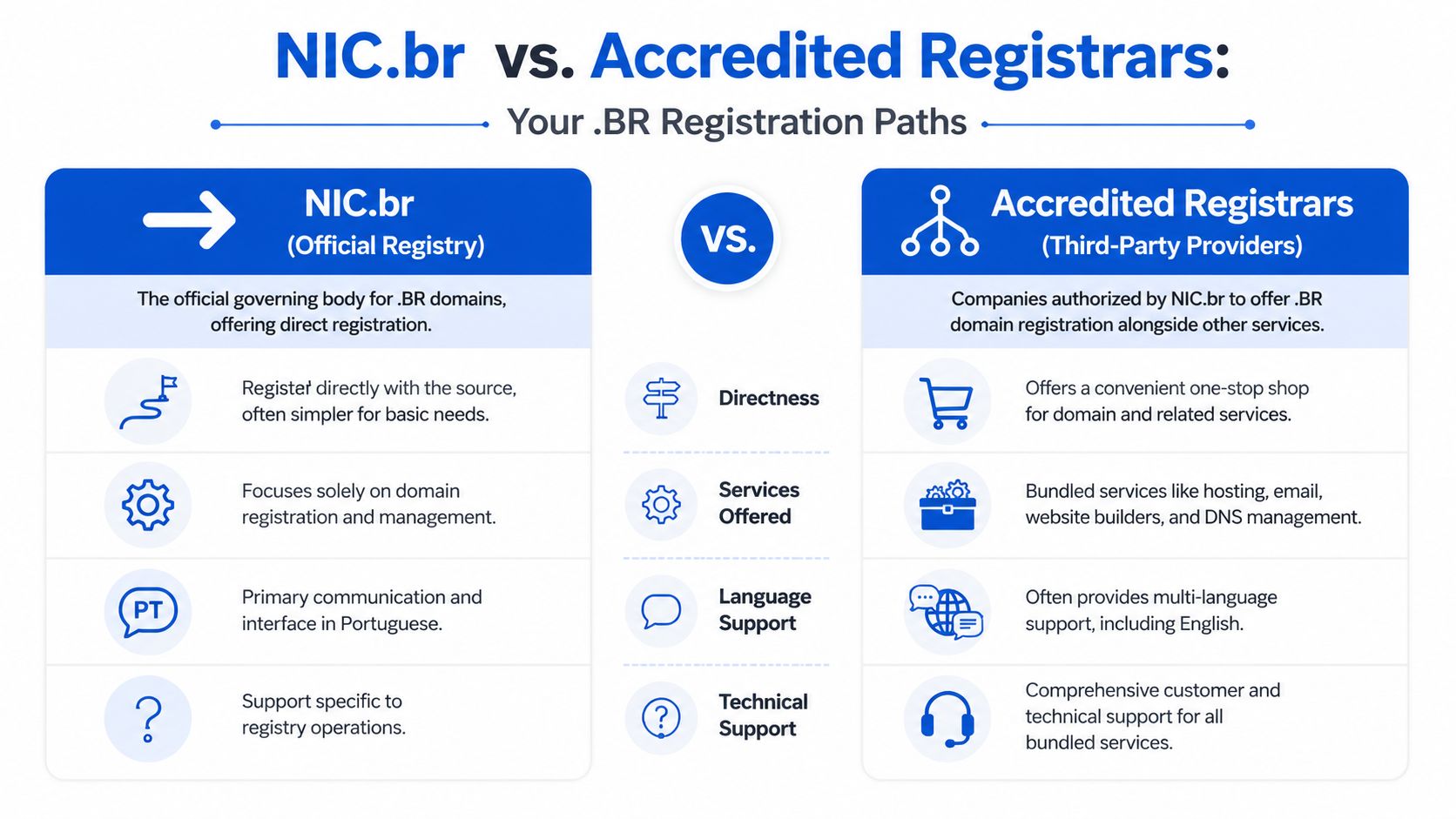
Once you're eligible, you get a fork in the road. You can go direct through the official registry path, or you can use an accredited registrar. Neither is automatically better. This is a personality test disguised as an operations decision.
If you want control, direct handling, and fewer middlemen, the official route is attractive. If you want hand-holding, English-language support, billing convenience, or help with local presence issues, a registrar often earns its margin.
The DIY control freak
Going direct is best for the buyer who wants to manage the namespace the way it was designed.
That person usually has some technical comfort, can deal with Portuguese interfaces or documentation if needed, and doesn't need bundled extras. They want the domain, the direct relationship, and fewer layers between them and the registry.
Good fit for:
- Local businesses with existing Brazilian documentation
- Operators with in-house DNS knowledge
- Buyers who hate paying convenience fees
The convenience seeker
A registrar is usually the smarter choice when the domain is only one part of a broader launch.
That includes companies that need help navigating local presence requirements, want one dashboard for multiple domains, or don't want to wrestle with registry mechanics. In these cases, you're paying for translation, packaging, support, and occasionally problem prevention.
One reason this choice matters is pricing. The .br namespace is structured, and costs can vary a lot by seller and extension. One registrar listing shows $155.00 per year for .br registration for 1 to 5 years, with late renewal possible 119 days after expiration at $271.98. Another market listing shows .br.com registration prices ranging from $34.87 to $69.90, which makes the shopping-around part very real, based on WHOIS pricing and policy notes.
What you're actually paying for
A lot of buyers compare only the sticker price and miss the operational trade-off.
| Path | Usually better for | Main downside |
|---|---|---|
| Direct registry route | Control, simplicity, fewer intermediaries | Less convenience, less bundled help |
| Accredited registrar | Support, bundled services, foreign-buyer assistance | Extra margin, variable policies, more moving parts |
If a registrar helps solve your eligibility or operational risk, the higher fee may be cheaper than a failed launch.
The wrong move is choosing the cheapest path before you know what problem you need solved.
The Registration Playbook From Search to Setup
Most .br registrations go wrong before the form is submitted.
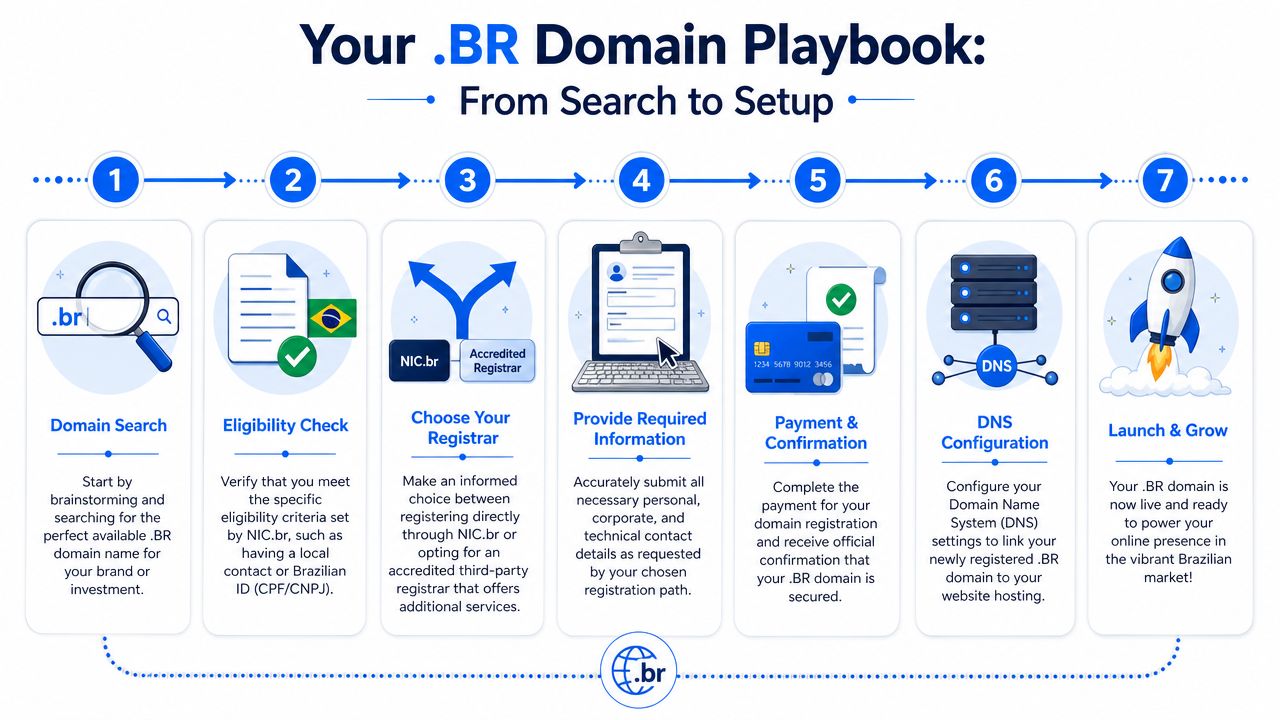
People obsess over the domain name, then rush the technical prep. Brazil's process rewards the opposite. Get your eligibility sorted, choose the right extension, and make sure the DNS setup is ready before you click anything important.
Start with the right name, not just an available one
Good br domain registration starts with selection discipline. A domain can be technically available and still be a bad asset.
I'd pressure-test the name for brand fit, spelling in Portuguese, local readability, and extension logic before doing anything else. If you want a useful framework for that early filtering, Feather's guide to domain selection for startups is a solid companion read.
Then make sure you understand the mechanics of the purchase itself. If someone on your team is fuzzy on the lifecycle basics, this primer on what domain name registration means is worth a quick skim before you assign tasks.
The pre-flight checklist that saves people weeks
The biggest technical gotcha is DNS readiness.
Registro.br expects 2 to 5 working authoritative nameservers to be configured before submission, and registrations can take a few days or up to 45 days if manual verification kicks in. A common failure point is DNS that doesn't answer correctly during registry testing, according to Truehost's operational guide to registering .br domains.
That means your setup checklist should look more like this:
- Confirm qualification first so you're not preparing infrastructure for an application that can't be approved
- Choose the correct second-level namespace such as .com.br for commercial use when that fits
- Prepare nameservers in advance because the registry wants working authoritative DNS before approval
- Verify consistency across records and contacts so the application details match the supporting information
- Leave room in the launch timeline because manual review can slow the process
Bad DNS breaks more .br registrations than bad intent.
Here's the part many teams miss. The registry doesn't care that your hosting vendor promised everything is “set up.” It cares whether the nameservers answer correctly when tested. If they don't, your application can stall.
A quick explainer helps:
A clean submission beats a clever one
Once the name, extension, and DNS are lined up, the actual application is the least dramatic part.
Use the exact legal details you're supposed to use. Don't improvise billing contacts. Don't mix entities. Don't register under one party while planning to “sort it out later.” That kind of mess creates ownership disputes and transfer pain.
The smoothest .br registrations usually share three traits:
- The buyer picked the right extension from the start
- The identity documents matched the registrant path
- The DNS answered properly before submission
That's not glamorous advice. It's the advice that gets domains approved.
Beyond Registration SEO Branding and Investor Secrets
Buying a .br domain is step one. Picking the right kind of .br domain is where strategy starts.
A lot of buyers default to .com.br and stop thinking. Sometimes that's correct. Sometimes it's lazy. Brazil's namespace is split into multiple extensions, including .com.br, .net.br, and .pro.br, and the choice can signal relevance when your ideal .com.br isn't available, according to NetEarth One's breakdown of .br extension strategy.
Extension choice changes the story
Different extensions carry different signals. That matters for branding, credibility, and how quickly a user understands what you are.
Here's a straightforward perspective:
| Extension type | Usually strongest for |
|---|---|
| .com.br | Broad commercial brands |
| .net.br | Network, infrastructure, or technical positioning |
| .pro.br and other niche variants | Professional identity where category fit matters |
If your exact-match .com.br is gone, don't automatically force a weaker name inside the default extension. Sometimes a tighter name in a more relevant category is the better brand.
Why investors should pay attention
The bureaucracy that annoys operators can create a nice hunting ground for investors and SEOs.
When a market is harder to access, more buyers ignore it. That can leave dropped or aging names with real branding or link potential in circulation longer than you'd expect. The trick is not to chase every expiring domain with a Brazilian suffix. The trick is to filter hard for names with clean histories, strong semantics, and realistic end-user demand.
If you're building a process for evaluating the search environment around a domain niche before buying, this overview of evaluating search APIs is useful background for assembling your research stack.
And if you're assessing aged assets, you need a framework for quality, not just availability. A practical reference point is understanding what domain score means, because not every dropped name deserves a second life.
Where the less-competed gems show up
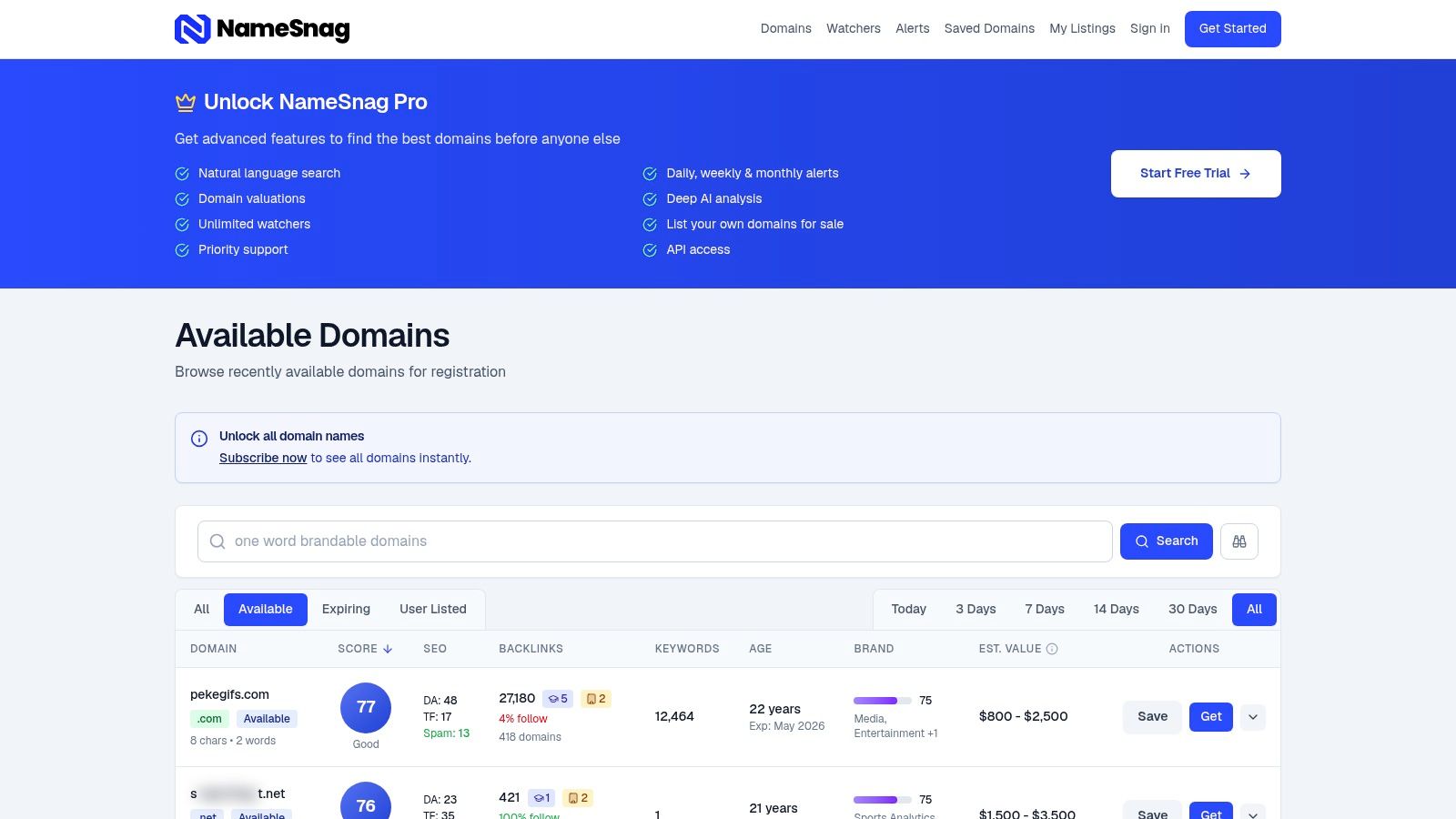
Modern discovery tools beat manual registrar tab-hopping.
You want two views of the market:
- Available domains that already dropped and can be registered immediately
- Expiring domains that are still in a grace window and may become available soon
That workflow matters in .br-adjacent research because timing uncertainty and policy friction can keep valuable names from being snapped instantly. If you're scanning opportunities, use live lists, then narrow by time window so you're not buried in stale inventory.
A few habits separate smart buyers from collectors of expensive mistakes:
- Check extension fit first because relevance beats novelty
- Look for names that survive translation well across Portuguese and English contexts
- Treat bureaucratic friction as part of valuation because some buyers won't bother, and that can be your edge
- Be patient around expiry cycles since timing in this market isn't always neat
The opportunity in Brazil isn't just registration. It's understanding that structure, scarcity, and process can work in your favor if you stop expecting instant gratification.
Keeping Your Domain Renewals Transfers and Disputes
Friday afternoon is when .br mistakes love to surface. The campaign is live, paid traffic is running, and somebody notices the site is down because the domain lapsed, the billing contact left six months ago, and renewal emails went to an inbox nobody checks.
That sounds dramatic until you work with enough international brands in Brazil. Then it sounds familiar.
NIC.br allows registrations from 1 to 10 years, and its domain lifecycle rules also make clear that an expired name does not vanish instantly. There is a post-expiry path before deletion. In practice, that delay helps disciplined buyers watching the market, and punishes owners who assume they have more time than they really do.
Renewals are part of risk management
A .br domain tied to revenue, rankings, or email should never depend on one person and one reminder email.
Set renewal alerts in more than one system. Keep payment details current. Make sure legal, marketing, and whoever controls infrastructure can all see the account status. Brazil's administrative friction works like a moat when you are acquiring names. It turns into quicksand if your own records are sloppy.
I register important names for longer terms whenever the holding period is obvious. It reduces admin overhead and cuts the chance of a preventable outage.
Transfers get messy fast
Transfers are where weak paperwork usually shows up.
If the domain was registered under the wrong CPF or CNPJ, tied to an agency account, or paid by a contractor who has since disappeared, a simple provider change can become a cleanup job. Keep a clean record of the registrant entity, account login owner, payment history, and who has authority to approve changes. If you need the mechanics, this guide to a domain name registration transfer is a useful primer.
That admin discipline has an investor upside too. .br scares off casual buyers because ownership trails and expiry timing are less straightforward than in many gTLDs. That extra friction leaves more room for prepared operators to spot neglected assets and move quickly when a good name finally clears.
Disputes favor the organized party
The strongest defense is boring documentation.
Register the domain under the correct legal entity. Keep trademark alignment where it matters. Do not leave strategic domains inside a freelancer's personal account because it was faster at the time. Fast now usually means expensive later.
If a dispute lands on your desk, the party with clean records starts in a much better position.
A practical protection checklist
- Use longer registration terms for names tied to brand, search visibility, or core operations
- Share renewal visibility across more than one employee or team
- Audit ownership records after staff, agency, or corporate structure changes
- Confirm transfer authority early before a dispute or urgent migration forces the issue
- Watch expiry windows strategically if you invest in Brazil-focused names and want to catch good domains before the broader market notices
That last point matters. Bureaucracy filters out lazy competition. If you accept the paperwork and track the timing properly, the .br system gives careful buyers a better shot at quality names than many more crowded extensions.
Find Your Perfect Domain
Get access to thousands of high-value expired domains with our AI-powered search.
Start Free Trial