That email lands, and your stomach drops.
Your GoDaddy domain expired. Maybe it’s your company site. Maybe it’s the lead-gen domain you’ve had parked for years. Maybe it’s a sleeper name you meant to renew “later” and later turned into a problem. Either way, the first question is always the same. Can I still get it back?
The second question depends on which side of the table you’re on. If it isn’t your domain, you’re thinking something else entirely. Is this one headed to auction, closeout, or a clean drop?
That’s why the godaddy grace period for expired domains matters so much. It isn’t a simple expired-or-not-expired switch. It’s a staged process with a safe zone, a penalty zone, and then a public feeding frenzy. If you own the domain, timing saves money and prevents a nasty surprise. If you want to acquire it, timing tells you when to watch, when to bid, and when to stay patient.
GoDaddy has its own quirks, and some of them catch people off guard. The biggest one is simple. The window to fix your mistake cheaply is shorter than many people assume. After that, the process gets more expensive and a lot more competitive.
That Heart-Stopping Email Your GoDaddy Domain Expired
A lot of people assume domain expiration works like a utility bill. You miss the due date, pay it late, and life goes on. GoDaddy doesn’t really work that way.
The typical panic sequence is predictable. First, you see the email. Then you check the site and notice it’s acting strange or already down. Then you log in and start clicking around your account like you’re defusing a bomb. If the domain matters to your business, those few minutes feel long.
For domain investors, the same message can trigger a different reaction. If it’s your own name, you’re in rescue mode. If it’s someone else’s strong domain, you’re already wondering where it is in the lifecycle and whether GoDaddy’s auction clock has started.
Why this feels worse than it is
The good news is that expiration usually isn’t instant deletion. There’s a sequence. The bad news is that GoDaddy’s sequence has enough moving parts to confuse owners and bidders alike.
The biggest mistake I see is emotional decision-making. Owners panic and assume they’ve already lost the domain. Buyers get excited too early and bid on names they haven’t properly vetted. Both mistakes come from not understanding the clock.
Practical rule: Treat expiration like a chess clock, not a catastrophe. Every day changes your options.
Here’s the part that matters. If you’re the owner, you still have windows where recovery is straightforward. If you’re the hunter, there are windows where preparation matters more than speed. The trick is knowing which phase you’re in, because “expired” doesn’t mean the same thing on Day 1, Day 18, or Day 30.
Two very different players, one messy system
The GoDaddy expired-domain process creates two parallel games:
- Owner game: renew before fees stack up and before auction activity complicates recovery.
- Buyer game: monitor the asset, wait for the right stage, and don’t overcommit before the registrar’s rules give you a real shot.
- Shared reality: both sides are reacting to the same timeline, but they care about different choke points.
If you understand those choke points, the process gets much less mysterious. It also gets much easier to use to your advantage.
The GoDaddy Expiry Timeline Demystified
Monday morning, the site is up, your inbox still works, and GoDaddy says the domain is expired. That mix is what trips people up. Expired at GoDaddy is not one event. It is a sequence of windows, and each window favors a different player.
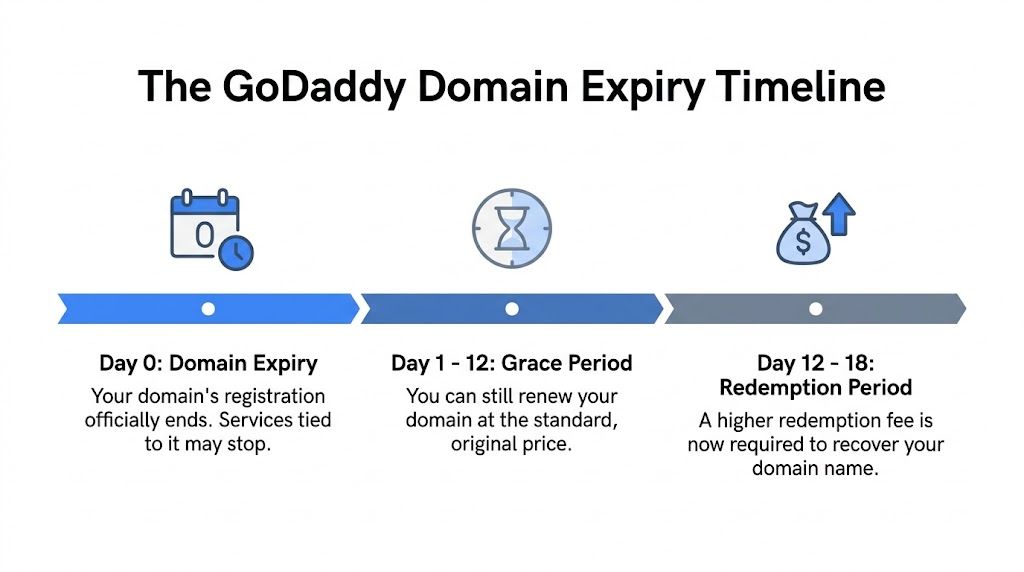
According to DomainDetails on GoDaddy renewal grace periods, GoDaddy gives expired .com domains an 18-day renewal grace period. For owners, that is the low-friction recovery window. For buyers, it is mostly a waiting room. You can watch, prep, and research, but you do not have a clean shot yet.
Day 0 through Day 12
Day 0 is expiration day. The domain has lapsed, but the game is still very much alive.
GoDaddy usually makes multiple renewal attempts early in the cycle. As noted in the same source, owners may still be able to renew at the regular price right after expiry, with additional billing attempts around Day 4 and Day 12. That is useful if your card failed. It is dangerous if you mistake those retries for extra time you can casually burn.
I have seen owners relax because the domain still resolves for a bit, then panic when email starts failing before they have fixed billing. GoDaddy's system is quirky that way. Service issues can show up before the cheap recovery window closes.
| Timeline point | What it means in real life |
|---|---|
| Day 0 | Registration expires. Log in and verify the domain status, not just the email reminder. |
| By Day 4 | Another billing attempt may happen. Website or email issues may start showing up. |
| By Day 12 | Early retries are nearly done. You still have room to fix it, but not much. |
For buyers, this stage is mostly reconnaissance. Check the backlink profile, traffic history, trademark risk, and whether the name is even worth chasing. If the domain reaches auction later, prepared buyers usually beat impulsive buyers.
The Practical Safe Zone
The part that matters is simple. That 18-day grace period is your cheapest recovery window.
That is the owner advantage. Use it.
If the domain matters to a business, a client site, or an email stack, treat Day 12 like your internal deadline, not Day 18. Waiting for the final day adds risk without adding upside. Billing issues, account access problems, and weekend delays are common enough to make last-minute renewals a bad bet.
Buyers should read the same window differently. Grace period days are not buying days. They are planning days. Build your watchlist, set alerts, and get familiar with how the later stages work, especially the GoDaddy closeout auction process, because that is where patience can turn into a real opportunity.
What actually works during grace
The best moves here are plain and a little boring.
- Log in first. Check the status inside the account instead of guessing from reminder emails.
- Fix payment problems. Expired cards, fraud blocks, and old billing info are common causes.
- Renew before the pressure spikes. The goal is to recover the name cheaply, not test GoDaddy's tolerance.
- Test the services tied to the domain. Website, email, forms, and anything customer-facing should be checked the same day.
One more GoDaddy quirk matters here. Owners and buyers are looking at the same clock, but only one side has control during grace. If you own the domain, act while the system still favors you. If you want to buy it, use this period to prepare, not to celebrate early.
Beyond Grace The Redemption Gauntlet and Auction Arena
The mood changes fast after grace ends. One missed renewal goes from a cheap fix to an expensive recovery, and the domain starts moving through a system that gives both owners and buyers a narrow shot at winning.
For owners, this is the uncomfortable part. GoDaddy can still allow recovery during redemption, but the bill gets ugly. You are usually looking at the renewal cost plus a redemption fee. That fee is GoDaddy’s way of charging for reversing an expired status instead of processing a normal renewal.
That cost forces a clear decision.
If the domain runs a business site, customer email, or a brand you still care about, pay the fee and get it back. If it was a side project you forgot about six months ago, redemption is often where people finally admit the name is not worth saving.
Redemption is still a window, not a guarantee
A lot of domain owners treat redemption like a safety net. It is better to see it as a penalty box with a ticking clock.
The domain may still be recoverable, but your margin for error is gone. Account access issues, payment failures, and support delays matter more here because every day pushes you closer to public competition. That is a defining GoDaddy quirk. The system does not move in a straight line from expired to gone. It opens and closes small windows, and the price of acting late keeps rising.
For buyers, redemption is mostly a waiting room. Watch closely, but do not assume the owner is finished. Plenty of domains look available right before the original registrant steps in and rescues them.
Then the auction room opens
Once the domain moves into GoDaddy’s expired auction flow, the game changes again. The name is no longer just a private recovery problem. It becomes visible to investors, agencies, competitors, and anyone else scanning for neglected assets.
That public listing creates one of the strangest parts of the GoDaddy process. A bidder can see the domain, place bids, and still lose the deal if the owner recovers it in time. Buyers who do this often learn the hard way that an auction listing is attention, not certainty.
If you plan to buy names in this stage, learn the handoff between auction and closeout. The pricing behavior changes, the competition changes, and your timing needs to change with it. This breakdown of the GoDaddy closeout auction process covers that shift well.
What each side should assume
| Role | Practical takeaway |
|---|---|
| Owner | Recovery may still be possible, but expect higher costs and less room for mistakes. |
| Bidder | An active listing does not mean the domain is yours yet. |
| Both | The closer the name gets to transfer, the more expensive hesitation becomes. |
The smart move in this phase is to stop guessing and start treating the domain like a live deal.
Owners should check the exact status inside the account and get a final price before they waste another day debating. Buyers should track the name, watch the auction path, and avoid getting emotionally attached too early. The best expired-domain hunters stay disciplined here. They know GoDaddy’s process is not just a timeline. It is a set of windows, and the edge goes to whoever is ready when one opens.
Your Playbook for Saving an Expired GoDaddy Domain
You wake up, open your laptop, and your site is gone. Email is flaky. Clients are asking questions. At that point, this stops being an admin chore and becomes a live recovery job.
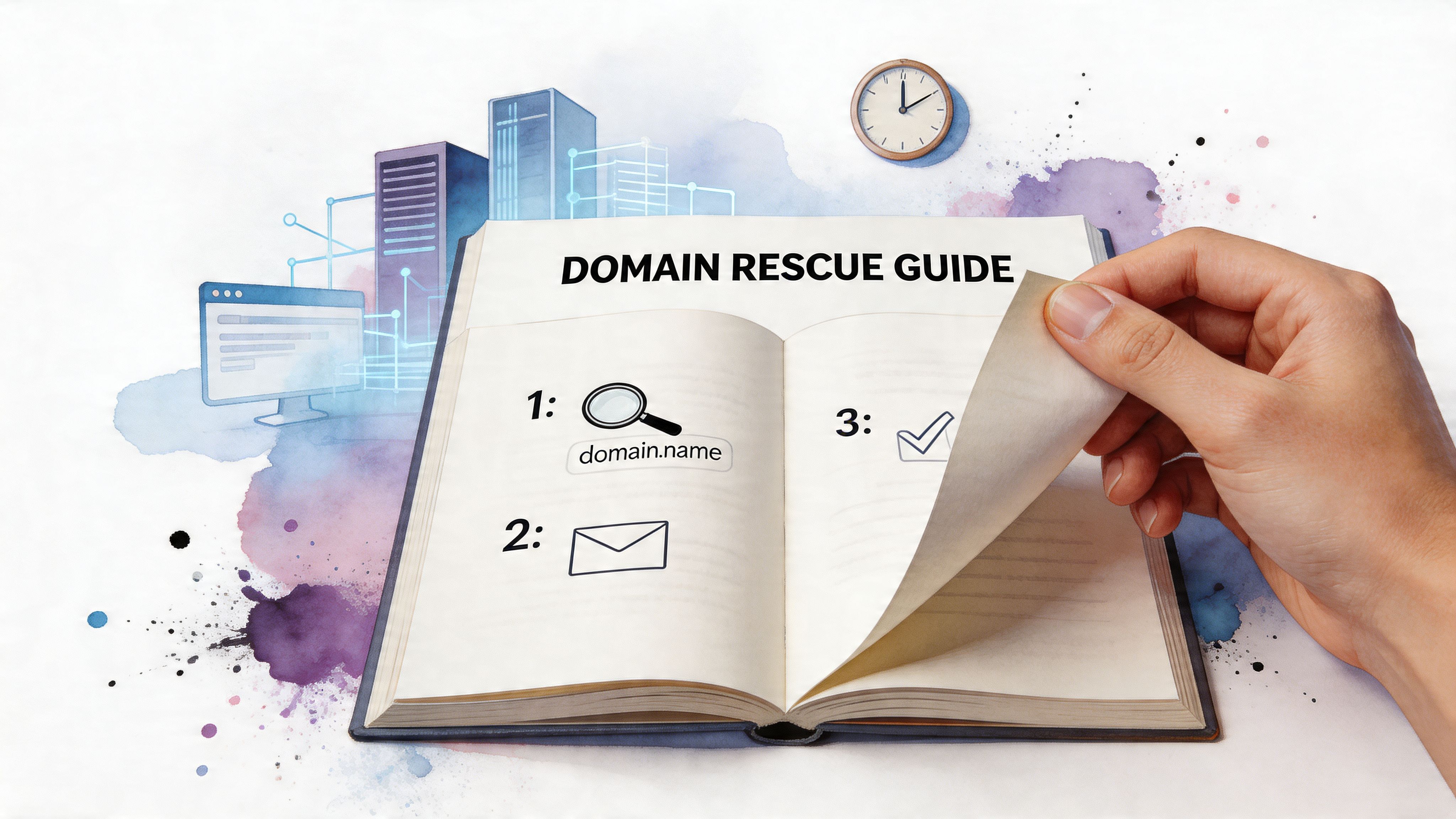
The goal is simple. Get the domain back for the lowest possible cost, before GoDaddy's process gives buyers a better position than you.
Speed matters more than outrage. If you are still in the basic renewal window, pay and clean up the mess afterward. If the domain has moved into a more expensive recovery stage, decide fast whether the name is worth saving. A strong brand domain usually is. A side project you forgot about usually is not.
If you want a quick refresher on what expired status means, read this guide on what it means when your domain is expired.
The owner checklist that saves money and time
Start inside your GoDaddy account. The dashboard is more reliable than whatever reminder email you half-read on your phone.
Check the exact status Find out whether the domain is expired, temporarily suspended, or already tied up in GoDaddy's resale pipeline.
Fix billing before you retry
A failed auto-renew usually points to an expired card, bank decline, or outdated billing profile. If you skip this step, the next renewal attempt can fail too.Renew immediately if standard pricing is still available
That is the cheapest save you will get. Waiting rarely improves your options.Price the business impact, not just the renewal fee
If the domain runs your website, email, client logins, redirects, or lead flow, the replacement cost is usually much higher than the recovery fee.
When paying the extra fee is the smart call
GoDaddy can turn a cheap renewal into an expensive lesson fast. That stings, but the essential question is not whether the fee feels annoying. The question is whether losing the name will cost more.
I have seen owners argue for two days over the recovery charge, then spend two months repairing broken email, lost rankings, and confused customers. Bad trade.
Pay to recover the domain if it is attached to any of these:
- your company name
- a revenue-producing site
- long-standing customer email addresses
- backlinks, rankings, or type-in traffic you would hate to rebuild
Let it go if the domain was experimental, replaceable, or already on the chopping block. Every expired domain reaches a point where emotion becomes the expensive part.
Here’s a useful walkthrough if you want to see the account-side process in action:
What does not work
Owners usually lose domains through slow, ordinary mistakes.
Check auto-renew once a year like you check smoke alarms. It’s boring until it isn’t.
Three habits cause the most trouble:
- assuming auto-renew guarantees success
- ignoring billing failures or service interruptions
- waiting until the name attracts buyer attention before acting
GoDaddy's expiry process rewards whoever moves first. That can be the owner, or it can be the buyer watching the same domain. If you want to stay in control, keep billing current, renew early, and treat every expiry notice like the opening move in a very real contest.
The Hunter's Guide to Snagging High-Value GoDaddy Domains
A domain hits expiry, the owner gets distracted, and buyers start circling. That is the moment GoDaddy stops being a simple renewal process and turns into a timing contest.
Buyers who do well here treat the pipeline like a series of windows, not a single auction. Some windows favor patience. Some reward early research. Some punish anyone who bids first and asks questions later.
The quirk serious bidders watch closely is auction activity during the late expiry stage. A NamePros discussion of GoDaddy’s redemption and auction behavior highlights why bidders pay attention to timing and bid placement so obsessively. GoDaddy’s process can shift the odds fast, which is exactly why experienced domain hunters monitor names before the crowd piles in.

What smart buyers watch for
New bidders usually burn money in one of two ways. They chase every decent-looking expiry, or they sit back too long and only react once a name has obvious heat.
A better method is to separate names by stage. One group is still moving through GoDaddy’s expiry machinery, where timing matters as much as budget. The other has already cleared the process and become a straight registration play. That distinction changes how aggressive you should be.
I use NameSnag to sort the noise before it becomes expensive. It is faster to filter a real target list, track status changes, and ignore the junk than to bounce between auction pages hoping something stands out. If you want a better process for building that watchlist, start with this guide on how to find expired listings.
Bidding, waiting, and keeping your head
A GoDaddy auction page can make a domain look more valuable than it is. The listing creates urgency. It does not create quality.
Before placing a bid, check four things:
- History: Was the domain used for a real site, or was it part of a churn-and-burn spam setup?
- Trademark risk: Can you use it without inviting legal trouble?
- Fit: Are you buying for a brand, a redirect, resale, or a rebuild?
- Price discipline: What is your ceiling before the auction starts?
That last one matters more than people admit.
I have watched bidders talk themselves into paying premium money for average inventory just because the auction looked active. Activity is not proof. It is often just proof that two people got attached to the same story.
Where the edge actually comes from
The practical edge is preparation. The buyer who wins consistently usually decided weeks earlier what kinds of names deserve attention, what red flags kill a deal, and what price turns a good name into a bad buy.
That is why the best opportunities are not always the most obvious auction listings. Some names get renewed. Some get bid into nonsense territory. Some only become attractive later, after the noise clears and the remaining path is easier to read. Buyers using NameSnag well can track those shifts instead of guessing.
Use this simple decision frame:
| Situation | Better move |
|---|---|
| Strong domain with obvious demand | Set your ceiling early and stick to it. |
| Good domain with uncertain owner outcome | Watch closely and wait for the picture to clear. |
| Average domain getting a lot of hype | Pass and save your budget for a better setup. |
That last move feels boring. It also protects your bankroll.
GoDaddy’s expiry system gives both owners and buyers a few chances to act. The trick is knowing which window you are in, and using the right tool before everyone else notices the same name.
Common Pitfalls and How to Sidestep Them
The GoDaddy process looks simple from far away. Up close, it’s loaded with little traps.
Owners think auto-renew means “handled.” Buyers think an auction listing means “acquirable.” Both assumptions cause trouble. The system has enough gray areas that sloppy habits get punished.

Mistakes domain owners keep making
A few problems show up constantly:
- Stale billing details: The card on file expired, the bank blocked the charge, or the account owner changed and nobody updated payment settings.
- Ignored warning emails: Renewal notices get buried, filtered, or sent to an address no one checks.
- Late realization of service issues: The website or email goes sideways before the owner connects it to domain status.
The fix is process, not heroics. Set annual checks for payment methods, verify contact email addresses, and make domain renewals part of routine ops.
Mistakes buyers love to rationalize
Buyers have their own bad habits.
They see a decent name in auction and assume any old backlinks make it valuable. They skip history checks. They get emotional in bidding. Or they forget that some auction-stage names still carry uncertainty until the process fully resolves.
Here’s the buyer sanity filter:
| Bad habit | Better move |
|---|---|
| Bidding first, researching later | Review history and legal risk before you bid. |
| Chasing a hot auction | Set a max price and stick to it. |
| Assuming every expired name is clean | Treat every domain like it needs to earn your trust. |
A cheap bad domain is still expensive if you spend months cleaning up the consequences.
The safest posture is disciplined skepticism. If the domain doesn’t make sense after a quick history check and a clear use case review, move on. The market always has more names. Your time is the scarce asset.
Your Next Move in the Domain Expiration Game
You notice the problem too late, or you notice the opportunity before everyone else. That is usually the difference.
GoDaddy’s expiration flow rewards whoever acts inside the right window. Owners who move fast can still recover a name before the process gets expensive or final. Buyers who stay organized can catch quality inventory before the crowd piles in. Same system, different objective.
For owners, the next move is boring but profitable. Audit auto-renew, test the payment method on file, and make sure renewal emails go to an inbox someone watches. A surprising number of lost domains come down to routine account sloppiness, not some mysterious registrar glitch.
For buyers, the next move is sharper filtering. GoDaddy auctions create noise, and noise gets expensive. The edge comes from knowing which domains deserve a bid, which ones are still too uncertain, and which ones are better left for someone else’s bad decision.
The practical way to view this process is as a series of windows. Owners get a shrinking chance to save the asset. Buyers get staged chances to acquire it. If you know where a domain sits in that sequence, you can act with timing instead of guesswork.
That is also why tools matter. NameSnag helps serious buyers cut through the junk, monitor names at the right stage, and focus on domains that fit a strategy, whether that means SEO rebuilds, brandable acquisitions, or clean inventory for a flip.
If you are protecting a business, tighten your renewal process today.
If you are hunting value, build a watchlist, stay patient, and treat GoDaddy expiry like what it is. A timing game with real money on the table.
Find Your Perfect Domain
Get access to thousands of high-value expired domains with our AI-powered search.
Start Free Trial