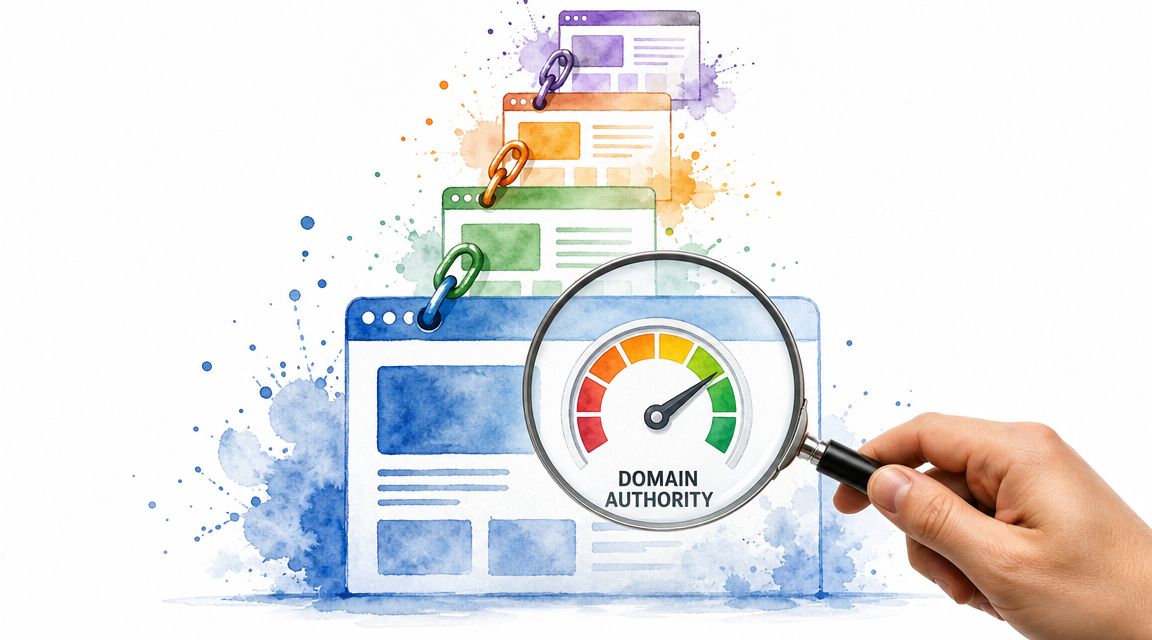
You find a domain that fits perfectly. Short. Clean. Usable. Then you check its status and see pendingDelete.
That's the moment many learn domain drop catching isn't some cute little side tactic. It's a crowded knife fight over a tiny pile of names that still have significant value. The fantasy is that you'll swoop in at the right second and grab a neglected gem. However, the situation is harsher. Many expired domains aren't worth touching, and the good ones attract people who've been doing this for years.
The good news is that speed isn't the whole game. The people who last in this business usually aren't the ones smashing refresh the hardest. They're the ones who know which names deserve a fight, which names are fake value in disguise, and when to stop bidding before they turn a decent opportunity into an expensive mistake.
Welcome to the Digital Gold Rush
A lot of people arrive here the same way. They weren't trying to become a domain investor. They just wanted one domain. Then they learned someone else let it expire, and now it's heading toward release.
That's the trapdoor into domain drop catching.
At a basic level, domain drop catching means trying to register a domain the moment the registry releases it after the previous owner fails to renew. People chase these names for different reasons. Sometimes it's branding. Sometimes it's type-in traffic. Sometimes it's the domain's backlink profile, age, or old reputation.
Why the game is narrower than it looks
Most newcomers think expired domains are a giant bargain bin. They're not. They're more like a landfill with a few watches buried in it.
A major study tracking 28 million domains over nine months found that only 10% of expired domains were re-registered or “caught” on average, and that tells you something important about this market. People aren't broadly chasing everything that drops. They're competing for a small fraction of names with perceived value in traffic, backlinks, or reputation, as documented in this large-scale drop catching study.
Practical rule: If a dropped domain looks obviously valuable, assume other people saw it days ago.
That changes how you should think about the game. Don't treat every expiring name like an opportunity. Treat most of them like bait. If you spend your time reacting to random pending-delete lists, you'll burn hours reviewing junk and still miss the names that matter.
What beginners usually get wrong
The amateur mindset is, “How do I catch more domains?”
The better question is, “Which domains are worth entering a fight for?”
That sounds obvious, but it changes everything:
- Good strategy starts before release day. The best names are usually identified early.
- Value beats volume. Reviewing fewer names with stronger history is better than scanning endless junk.
- Not every win is a win. Some caught domains come with baggage that makes them useless or risky.
This business has a gold-rush vibe because every list promises hidden treasure. But real operators get cynical fast. They know shiny metrics can lie, old backlinks can be toxic, and plenty of “great” domains are only great until you inspect their history.
That's why domain drop catching is less about reflexes than judgment. Speed matters at the moment of release. Judgment decides whether you should have shown up at all.
The Ticking Clock of a Domain's Last Days
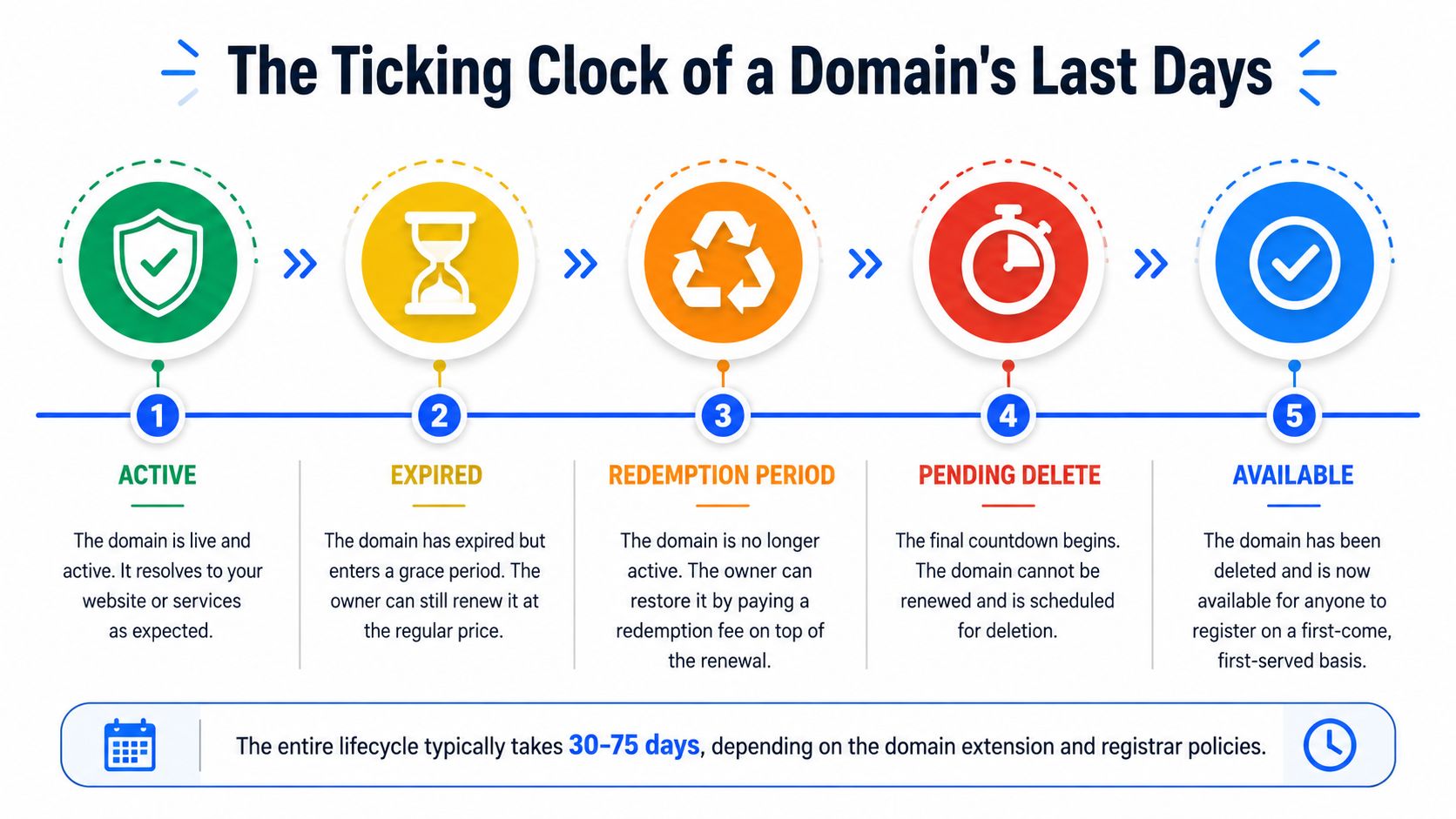
A domain doesn't go from active to free in one clean jump. It drags itself through a slow administrative death, and each phase matters if you want to time your move correctly.
The rough sequence is familiar to anyone who's spent time in expired inventory. A live domain expires. Then there's usually a grace period where the owner can still renew it. After that comes redemption, where renewal is still possible but more painful. Then comes Pending Delete, which is the actual final countdown.
The stages that actually matter
Here's the simple version of the lifecycle from a buyer's perspective:
| Stage | What it means for you |
|---|---|
| Active | Ignore it unless you're monitoring ownership changes or renewal risk. |
| Expired | The owner may still renew normally. Don't assume it's coming free. |
| Redemption Period | The owner can usually still recover it. Better for watchlisting than planning around. |
| Pending Delete | This is the point of no return. The domain is heading for release. |
| Available | If nobody catches it, it becomes open for standard registration. |
The mistake beginners make is treating expiration as the event. It isn't. Expiration is just the warning siren. Pending Delete is where drop catchers start paying close attention because that's when the name is on a fixed path toward deletion.
Why timing feels messy even when the lifecycle is clear
The lifecycle is predictable. The exact release moment often isn't, at least not in a way a human can exploit reliably.
That's why this part of the game feels strange. You can know a domain is dropping soon without being able to casually click your way into owning it. Registries, registrars, and catching services all operate in a narrow release window that punishes hesitation and rewards automation.
Most people lose before the drop because they start paying attention too late.
If you're serious, the practical move isn't to stare at a domain on deletion day. It's to build your watchlist earlier, know which names are nearing the end of the line, and decide in advance whether the domain is worth a backorder, a bidding war, or no action at all.
Pending Delete is the only phase that deserves urgency
Grace and redemption are observation phases. Pending Delete is action territory.
That doesn't mean every pending-delete name deserves a chase. It means once a domain reaches that stage, your indecision starts costing you. By then, you should already know:
- Whether the domain has clean history
- Whether the backlinks are worth anything
- Whether the name is brandable or commercially useful
- Whether you're willing to pay beyond a base catch fee if bidding starts
People love to obsess over tools and ignore the calendar. The calendar is what tells you when a domain becomes real inventory instead of just wishful thinking.
How to Hunt for Treasure Before the Drop
The smartest money in domain drop catching gets made before the domain is released. Not after.
If you wait until a name has already dropped, you're usually looking at leftovers, mistakes, or inventory everyone else passed on. Sometimes there are still useful finds in that pile, but if you want better odds, you want to identify strong candidates while they're still expiring and moving through the clock.
What makes an expiring domain worth chasing
A domain's value usually comes from some combination of history, relevance, and resale potential. That's where people get sloppy. They see age or a handful of links and assume the domain has authority. Sometimes it does. Sometimes it's just old trash.
Here's what deserves real attention:
- Backlink quality: A few relevant links from legitimate sites beat a pile of spam.
- Anchor profile: If the anchor text looks manipulated, the domain can become a cleanup project.
- Topical fit: A domain with history in the same niche as your project is easier to utilize.
- Brandability: Short, pronounceable, clean names still matter. SEO metrics don't rescue ugly branding.
- Historical use: A domain that used to host a real business, publication, or resource is usually easier to trust than one that bounced through sketchy pages.
If you're brainstorming names for a new project while also watching the expiry market, tools like CodeDesign.ai's domain tool can help you pressure-test alternatives before you get emotionally attached to one target. That matters more than people admit. Attachment makes bidders stupid.
Why pre-drop research beats deletion-day panic
Deletion day is a terrible time to do deep research. You're rushed, other people are already queued, and your judgment gets distorted by scarcity.
A better workflow looks like this:
- Build a shortlist early. Focus on domains still in the expiring pipeline.
- Check history before you care too much. Look at old site use, old branding, and topical continuity.
- Sort names by purpose. One bucket for redirects, one for rebuilds, one for resale, one for brand use.
- Set a ceiling now. If the domain goes to auction, you need a pre-decided max.
If you want a deeper process for researching names before they drop, this guide on how to find expiring domain names is useful because it keeps the focus on filtering and timing instead of blind list-scraping.
Good hunters don't chase every deer in the forest. They pick the one worth carrying home.
The filters that save you from junk
Most expired-domain workflows fail because the operator reviews too much garbage. You don't need more raw inventory. You need fewer false positives.
A practical pre-drop filter usually includes:
| Filter | Why it matters |
|---|---|
| Relevant keywords | Helps separate real commercial use from random leftovers |
| Age | Older domains can carry useful history, but only if the history is clean |
| Referring domain quality | Stronger signal than raw backlink clutter |
| Brandability | Matters for resale and project launch, not just SEO reuse |
| Spam signs | If it smells wrong early, it usually gets worse under inspection |
People love the thrill of the catch. Professionals like avoiding bad catches in the first place.
Choosing Your Weapon for the Catch
By the time a valuable domain is released, your browser is already outclassed.
Manual registration still gets romanticized by people who haven't watched a serious drop. They think they'll sit ready at the right second, hit register, and beat the field with hustle. That fantasy dies fast.
Research on deletion-day re-registrations found that when catches were defined as re-registrations happening within 3 seconds or less, about 86.1% of deletion-day re-registrations fit that definition in this study of registrar behavior and timing. That's the part beginners need to absorb. The contest is measured in seconds, not in “being online around then.”
The three real options
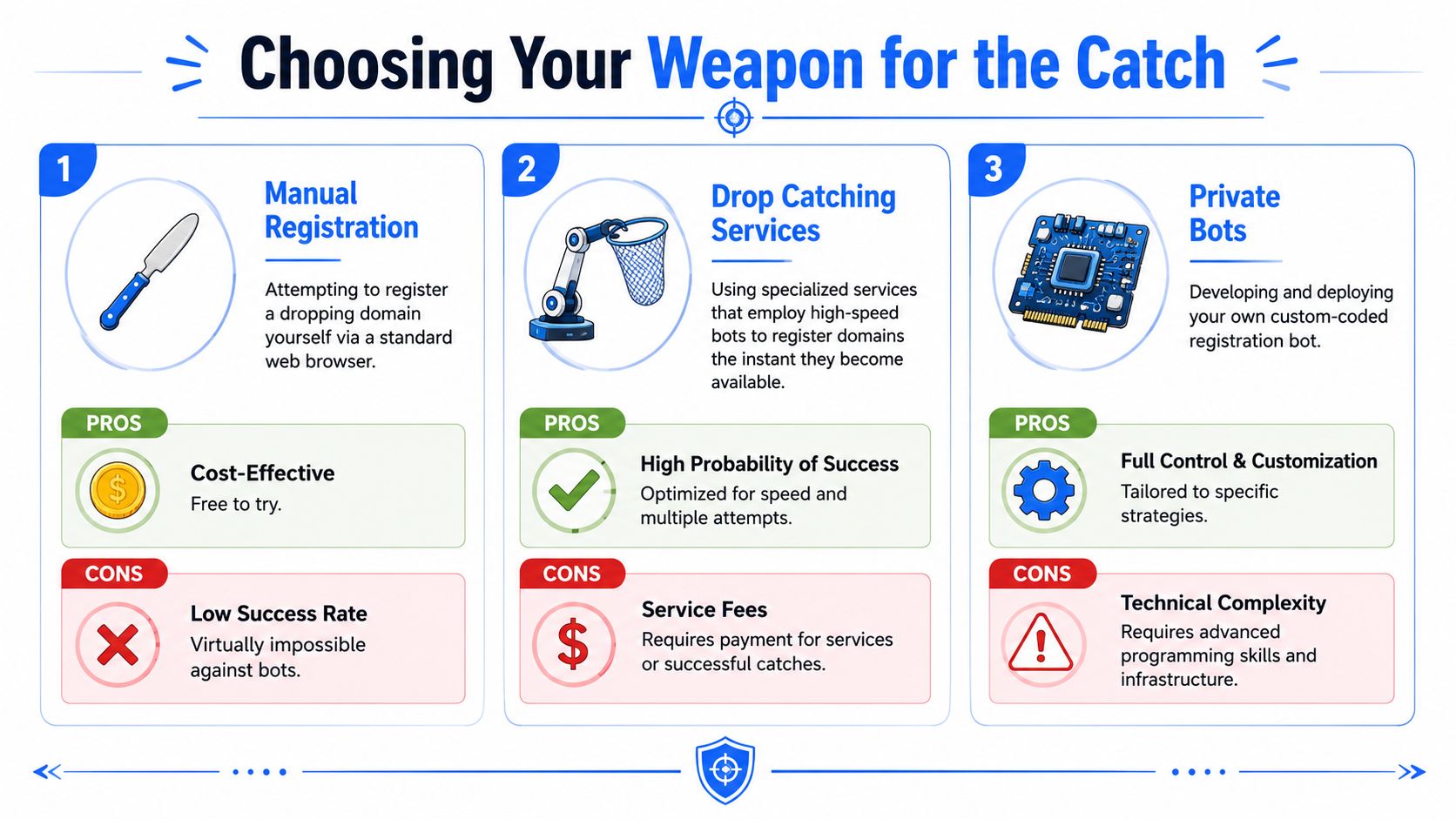
Here's the practical comparison:
| Method | Best for | Problem |
|---|---|---|
| Manual registration | Low-competition leftovers | Too slow for names anybody actually wants |
| Backorder services | Most buyers | Shared infrastructure, shared competition, possible auctions |
| Private bots | Advanced operators with technical skill | Hard to build well, harder to compete at the top end |
Manual registration is the backup plan, not the strategy
Manual registration only makes sense when you believe nobody serious is targeting the name.
That can still happen. Some domains drop and sit available long enough for a normal registrar checkout. But if the domain has obvious commercial value, aged authority, or a clean backlink profile, assume a service is already waiting. Don't mistake surviving inventory for a repeatable strategy.
Backorders are the sensible middle ground
For many, backorder services are the only realistic way to compete. They give you access to infrastructure you don't have to build yourself, and they remove the illusion that your reflexes matter.
The trade-off is that convenience attracts crowds. If multiple buyers place a claim, the “catch” often turns into an auction. That's where discipline matters more than enthusiasm. If you want a practical overview of that process, this breakdown of a backorder domain service is worth reading before you enter a contested name.
A few habits keep backorders from becoming expensive entertainment:
- Backorder only after research. Never use a catch service to outsource your judgment.
- Spread selectively. Placing a name everywhere can help, but only when the domain is worth that attention.
- Expect auctions on obvious names. If the value is visible, you won't be alone.
Later in the process, it helps to see the mechanics in motion:
Private bots are power tools, not beginner tools
Running your own catching scripts gives you control, but control isn't the same as advantage. You still need timing accuracy, registrar access, operational reliability, and enough engineering discipline to trust the system under pressure.
If you need to ask whether you should build your own bot, you probably shouldn't.
That sounds harsh, but it saves people months of wheel-spinning. Most investors don't need a bot. They need better target selection, cleaner valuation, and fewer auction mistakes.
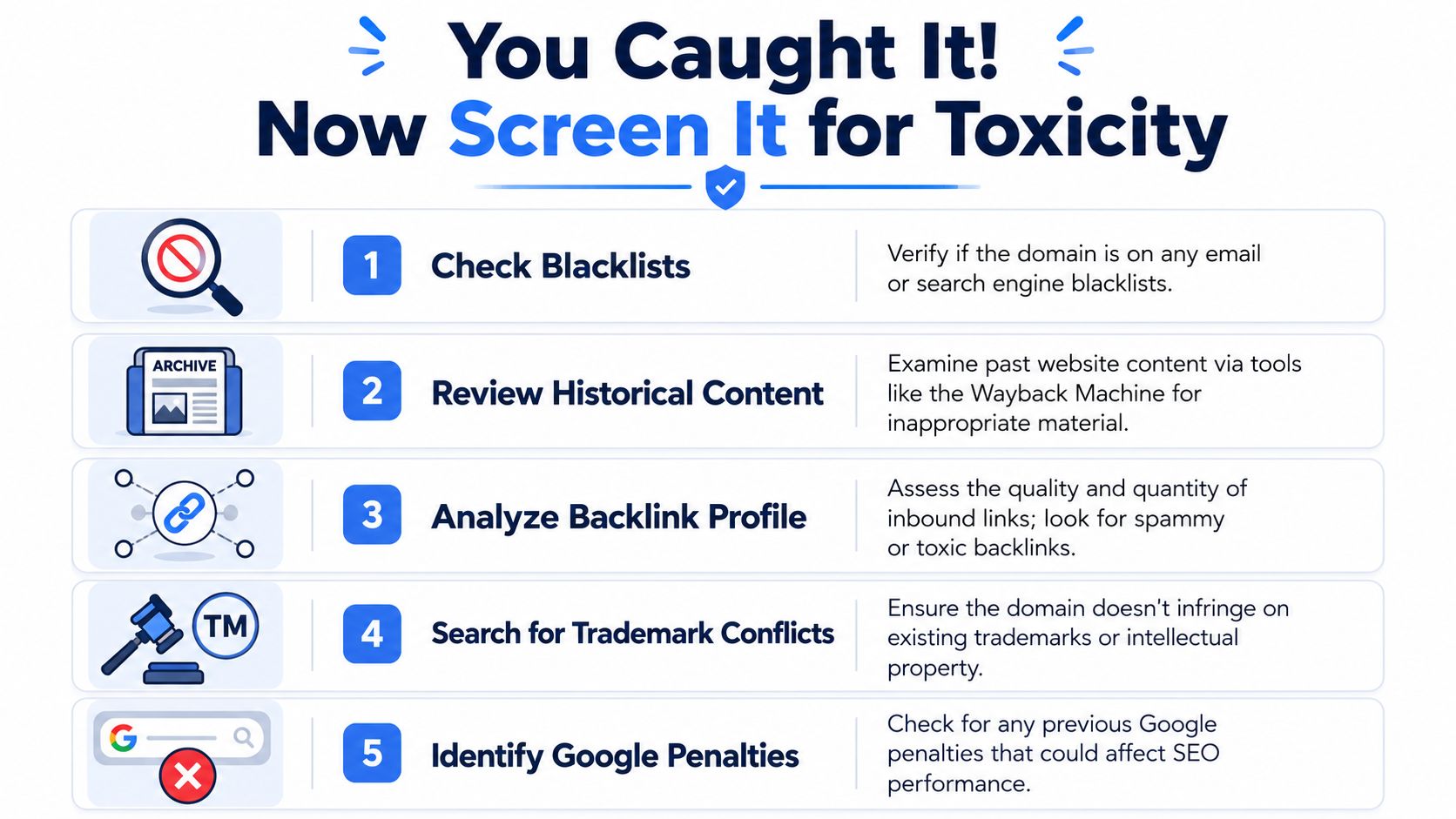
You Caught It! Now Screen It for Toxicity
Winning the domain is not the finish line. It's the start of due diligence you should have done mentally before the catch and now need to confirm with zero laziness.
People talk themselves into bad assets. They see old backlinks, a decent name, or a satisfying auction win, and then they stop asking hard questions. That's how portfolios fill up with domains that look useful on paper and turn out to be radioactive.
Research and practitioner guidance on drop catching keep returning to the same overlooked issue. A domain can inherit reputation problems from its previous life, including blacklist status, spam baggage, or search-related penalties. That's why post-capture verification matters so much, as discussed in this guide to the hidden risks of drop catching.
The forensic checklist that isn't optional
Start with a plain checklist and go one item at a time:
- Historical content check: Use the Wayback Machine and inspect what lived on the domain. You're looking for spam, hacked pages, fake stores, parasite SEO, or abrupt topic changes.
- Backlink review: Open the linking domains and see what they are. Don't trust a clean-looking summary screen.
- Index sanity check: Run a simple site search in Google and look for signs the domain has been burned or abandoned unusually hard.
- Trademark review: Make sure the name doesn't create legal exposure just because the prior owner let it lapse.
- Email reputation check: If you plan to use the domain operationally, inherited mail problems can become a headache fast.
What toxicity usually looks like in the wild
Toxicity isn't always dramatic. Sometimes it's subtle:
| Red flag | Why it matters |
|---|---|
| Spammy historical content | Signals abuse, churn, or prior manipulation |
| Weird anchor text patterns | Suggests link schemes or compromised use |
| Foreign-language mismatch | Often points to recycled spam deployments |
| Trademark-loaded terms | Creates resale and usage risk |
| No believable continuity | Makes redirects and rebuilds less trustworthy |
If you want a second screen before committing the domain to a project, a domain spam score checker can help you catch warning signs that are easy to miss when you've already fallen in love with the name.
A great catch with a bad history is still a bad catch.
The worst mistake after winning a domain is trying to force the asset to justify the effort you spent getting it. Domains don't care how hard you fought for them. If the history is dirty enough, walk away from the original plan and treat the catch like a lesson.
Secure and Monetize Your New Digital Asset
Once a domain passes inspection, move quickly and cleanly. You're no longer in hunter mode. You're in asset-management mode.
First, secure the basics. Put the domain under the registrar account you trust most. Turn on the protections you normally use. Lock it down. Make sure the contact settings, renewal settings, and ownership details reflect reality. Nothing is more annoying than winning a name and then handling it like a temporary toy.
The first week after acquisition
Your early decisions shape whether the domain becomes useful or just sits in your account while you admire it.
A sensible sequence looks like this:
- Stabilize ownership. Confirm registrar settings and renewal controls.
- Set up the destination. Point it toward the project, landing page, or holding page you intend to use.
- Document the history. Save notes on why you bought it, what risks you checked, and what the intended use is.
- Choose one monetization path. Don't improvise five competing plans.
That last point matters. People ruin good domains by indecision. They redirect them for a week, then park them, then think about selling them, then half-build a site. Pick a lane.
The three monetization paths that make practical sense
Most useful post-catch plans fall into one of these buckets:
- Redirect to an existing site: Best when the topic and historical context line up. Don't force a redirect from a mismatched niche and expect magic.
- Rebuild on the domain: Often the cleanest option when the historical use gives you a believable foundation to continue from.
- List it for sale: Good for names with brand value, category clarity, or buyer appeal beyond your own projects.
Each route has trade-offs. Redirects are fast but can be clumsy when the fit is weak. Rebuilds take more effort but usually give you more control over continuity. Sales can be profitable, but many domain owners overestimate what strangers will pay for names they personally like.
The overlooked plan B
Not every good opportunity requires a high-speed catch or auction stress.
Some dropped domains become available because nobody serious wanted them, or because the value was niche enough that it slipped through. That's where browsing available domains can be useful if you want immediately registerable names without entering the full drop-catching scrum.
The same goes for scouting expiring domains before they reach release. If your edge is judgment rather than infrastructure, that's often the smarter place to spend your time.
The easiest profit in this business often comes from names that were good enough, not names everybody fought over.
That sounds less glamorous than winning an auction war. It's also a lot kinder to your margins.
A lot of experienced buyers prefer clean, unclaimed opportunities to “trophy” wins. They know the trophy names attract ego, and ego inflates prices faster than value.
Playing by the Rules Legal and Ethical Lines
You can legally catch a domain and still make a terrible decision.
The clearest line is trademark risk. If the domain leans on someone else's brand, product name, or confusing variation, leave it alone. An expired domain is not a permission slip. Buying a lapsed brand term because it dropped doesn't make you clever. It makes you easier to target.
What to avoid without debate
Some names should trigger an instant no:
- Misspellings of known brands
- Expired company names with active trademark presence
- Domains that imply affiliation you don't have
- Names you only want because someone else built recognition into them
That kind of inventory attracts people who think they've found a loophole. Usually they've found a legal bill.
The ethical side matters too
Not every bad move is illegal. Some are just short-term and shabby.
If your whole plan is to strip old SEO value out of a domain with no regard for relevance, history, or user trust, you can do that. Plenty of people do. But those tactics age badly. Search platforms adapt, buyers get more skeptical, and your own portfolio quality starts to sink because you trained yourself to chase residue instead of value.
The investors who last usually prefer names with clean histories, honest use cases, and obvious buyer logic. They don't need every deal to be flashy. They need the portfolio to hold up under scrutiny.
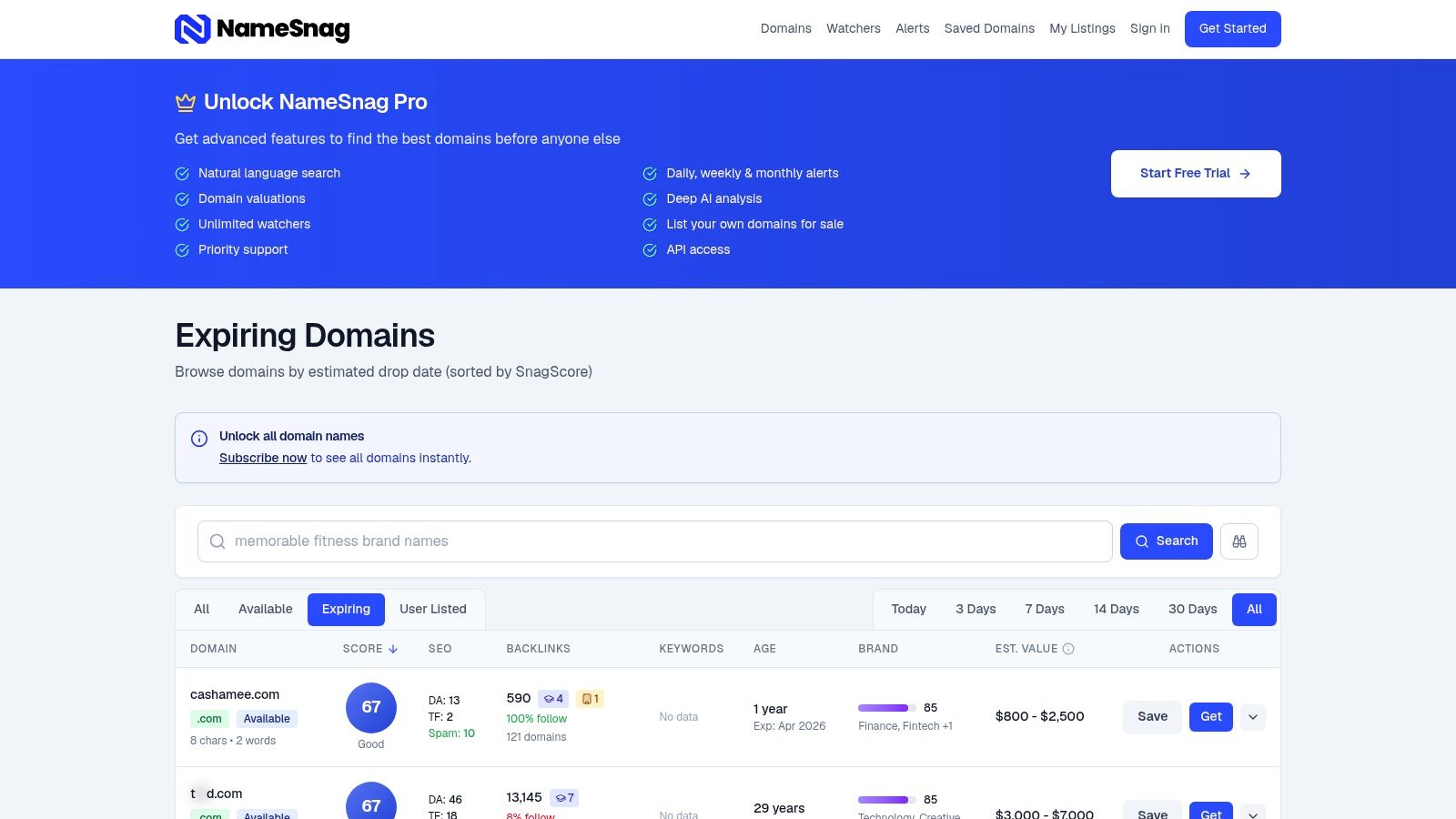
If you want a cleaner way to spot strong expired and expiring names before everyone else piles in, NameSnag is built for exactly that. It helps you sort through the junk, track names early, and focus on domains that deserve your attention instead of wasting your day on false alarms.
Find Your Perfect Domain
Get access to thousands of high-value expired domains with our AI-powered search.
Start Free Trial