A single character can sit dormant for years, then suddenly become the front door of a global brand. That's the strange power of 1 letter domain names.
Many observers see a letter. Domain investors see scarcity, strategic advantage, and a piece of internet history that almost nobody gets to own.
The Billion-Dollar Typo
X.com is the easiest way to explain why 1 letter domain names fascinate serious buyers.
For years, it was one of those domains everyone knew, but few people fully appreciated. Then it re-emerged as the banner of a major global brand, and the whole world got a refresher on what a single character can do. It doesn't need explaining, spelling help, or a slogan to sound important. It arrives with built-in authority.
That's the part outsiders often miss. The best short domains don't just save characters. They compress status.
Why one letter changes the feel of a brand
A one-letter domain does three things at once:
- It removes friction: nobody struggles to remember it.
- It signals rarity: people instantly sense they're looking at something unusual.
- It creates range: one letter can stretch across products, markets, and future pivots.
A long descriptive domain can rank, convert, and build trust. I use those too. But a 1 letter domain name plays a different game. It works more like owning the building with the best address in the city, not just renting ad space on it.
A premium short domain often feels expensive before the visitor knows anything else about the company.
That feeling matters. Startups want it because it sharpens positioning. Public companies want it because it simplifies branding. Investors want it because scarcity is doing much of the heavy lifting before marketing even starts.
The obsession is rational
This isn't just collector behavior. There's hard evidence that these names sit in the premium tier. The highest recorded sale was Z.com at $6.784 million, and NameBio-tracked single-character domain sales total 605 transactions with an average price of $23,700, according to Wikipedia's history of single-letter second-level domains.
That doesn't mean every one-character domain is a lottery ticket. Far from it.
It means the category has proven demand, and the best assets in it can carry a serious strategic premium. That's why founders, brokers, and domain people keep circling back to them. Not because they're cute. Because they're one of the cleanest expressions of digital exclusivity you can buy.
The Scarcest Real Estate on the Internet
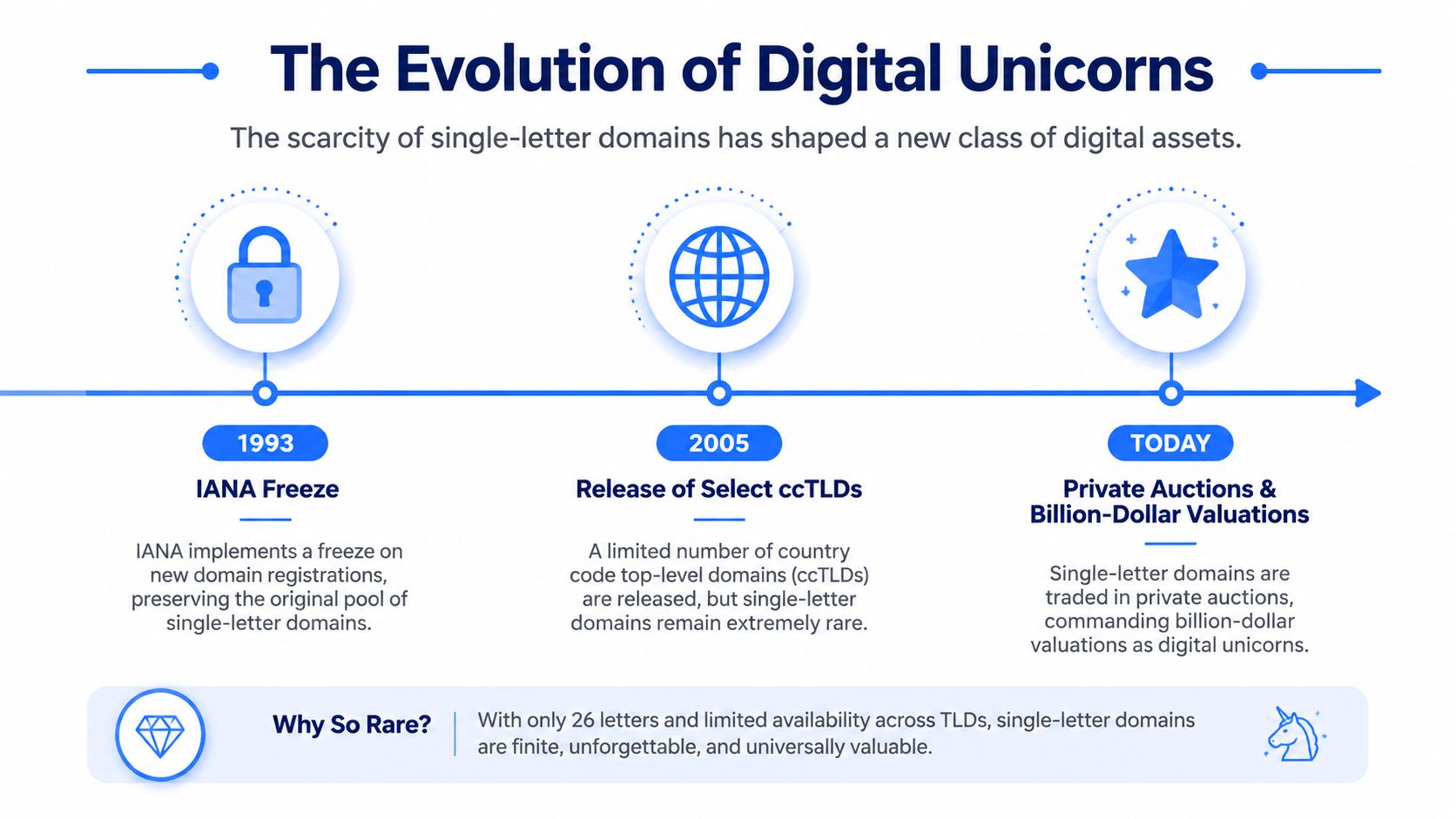
A buyer can raise capital, hire a broker, and still have no path to A.com. Money matters in domains, but policy matters too. In the single-letter market, policy set the ceiling decades ago.
By the early days of the commercial internet, internet administrators had already moved to restrict one-character names in the major legacy extensions. The practical effect is what matters now. In .com, .net, and .org, the alphabet is not an open shelf. It is a fenced compound with very few gates.
Why the alphabet got locked up
The restriction was a defensive move. Single-character domains were obviously scarce even then, and leaving them wide open would have handed a tiny number of early registrants permanent control over the best addresses online.
That one decision still shapes the market today. Legacy supply did not tighten over time. It was cut off.
For investors, founders, and brokers, that changes the job. The question is rarely, "How do I register one?" The true question is, "Which version of this category is obtainable, and at what price?"
What that means in practice
I split this market into two buckets right away:
| Bucket | Reality |
|---|---|
| Legacy extensions | .com, .net, and .org single-letter names are effectively closed and usually trade only through rare private situations |
| Other extensions | ccTLDs and newer gTLDs still produce real opportunities, if you know how to screen for quality and legal risk |
That distinction saves time.
New buyers waste months staring at impossible targets. Experienced buyers move one layer down the stack and start hunting where inventory can move. Sometimes that means country-code domains. Sometimes it means short brandables, strong acronym domains, or a category-defining word in a clean extension. A good one word domain name strategy guide is often more useful than another hour fantasizing about X.com.
Scarcity is the asset
A one-letter domain is valuable because supply is fixed at the top end and buyer demand never fully disappears. Brand teams want memorability. Public companies want authority. Investors want an asset class with obvious scarcity and global recognition.
That does not mean every one-character domain is a winner. Extension quality, letter quality, jurisdiction, trademark exposure, and actual buyer demand all matter. I have seen buyers overpay for short names that looked rare on paper but had weak resale depth in the actual market.
The practical takeaway is simple. Waiting for a legacy single-letter .com to drop is not a plan. Hunting adjacent scarcity is. That is where tools like NameSnag earn their keep, especially when you are tracking expiring short domains, monitoring overlooked country codes, and building a list of alternatives with real acquisition paths.
Meet the Billion-Dollar Alphabet Club
The first time buyers study this niche, they fixate on the headline names and miss the actual lesson. The winners are not just rare. They are usable at the highest level of business.
Only a small group of single-letter domains sits in public view as active, recognizable assets. That club matters because it shows how elite buyers use these names once they get them. Some become the face of a company. Some sit inside a larger portfolio as strategic reserves. Some work as pure authority signals that shorten the path from first impression to trust.
Three names investors study for a reason
A few examples come up in nearly every serious conversation about one-letter domains.
X.com
X.com shows what happens when a one-letter domain becomes the primary brand. It carries history, media attention, and enough flexibility to cover a very broad company vision. That breadth is part of the value. A buyer is not stuck inside a narrow category.Z.com
Z.com is one of the clearest proof points that a single character can command elite pricing. The exact sale figure matters less than what it signals. Buyers at that level are paying for category scarcity, global brand potential, and the fact that there is no close substitute once the asset is gone.Q.com
Q.com highlights the corporate side of the market. Not every premium one-letter domain needs hype to matter. Some are powerful because they are short, credible, and impossible to ignore in a boardroom, a press release, or a browser bar.
What the top names teach
These domains do not all serve the same purpose, and that is the useful takeaway for investors.
| Domain type | Best use |
|---|---|
| Brand flagship | A single identity for a broad company vision |
| Corporate authority asset | A short, memorable front door for an established business |
| Strategic holding | A premium property kept for future branding or resale leverage |
That distinction helps with valuation. Buyers who want a practical framework should study a domain valuation guide for premium names before chasing ultra-rare assets on instinct alone.
The broader market is also more active outside the household names than many buyers realize. As noted earlier, a large share of single-character sales has happened in country-code extensions, not just .com. That matters because it points to a real acquisition path. Investors who track expiring ccTLD inventory, private broker listings, and underpriced short domains often find better risk-adjusted opportunities there than in headline chasing.
I use the public sales first, then I look for patterns behind them. Was the buyer paying for a global brand, a regional shortcut, or an asset that strengthens an existing company? That question usually matters more than the letter itself.
Traffic and business quality still need verification. If a seller claims an asset has residual type-in value or a strong operating history, check it against data-driven alternatives to Alexa rank instead of relying on stale vanity metrics.
The inside scoop is simple. The billion-dollar alphabet club is useful as a map, not a shopping list. Serious buyers study these names to understand why money concentrates at the top, then use that pattern to hunt the next tier with tools like NameSnag, where the odds are still long but the inventory is in play.
Valuing a Unicorn What Makes One Letter Worth Millions
A 1 letter domain name can be worth a fortune, but not for one single reason. It's usually a stack of advantages that reinforce each other.
The first layer is obvious. One character is easy to remember, easy to type, easy to display, and nearly impossible to forget once it's attached to a brand people know. But the deeper value comes from what that simplicity communicates. It tells users they're looking at something scarce, established, and hard to imitate.
Brand power beats cleverness
Most domains need context. A one-letter name often doesn't.
That changes how people process the brand. Shorter names usually look cleaner in ads, on mobile screens, in investor decks, and in spoken conversation. A company using a one-letter domain doesn't need to explain why it chose brevity. The choice itself becomes the signal.
Here's how I think about the valuation stack:
- Memorability: one character has almost no recall burden.
- Prestige: scarcity creates status before the product gets judged.
- Versatility: a single letter can support a wider brand vision than a keyword-stuffed domain.
- Defensibility: elite short names are hard to replace with something equally strong.
SEO matters, but usually in a secondary way
People sometimes overplay the SEO angle with ultra-short domains. The domain alone isn't magic. A one-letter domain won't rank because it's short.
What can matter is the quality of the asset around it. If a short domain comes with a clean history, strong backlink profile, and credible age, that can add serious practical value for buyers who care about authority. If you're evaluating domain strength beyond vanity metrics, this breakdown of data-driven alternatives to Alexa rank is useful because it focuses on signals that are still worth paying attention to.
What investors should actually examine
A premium short domain should be judged from multiple angles, not just by how cool it looks.
| Factor | Why it affects value |
|---|---|
| Extension | Legacy and trusted extensions usually carry stronger buyer demand |
| Commercial fit | Some letters map more naturally to brands, products, or categories |
| History | Age and prior use can either help or poison the asset |
| Backlinks | Clean, relevant links can add practical SEO upside |
| Buyer pool | A domain worth a lot to the right buyer may be awkward to sell broadly |
That last point matters. A one-letter domain can be elite and still illiquid if the buyer pool is narrow. Liquidity and prestige are not the same thing.
Investor mindset: A rare domain isn't automatically a good buy. It's a good buy when rarity, buyer demand, and clean history line up.
If you want a more systematic framework for this kind of analysis, this guide on how to value domain names covers the broader process well.
The big mistake is treating all short names as equally premium. They're not. Some are pristine branding assets. Some are expensive curiosities. The difference usually shows up in buyer intent, history, and how naturally the name can anchor a real business.
How to Hunt for Single-Letter Domains
The first time you chase a one-letter domain, the temptation is to search a registrar, see nothing, and conclude the market is closed. That is how buyers burn hours and miss the few openings that matter.
Single-letter hunting is a monitoring game. Inventory is tiny, ownership is concentrated, and the best opportunities appear through expiry, private outreach, niche extensions, or adjacent short names that other buyers ignore.
A useful search starts with movement.
Start where names can move
The broad universe of one-character domains looks bigger on paper than it does in practice. Many are registry-reserved, permanently held, or tied up in portfolios that rarely sell. The workable part of the market sits in newer gTLDs, selected country-code extensions, and short alternatives close enough to deliver the same branding effect.
That changes the hunt immediately.
A buyer who only searches alphabetic one-letter names misses part of the market. Numeric single-character domains can draw serious demand too, especially in extensions where letter inventory is gone or restricted. If the end goal is memorability and scarcity, a strong number can beat a weak letter in a forgettable extension.
Build the search in three tiers
I break the hunt into three buckets:
Legacy long-shot monitoring
Keep the true trophy names on a watchlist, but treat them like low-probability events. They matter, just not as the core plan.Newer extension hunting
One-character names still surface here through registry release, expiry, or aftermarket resale. Pricing can be aggressive, but at least names can move.Near-match short domains Disciplined buyers get deals done here. A one-character or two-character name in the right extension often captures most of the practical upside without the fantasy pricing.
Use expiry data, not registrar guesswork
Typing random combinations into a search box is a weak process. Good short domains are usually found by tracking names already heading toward release.
My standard workflow is simple:
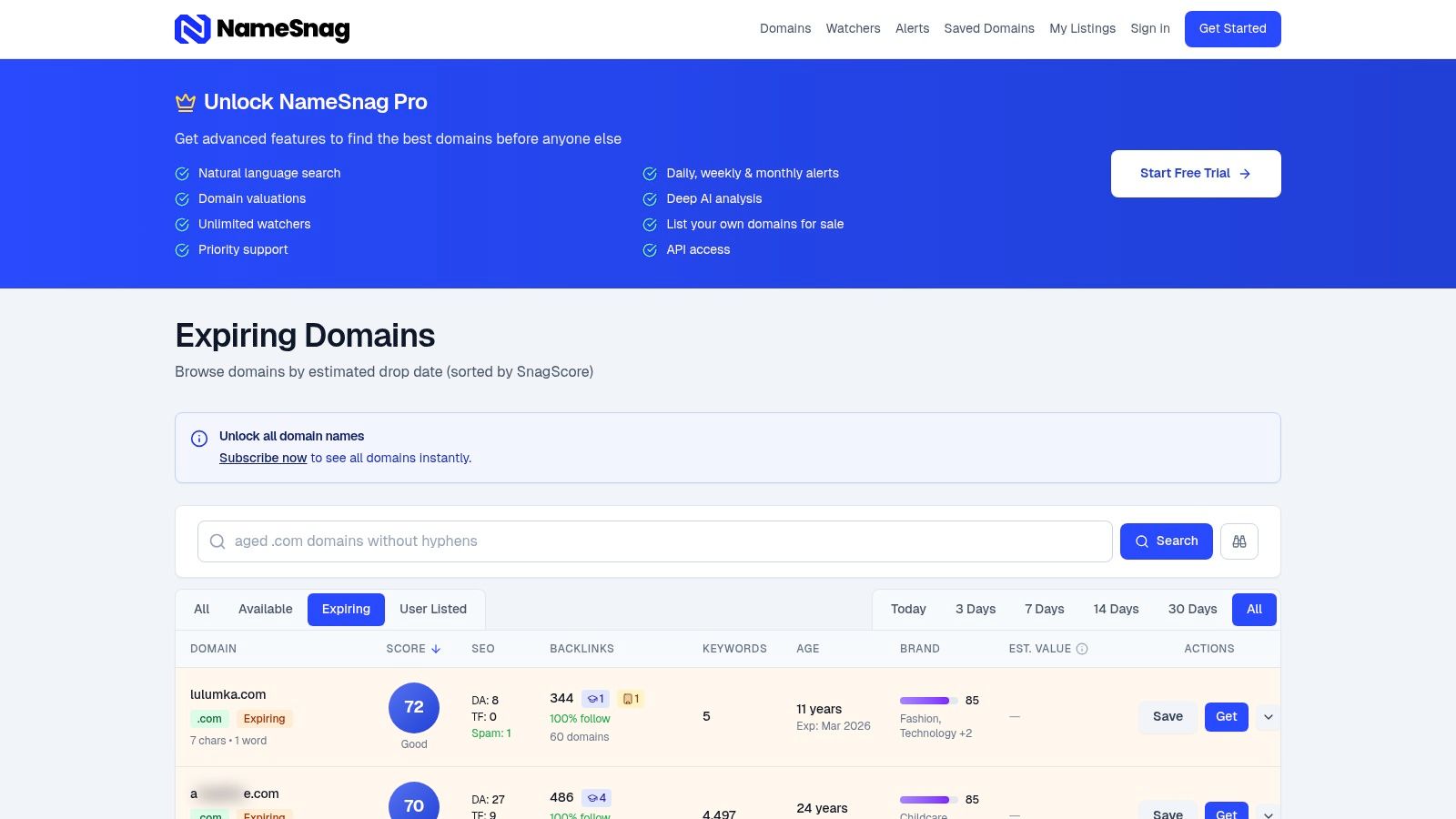
- Track dropping inventory: scan available dropped domains for names you can register immediately.
- Watch names still in the cycle: monitor expiring domains before they clear or get renewed.
- Widen the window on purpose: check Today for fast action, then review 3 Days, 7 Days, 14 Days, 30 Days, and All to spot extension-level patterns.
That last step matters more than newcomers expect. After a few weeks, patterns show up. You start seeing which TLDs permit one-character registrations, which strings attract repeat bidders, and which short names look ugly only because nobody has framed them properly yet.
Backorders win before the auction starts
Short domains punish late reactions. If a target enters the drop cycle and you wait until everyone else notices, your odds collapse.
Set up a process early and use a backorder domain service guide to tighten your timing, registrar coverage, and bidding discipline. The goal is simple. Be in position before public interest spikes.
Here's a quick visual walkthrough that helps if you're newer to domain hunting:
The edge in this niche comes from narrow watchlists, repeat monitoring, and quick decisions. There is no big pool of obvious one-letter opportunities. There are brief windows, and prepared buyers are the ones who catch them.
Smart Alternatives When You Can't Get X.com
Most buyers should stop trying to force the fantasy purchase and start buying the nearest strategic win.
If you can't get a legacy 1 letter domain name, the next best move is often a very short domain that delivers the same practical effect. In real use, a clean two-letter or three-character domain in the right extension can feel every bit as sharp as a one-letter vanity asset.

The alternatives that actually make sense
According to Snagged's history of single-letter domains, only 5 single-letter .com domains are known to exist, and that scarcity has pushed two-letter .coms into seven-figure territory. The same piece suggests filtering for 2-3 character expired domains in extensions like .co or .io, with Trust Flow >20 and age >5 years, as a realistic way to approximate premium short-brand authority.
That advice is sound because it focuses on outcomes, not on purity.
What works better than people expect
A short alternative can outperform a weak single-character target if it has:
- A better extension fit: a startup may look more natural on .io or .co than on an obscure string.
- Cleaner history: a short domain with a trustworthy past is often more useful than a flashy asset with baggage.
- Stronger pronounceability: two letters that can be spoken naturally often brand better than one awkward letter.
- Broader buyer appeal: if you ever resell, more buyers may understand the value immediately.
I'd rather own a highly usable two-letter or three-character domain with clean signals than overpay for a one-character novelty in an extension nobody respects.
Good pivots for serious buyers
Here are the alternatives I'd evaluate first:
| Alternative | Why it works |
|---|---|
| Two-letter .com | Elite category if budget allows |
| One-character ccTLD | Strong scarcity with regional or startup appeal |
| Two to three character .io or .co | Often the sweet spot for brandability and access |
| Short aged expired domain | Can add branding and authority upside if clean |
Reality check: Most profitable domain buying comes from disciplined compromise, not from getting the mythical asset.
That's how experienced buyers stay in the game. They don't quit when the perfect name is unavailable. They redefine “premium” in a way that still produces an advantage.
Securing Your Prize Legal and Negotiation Tips
A one-letter domain can make smart buyers act reckless.
I've seen the same mistake more than once. A buyer gets a reply from the owner, hears that there is "other interest," and wires a deposit before checking trademark exposure, past use, or even whether the seller controls the name. That is how an elite asset turns into a legal bill, a failed transfer, or a domain you cannot use with confidence.
Trademark review comes first. Single-letter names look generic at a glance, but disputes are usually decided by context. The extension matters. The industry matters. Prior use matters. Your intended use matters too. A clean letter in one category can be trouble in another if the branding overlap is obvious.
Do the boring checks before you negotiate
Run these before you discuss price in any serious way:
- Trademark overlap: search for active brands tied to the same letter or short string in your target category.
- Historical use: review archived versions of the site to see what lived there before.
- Spam signals: inspect backlinks and anchor text for obvious manipulation, malware, or adult history.
- Ownership clarity: confirm the seller is the listed registrant or has documented authority to sell and transfer the domain.
By being disciplined, buyers save money. A one-character name with a messy record often costs more after closing than it did at purchase.
One negotiation I watched went sideways for exactly this reason. The buyer focused on the letter, agreed on a six-figure price, and pushed for speed. During escrow, archived pages showed the domain had previously redirected into a counterfeit operation. The seller still wanted full price. The buyer tried to renegotiate late, trust collapsed, and the deal died after weeks of legal review and escrow fees. The string was rare. The asset was flawed.
Keep the negotiation plain and controlled. Ask if the domain is available. Confirm who is handling the transfer. Ask whether there are liens, ownership disputes, or registrar restrictions. Save the story about your startup, fundraise, or rebrand for after the name is secured.
A broker can help, especially on high-end names, but brokers also sharpen pricing. Owners tend to hold firmer when a professional is in the middle.
A few rules keep you out of trouble:
- Use escrow: for any meaningful purchase, a trusted escrow service is required.
- Set your ceiling early: decide your maximum before the seller starts creating urgency.
- Price the full risk: include legal comfort, transfer friction, history, and resale depth in your number.
- Get terms in writing: payment schedule, inspection window, and transfer steps should be clear before funds move.
Short domains trigger emotional bidding. The buyer who stays detached usually makes the better purchase, or skips a bad one.
Experienced domain investors excel at declining flawed rarity as much as spotting true value.
If you're serious about finding premium short domains before everyone else piles in, NameSnag is worth having in your toolkit. It helps you monitor expiring and dropped inventory, surface strong 2 to 3 character alternatives, and spend less time sifting through junk that was never worth a bid in the first place.
Find Your Perfect Domain
Get access to thousands of high-value expired domains with our AI-powered search.
Start Free Trial