
Most advice about five letter domains is too simplistic. It usually swings between two bad extremes: "all short domains are valuable" and "if it isn't a dictionary word, it's junk."
Both ideas lose money.
Five letter domains sit in a part of the market where taste, filtering, and patience matter more than hype. A bad five-letter name is still bad. But a strong one can be a serious asset for a founder, an SEO operator, or a domain investor who knows what to look for. The difference is rarely the length alone. It's structure, history, commercial fit, and whether another human can remember it after hearing it once.
The Sweet Spot Why Five Letter Domains Matter
Five letter domains matter because they sit in the middle of the naming market, and the middle is often where the best trades live. They're short enough to feel premium, but not so scarce that every decent option is already locked away behind a painful price tag.
That middle position is what makes them interesting. According to this overview of domain length dynamics, five-letter domains occupy a critical position between ultra-premium three and four-letter names and the abundant but less valuable six-letter-and-longer alternatives, and value appreciation tends to weaken as length goes beyond five characters.
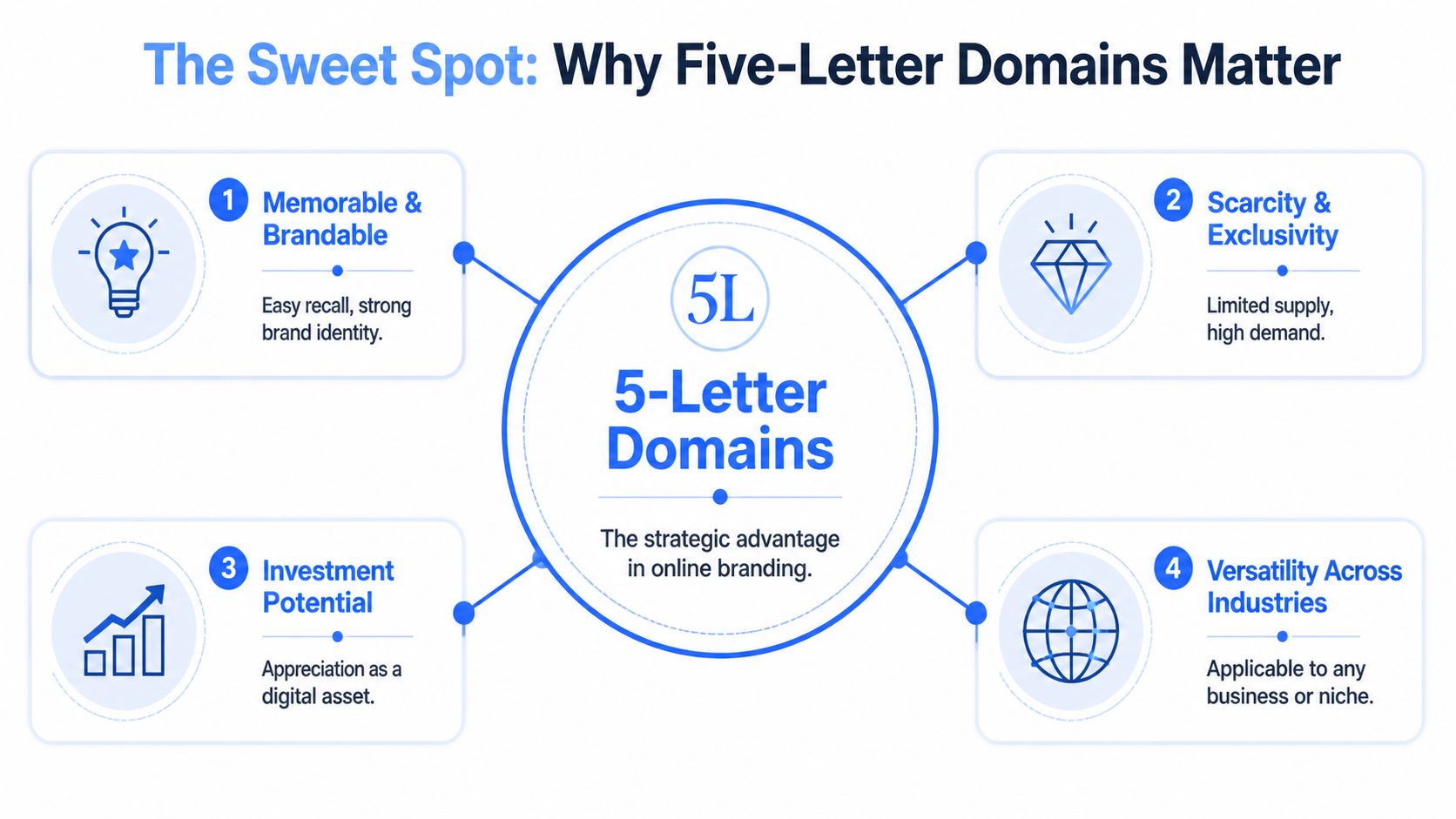
A lot of beginners underestimate how important that is. With very short names, the supply is brutally tight. With long names, supply explodes and memorability drops. Five letters often gives you just enough room to create a real brand shape without drifting into clunky territory.
What good five letter domains do better
Good five letter domains tend to do four things well:
- Stay easy to say: If a person can say it on a call without spelling it three times, you've already improved its odds.
- Feel like a brand: Short names with rhythm tend to look better in logos, page headers, and app icons.
- Leave room to grow: A five-letter brandable can fit software, e-commerce, local services, media, or a holding company.
- Avoid over-explaining: Long exact-match names can trap a business inside one category. Shorter brandables leave strategic breathing room.
Practical rule: Short is not enough. A five-letter domain earns attention only when it also sounds clean, looks balanced, and doesn't carry baggage.
This matters even if you're not a domain investor. Founders choosing a brand name often need a fast crash course in understanding custom domains, because the name isn't just a web address. It's your brand handle, your email identity, your pitch shorthand, and the thing people type when they half-remember you.
The junk vs gem split
Here's where people get burned. They hear "five letters" and assume rarity alone creates value. It doesn't. There are plenty of awkward five-letter strings that nobody wants. They aren't brandable, they aren't meaningful, and they don't have useful SEO history.
The gems usually have one or more of these traits:
| Trait | Why it matters |
|---|---|
| Pronounceability | Easier recall and better verbal sharing |
| Clean history | Safer for SEO and resale |
| Strong letter pattern | Better visual balance and branding potential |
| Commercial use case | Clear buyer pool beyond domain speculators |
If you're naming a startup, the thinking behind what makes a good brand name applies here almost perfectly. The best five letter domains don't just look short. They carry a shape that people can remember.
Decoding the Value of a Five Letter Domain
A five-letter domain can be worth a registration fee or serious money. The gap comes from quality signals, not from length alone.
The easiest way to think about valuation is this: a domain has brand value, SEO value, or ideally both. If it has neither, it's usually inventory, not an asset.

Brandability beats randomness
The first filter is sound. A domain like VILOS.com feels different from something like XGTRB.com, even before you look at any metrics. One looks like it could become a company. The other looks like somebody leaned on a keyboard.
That instinct has real market value. According to this analysis of five-letter domain patterns, pronounceable five-letter .coms, especially CVCVC structures, can command 4-6x premiums over random letter strings, and the same source notes that this structure has reduced bounce rates by 15-20% in A/B branding tests.
History can rescue an average name, or ruin a pretty one
A great-looking name with a toxic backlink profile is a trap. An average-looking name with age, trust, and a clean link profile can still become useful if you're building a niche site, a redirect asset, or a lead-gen brand.
When I screen five letter domains, I care about:
- Backlink cleanliness: Old spam, junk anchors, and obvious abuse can kill the SEO angle fast.
- Referring domain quality: A smaller clean profile often beats a noisy profile.
- Topical fit: Aged authority matters more when the old link graph aligns with your intended use.
- Brand rescue potential: Some names aren't beautiful, but they are usable if the history is strong.
If you want a clean refresher on authority metrics before buying, this guide to evaluating domain rating and authority is worth reading. It helps separate vanity metrics from useful signals.
Buy the history only if you'd still be comfortable owning the name after the SEO value fades.
A practical scoring lens
I don't use a single magic formula, but I do use a quick hierarchy:
- Can someone say it and remember it?
- Would a real business use it?
- Is the history clean enough to trust?
- Does the extension support the intended buyer or project?
- Is there a realistic exit path?
Here's a simple way to look at it:
| Domain type | Usually stronger for |
|---|---|
| Pronounceable brandable | Startup branding, resale, agency naming |
| Exact or semi-keyword five-letter name | Commercial intent, niche sites, direct response |
| Random string with clean history | Speculative resale or selective regional demand |
| Random string with bad history | Usually pass |
A lot of investors overpay for "short." Experienced buyers pay for usability.
Your Playbook for Snagging Valuable Five Letter Domains
Hunting five letter domains often occurs in the wrong places. Those pursuing them browse marketplace listings, scroll for a while, and convince themselves they're doing research. They're usually just looking at leftovers or overpriced inventory.
The better approach is to split the hunt into two lanes: available drops and expiring domains.
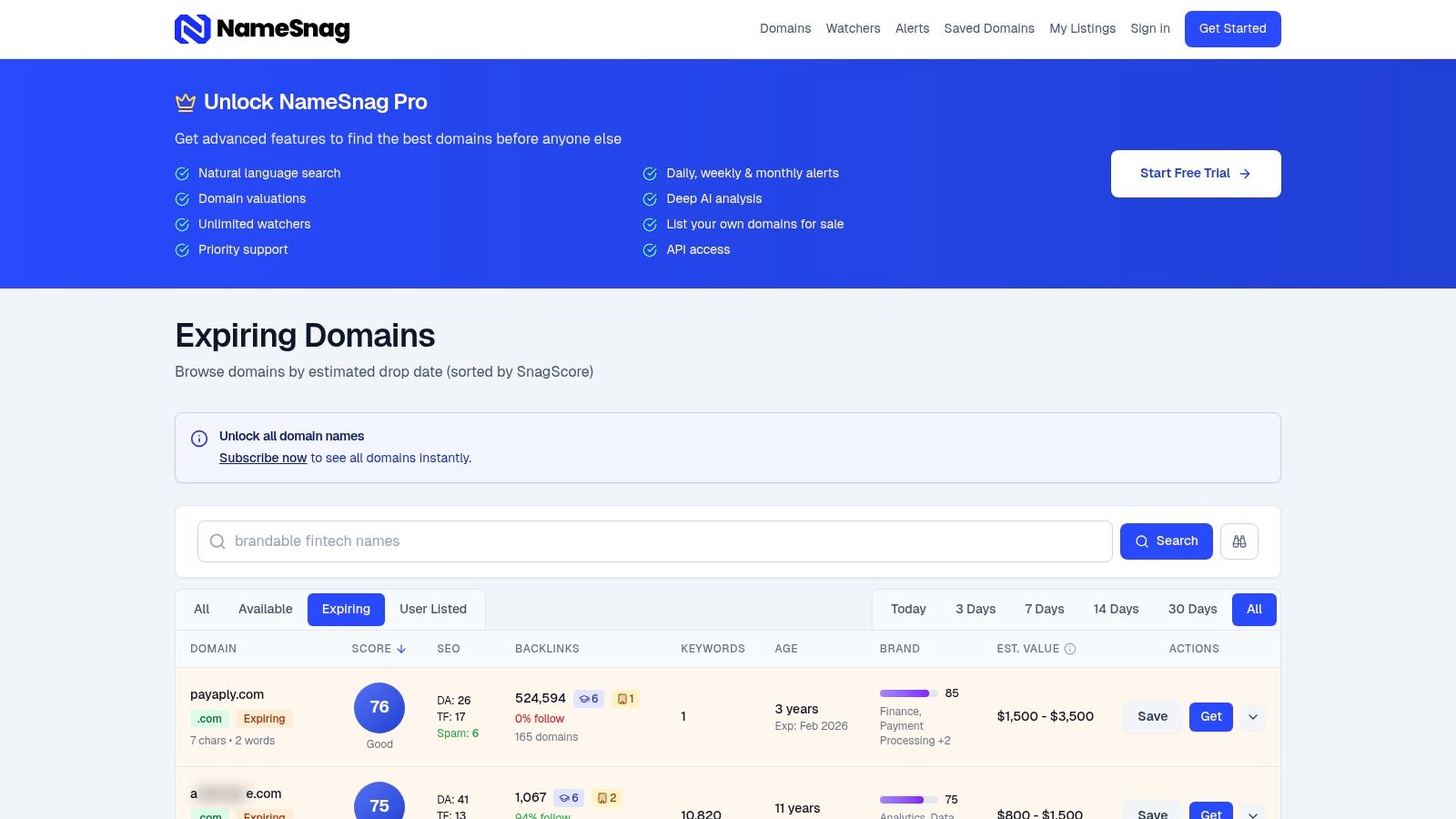
Hunt lane one with recently available domains
The first lane is for domains you can register immediately. These are the names that were dropped and are now open again. For this route, check recently available domains and tighten the time window so you're not sifting through stale scraps.
This lane works best when you want brandable upside at standard registration pricing. You're not expecting every find to have powerful history. You're looking for names that other people missed, mispriced, or failed to appreciate.
What to look for here:
- Clean sound: Favor names that pass the radio test.
- Letter balance: Mixed vowels and consonants usually read better than dense clusters.
- Commercial flexibility: A name that could suit SaaS, e-commerce, media, or service businesses has a wider buyer pool.
- Fast review windows: Use tighter filters like today's drops or the last few days so you're seeing fresher inventory.
Hunt lane two with expiring domains
The second lane is where things get more competitive and more interesting. Expiring domains are still in the grace-period pipeline and may drop soon. Sometimes, within this stage, you can find a name with age, backlinks, and real reuse potential before it hits broader public attention. The best place to review that stream is expiring domains.
The SEO edge usually doesn't sit in ordinary fresh registrations. According to WhoAPI's overview of available five-letter domains, 90% of newly available domains lack SEO history, while significant opportunity is in 170k+ daily expirations, where aged, brandable names with metrics such as DA>20 can resell for 5-10x their cost.
That one point changes the workflow. If you want SEO value, don't just shop for names. Shop for history attached to usable names.
My filtering workflow
Here's the playbook I use when I want to move fast without buying junk:
Start with the time filter
Use a narrow window first. "Today" or the last few days keeps the review set manageable.Screen for pattern quality
CVCVC and similar pronounceable structures go to the top of the pile. Harsh clusters usually go to the bottom.Check the old life of the domain
I want to know whether the prior use looks legitimate, neutral, or obviously abusive.Review backlink context, not just the metric
One clean relevant link can matter more than a pile of garbage links.Decide the intended thesis before buying
Brand flip, SEO build, redirect candidate, or hold. If I can't answer that, I usually pass.
For names you're serious about catching before they fully drop, it helps to understand how a backorder domain service fits into the process. Not every good expiring domain becomes easy pickup inventory.
A short walkthrough makes the workflow easier to picture:
What usually fails
A lot of losing buys follow the same pattern:
- They are short but ugly: Five letters doesn't save a domain that nobody can say.
- They look clever only in your own head: If you need to explain the pronunciation, expect friction.
- They have poisoned history: Cheap domains become expensive when they absorb your time.
- They don't match a buyer type: A name without a clear future owner is hard to price and harder to sell.
The best buys usually feel obvious after you see them. The skill is building a filter that lets you spot that obviousness early.
Five Letter Domains in the Wild Case Studies
The easiest way to develop judgment is to compare different types of five-letter names and ask a simple question: who would actually want this?
ROVER as the real-word winner
ROVER works because it doesn't need translation. It's a common word, easy to spell, and broad enough to support a major consumer brand. Real-word five-letter domains sit at the top of the food chain because the branding work is already done for you.
The trade-off is obvious. They're expensive and rarely available in good extensions. You don't "discover" many of these. You either pay up or get lucky.
VILOS as the brandable operator play
A name like VILOS isn't a dictionary word, but it has shape. It sounds plausible, looks balanced, and could fit software, media, or a service company. This is the sweet middle of the market where many practical buyers live.
These are often the best five letter domains for founders who want a unique brand without forcing weird spelling. If you can say it once and another person can type it back correctly, that's a strong sign.
PLUMB as the keyword-leaning asset
PLUMB shows a different path. It's short, real, and commercially tied to an obvious service category. A name like that can work as a brand, but it also carries built-in relevance for a business use case.
That doesn't mean every service-ish five-letter name is gold. It means some names pull double duty. They read like a brand and still hint at commercial intent.
ZILOS as the modern invented name
ZILOS is the kind of invented five-letter domain tech founders often like. It sounds contemporary. It doesn't feel trapped in one category. It has enough edge to be distinctive without becoming unreadable.
The lesson from all four examples is simple. Winning five letter domains don't all look the same. Some win by meaning, some by sound, some by category fit. What matters is whether the domain gives the next owner a clear advantage.
You Got a Gem Now Build Your Castle
Buying the domain is the fun part. Deciding what to do with it is where discipline shows up.
A strong five-letter domain usually supports one of three plays: build on it, boost an existing asset with it, or flip it. Problems start when people buy with one thesis and then drift into another because they never had a plan.

Build when the name is the story
If the domain is highly brandable, building is often the cleanest move. A five-letter name can anchor a SaaS product, niche publication, agency brand, or e-commerce concept without feeling cramped or generic.
This path works best when the domain has naming power, even if the SEO history is only modest. The domain becomes the front door, not just a tradable chip.
Boost when the history is the asset
Sometimes the name is merely decent, but the existing authority makes it useful. In that case, the value may sit in the aged profile and how carefully you repurpose it. Some buyers build a tightly related site on top of the old domain. Others redirect it to a relevant existing property.
If you're considering the second route, this guide to 301 redirects for SEO gives a solid conceptual grounding for when redirects make sense and when they don't. The key is relevance. A mismatched redirect often wastes the asset.
Aged authority is useful only when you preserve context. If the old domain talked about one thing and the new site talks about something unrelated, don't expect miracles.
Flip when the buyer story is clear
Flipping works when you can describe the buyer in one sentence. "This fits a cybersecurity startup." "This suits a local services roll-up." "This could be an AI tool brand." If you can't imagine the buyer, pricing gets fuzzy.
A good acquisition should already suggest its exit route. If you need help thinking through next steps after purchase, this practical piece on what to do after buying a domain covers the operational side well.
The domain doesn't need to become a castle overnight. It just needs a real plan.
Answering Your Top Five Letter Domain Questions
Are all five letter domains valuable
No. A five-letter string can still be junk. If it's ugly, hard to pronounce, commercially useless, and carrying bad history, the short length doesn't save it.
Do random five-letter .com domains ever matter
Yes, many guides often fall short on this aspect. According to Domain Name Wire's discussion of seemingly random five-letter domains, a common mistake is labeling all non-pronounceable five-letter .coms as worthless, and investor-forum commentary highlighted there points to Chinese buyers prioritizing short .com names, with that market accounting for over 70% of short domain premiums.
That doesn't mean every random string has value. It means you shouldn't dismiss them without checking potential end-user demand.
Should I hunt available or expiring names first
Choose based on your thesis. If you want low-cost brandable shots on goal, available drops make sense. If you want stronger SEO reuse potential, expiring names usually deserve more of your time.
Is pronounceability always required
Not always. It matters a lot for branding, but some non-pronounceable five-letter domains can still attract buyers for reasons that have nothing to do with English phonetics. The buyer pool just changes.
What's the biggest beginner mistake
Buying names because they feel short and "kind of premium" without defining the exit. That's how portfolios fill up with dead weight.
Your First Step into a Larger World
Five letter domains are attractive because they're one of the few corners of digital real estate where a smaller buyer can still develop an edge. You don't need to own the rarest names in the world. You need to judge quality better than the next person.
The opportunity is bigger than many people assume. According to Atom's breakdown of the five-letter domain market, there are approximately 11,881,376 possible five-letter .com combinations, yet premium examples have still appreciated over the past decade, with sales ranging from $2,000 to $2.5 million.
That's the lesson. Massive theoretical supply doesn't make the good ones ordinary.
If you're serious about this niche, start small and stay picky. Review names daily. Pass on most of them. Buy only when the name, history, and use case line up cleanly. Over time, your eye gets sharper, and the market starts looking less like a random pile of letters and more like a board of opportunities.
Treasure hunting is a better metaphor than collecting. The point isn't to grab more. It's to recognize the gem before everyone else does.
If you're ready to start hunting instead of guessing, NameSnag is built for exactly this kind of work. It helps you sort through available and expiring domains, cut out obvious junk, and zero in on five-letter names with real branding or SEO potential.
Find Your Perfect Domain
Get access to thousands of high-value expired domains with our AI-powered search.
Start Free Trial