
You spot a domain that feels almost unfair. It's short, clean, old, and still has traces of authority from a previous life online. Maybe it once belonged to a small software company. Maybe it was attached to a university project. Maybe it handled email for years and then fell out of use.
That's where people get in trouble.
Old email domains can be fantastic acquisitions, but they aren't normal expired domains. They come with memory. Not human memory. Mail memory. Routing history, sender reputation, forgotten logins, stale DNS decisions, and all the little technical leftovers nobody thinks about until something weird starts happening.
I like old domains. I buy them, screen them, and pass on plenty of them. But when a domain has a real email past, I stop treating it like a simple SEO asset. I treat it like a property with old wiring behind the walls. Sometimes that history is exactly what makes it valuable. Sometimes it's the reason you should walk away.
The Allure of the Dusty Digital Attic
A lot of great domain finds start the same way. You're digging through drops, auctions, or forgotten brandables and one name jumps out immediately. It's got age. It looks legitimate. You can already picture it rebuilt into a content site, a lead gen asset, or a startup brand.
Then you notice something else. The domain wasn't just a website. It was an email domain.
That detail changes the whole evaluation.
An old domain with backlinks and brand appeal already has obvious upside. But once a domain has spent years as part of someone's mail infrastructure, it carries a different kind of history. You're not just inheriting links and mentions. You may be inheriting trust, distrust, residual traffic, and technical baggage all at once.
Why old email domains trigger excitement
The attraction is easy to understand. Older domains often come from a less crowded era of the web, when strong one-word and two-word names were still available. Some were attached to real businesses, newsletters, support desks, or entire hosted email systems. That kind of history can create a rare mix of age, recall, and authority.
At the extreme end, Symbolics.com was registered on March 15, 1985, and it's widely cited as the oldest registered domain name still active on the internet. That puts domains from that era at 40+ years old today, which is one reason investors treat very old domains as unusual assets with historical authority and trust signals, as noted in this history of early internet domains and email marketing.
Why the same domain can become a trap
The mistake is assuming age alone makes a domain safe.
A domain that once handled corporate inboxes, forwarding, newsletters, or customer support can have a messy afterlife. Old mail routes may linger. Former users may still receive messages intended for someone else. SaaS accounts may still be tied to that address pattern. The domain may also carry reputation issues that don't show up in a quick backlink scan.
Old email domains reward curiosity. They punish shortcuts.
That's why these domains feel like treasure hunts. The prize can be real. So can the ghosts.
What Exactly Are Old Email Domains
The best way to think about old email domains is to think about classic cars. A well-kept one has style, story, and appeal you can't fake. But buying one without checking the engine is how you end up owning a beautiful headache.
An old email domain is any domain with meaningful historical use as part of an email identity or mail system. That can mean a public-facing provider domain, a business domain that powered employee inboxes, or a personal vanity domain used heavily for years.
Two kinds of old email domains
The first category is the one commonly recognized immediately.
These are domains tied to long-running consumer email providers. Think Yahoo, Hotmail, AOL, and Gmail. Their longevity matters because people don't abandon email identities as quickly as they abandon social accounts or apps. A 2016 survey of live email addresses found gmail.com at 17.74%, yahoo.com at 17.34%, hotmail.com at 15.53%, and aol.com at 3.2%, which shows how entrenched long-running domains remained even as newer providers emerged, according to this list of popular email domains.
The second category is more interesting for acquisition work.
These are privately owned domains that once handled company email, personal branded inboxes, nonprofit communications, or old hosted webmail. They may not be famous, but they often have richer hidden history. A business might have used a domain for support tickets, invoices, outreach, or customer replies for years before the site disappeared.
What makes a domain “an email domain”
A domain doesn't need to be famous to count. If it spent years functioning as an identity layer for inboxes, it matters. That history can influence:
- Perception: People may still recognize or trust the name from prior use.
- Residual activity: Old contacts, spam, resets, and misdirected messages may continue long after the original owner is gone.
- Technical complexity: Historical mail records and provider dependencies often outlive the visible website.
Here's the quick-reference view.
| Provider | Era of Popularity | Common Risk/Consideration |
|---|---|---|
| Gmail | Long-running modern era | Huge installed base, but popularity doesn't automatically make a reused domain strategy relevant for acquisition |
| Yahoo | Legacy consumer webmail era into modern use | Familiarity is strong, but legacy trust issues can affect how platforms treat the address |
| Hotmail | Early mass-market webmail era | Long brand memory, but older Microsoft-linked identity patterns can create friction |
| AOL | Early consumer internet era | Recognizable and sticky, but often associated with older user bases and legacy infrastructure |
| Private company domains | Varies by business lifecycle | Can carry valuable authority or messy operational history depending on prior mail use |
Why this matters more than people think
A lot of domain buyers still evaluate old domains like they're only websites. That misses the point. Email use leaves a longer trail than most site content does. People keep old contacts. Services keep old account ties. Providers keep opinions.
A domain can be dead as a brand and still very alive as an email artifact.
That's why old email domains need a different level of due diligence from the start.
The SEO Gold Rush Why Old Domains Are Valuable
The upside is real, and it's why people keep hunting these names.
An old domain can give you a running start that a fresh registration cannot. Age, link history, memorability, and prior legitimacy all help. No single metric guarantees results, but when those signals line up, the domain starts with an advantage.

Age still matters
A domain that has existed for decades carries a kind of digital permanence. It has had time to be cited, remembered, linked, and revisited. Even when search engines don't reward age in a simplistic way, older domains often have stronger surrounding signals because they've had more time to earn them.
That's why names from the earlier internet feel special in the market. They weren't born yesterday, and everyone can tell.
Backlinks are where the real leverage lives
The best old domains don't just have age. They have evidence of prior relevance.
That could mean mentions from industry sites, resource pages, old press coverage, or references embedded in long-lived documents and directories. If those links are natural and topically sane, you're not starting from zero. You're inheriting a history of being worth citing.
I'm especially interested when the old domain had email-connected business use and the backlink profile still points to real commercial or editorial activity rather than spam. That usually tells you the domain wasn't just registered early. It was actually used by people who mattered in its niche.
If you're trying to understand how a domain or brand is still being referenced by AI systems, tools for tracking AI citations can add a useful modern layer to classic backlink analysis.
Good names from the old web are harder to replace
Short names, clean words, and naturally brandable combinations were easier to secure in earlier internet eras. That scarcity is a huge part of the appeal. A strong old domain can work as an SEO asset and a branding asset at the same time, which is rare.
That's also why investors pay attention to expired-domain traffic patterns and link persistence. Name quality without residual authority is nice. Name quality with surviving authority is far better. This breakdown on traffic from expired domains captures that dynamic well.
What buyers usually want in the sweet spot
- Natural link history: Links from relevant sites beat random volume.
- Memorable wording: If the name sounds credible out loud, it's easier to reuse.
- Clean topical continuity: A finance domain with old finance links is easier to repurpose than a domain with chaotic history.
- Proof of real use: Former business activity is often more valuable than an empty parked past.
The best old domains don't feel “expired.” They feel interrupted.
That's the gold-rush logic. You're looking for interrupted assets, not dead ones.
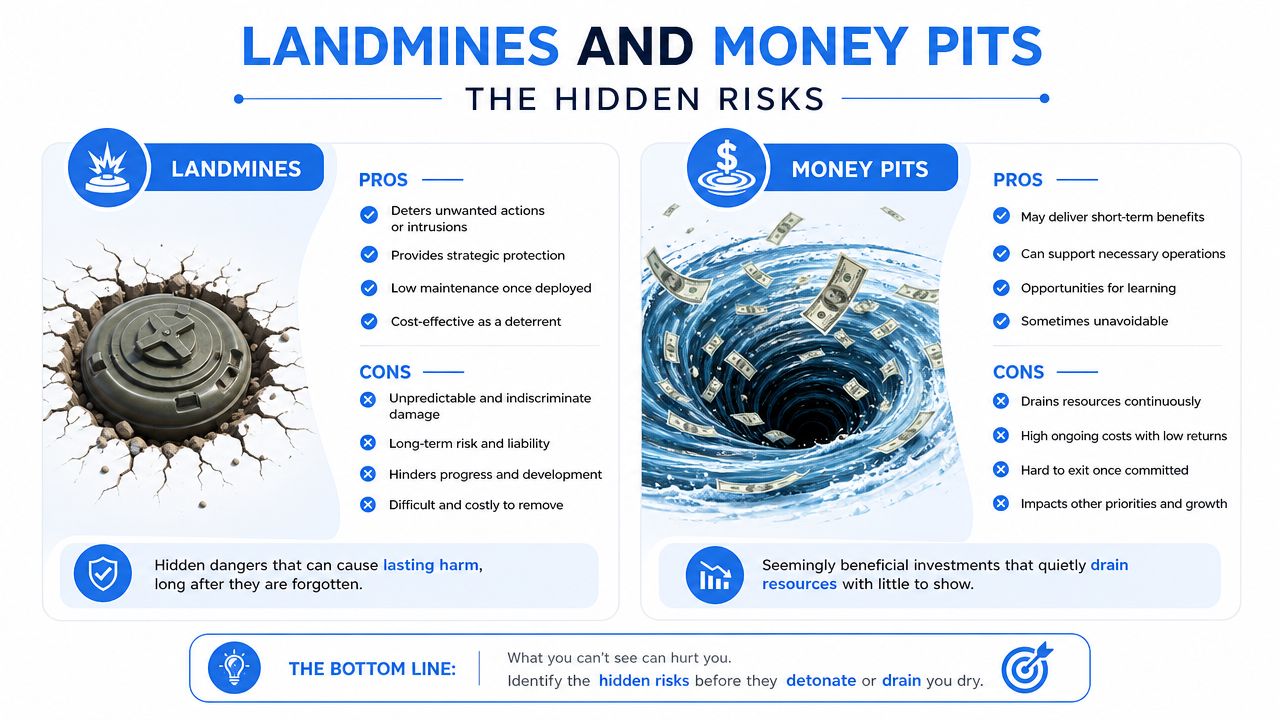
Landmines and Money Pits The Hidden Risks
However, old email domains stop being romantic.
A lot of buyers know to check whether a domain was spammed. Fewer people think about what happens when the domain's email history keeps affecting it after the site is gone. That's where the nastiest surprises live.
Legacy trust problems are real
A domain can look clean in a branding sense and still perform badly in practice because of how platforms interpret older mail patterns.
Many modern SaaS tools and inbox providers treat legacy free-mail domains, including those associated with Yahoo or Microsoft ecosystems, as low-trust or even blocklisted infrastructure, which can create signup friction and deliverability problems regardless of the individual user's own reputation, as discussed in this analysis of email-domain trust issues.
That matters even if you're not buying one of those exact domains. The lesson is bigger than Yahoo or Outlook. Provider-level reputation can override your personal intentions fast.
Old routing can create very current problems
This is the part many buyers never check.
An old email domain may have a long tail of forgotten systems attached to it. Newsletter tools, invoicing platforms, support tools, user accounts, forwarding rules, old mailbox aliases, and stale references in archived docs can all keep interacting with that domain after ownership changes.
That can create several headaches:
- Misdirected email: Messages intended for the former owner may keep arriving.
- Brand contamination: People may associate your new project with the old one.
- Unexpected account ties: Password reset flows and service notifications can still target legacy addresses.
- Support burden: You may end up fielding mail that has nothing to do with your business.
If you're checking how much exposure an old email identity may still have across services, a tool that helps discover your linked accounts can be useful as a thought framework, even if your core due diligence still has to go deeper.
Some domains are expensive because they're broken
Buyers often overpay for age and underprice cleanup.
A domain with years of email use can require more work than a younger, cleaner alternative. You may need to investigate prior sender reputation, historical reputation damage, or whether the domain has a pattern of low-quality associations. A bad acquisition here doesn't just fail to help. It burns time, introduces risk, and muddies a future brand.
That's why I care more about the domain's operational reputation than its birthday. This overview of domain name reputation is worth reading before buying anything with a complicated past.
Red flags that make me pause
- Provider baggage: If the domain sits too close to legacy free-mail trust problems, I get cautious.
- Identity confusion: If old branding and new branding would collide, expect friction.
- Mail-heavy history with no transparency: If you can tell it did a lot of email work but can't tell what kind, that uncertainty has a cost.
- “Too good to be true” pricing: Sometimes it's cheap because someone else found the mess first.
A pretty backlink profile won't save a domain that carries years of mail-related distrust.
Old email domains can absolutely be assets. But some of them are money pits with a nice origin story.
How to Snag a Diamond from the Digital Rough
The buying process needs to be stricter when email history is involved. I don't mean more complicated. I mean less sentimental.
If a domain looks promising, I run it through a practical screen before I care about the logo ideas or the flip potential.
Start with the history, not the hype
The first question is simple. What was this domain used for?
If it was a business site with normal public content and modest email use, that's one profile. If it was heavily tied to hosted mail, support systems, or reseller infrastructure, that's another. You want to know whether email was a side function or the entire identity of the domain.
A strong manual pass usually includes:
- Archived website review: Look at old snapshots and figure out its actual use case.
- Brand consistency check: Compare old branding to your intended use. If they clash badly, think twice.
- Mail-history clues: Watch for signs the domain was centered around inboxes, support, forwarding, or hosted communications.
Check for mail infrastructure residue
This is the step people skip because it's boring. It's also the step that prevents dumb purchases.
Security researchers showed that an expired mail-server hostname could be re-registered for roughly $8 and then used to receive email for affected domains by exploiting legacy MX configurations, which is exactly why historical DNS and mail-routing checks matter before you buy, as detailed in this expired-domain email interception report.
That doesn't mean every old email domain is dangerous. It means historical mail setup isn't trivia. It's part of the asset.
Practical rule: If a domain has deep email history and you can't get comfortable with its past routing story, skip it.
Evaluate authority and contamination together
A lot of buyers separate “SEO value” from “email risk” like they're different deals. They're not. They're the same deal.
When I review a candidate, I want both of these to be true:
- The domain has a credible authority story.
- The domain does not come with enough email baggage to cancel out that value.
That's why broad expired-domain process matters. A good primer on how to find expired domains helps frame the hunt, but with old email domains you need one extra layer of skepticism.
A practical hunt workflow
If you're actively sourcing, I'd split the search into two lanes.
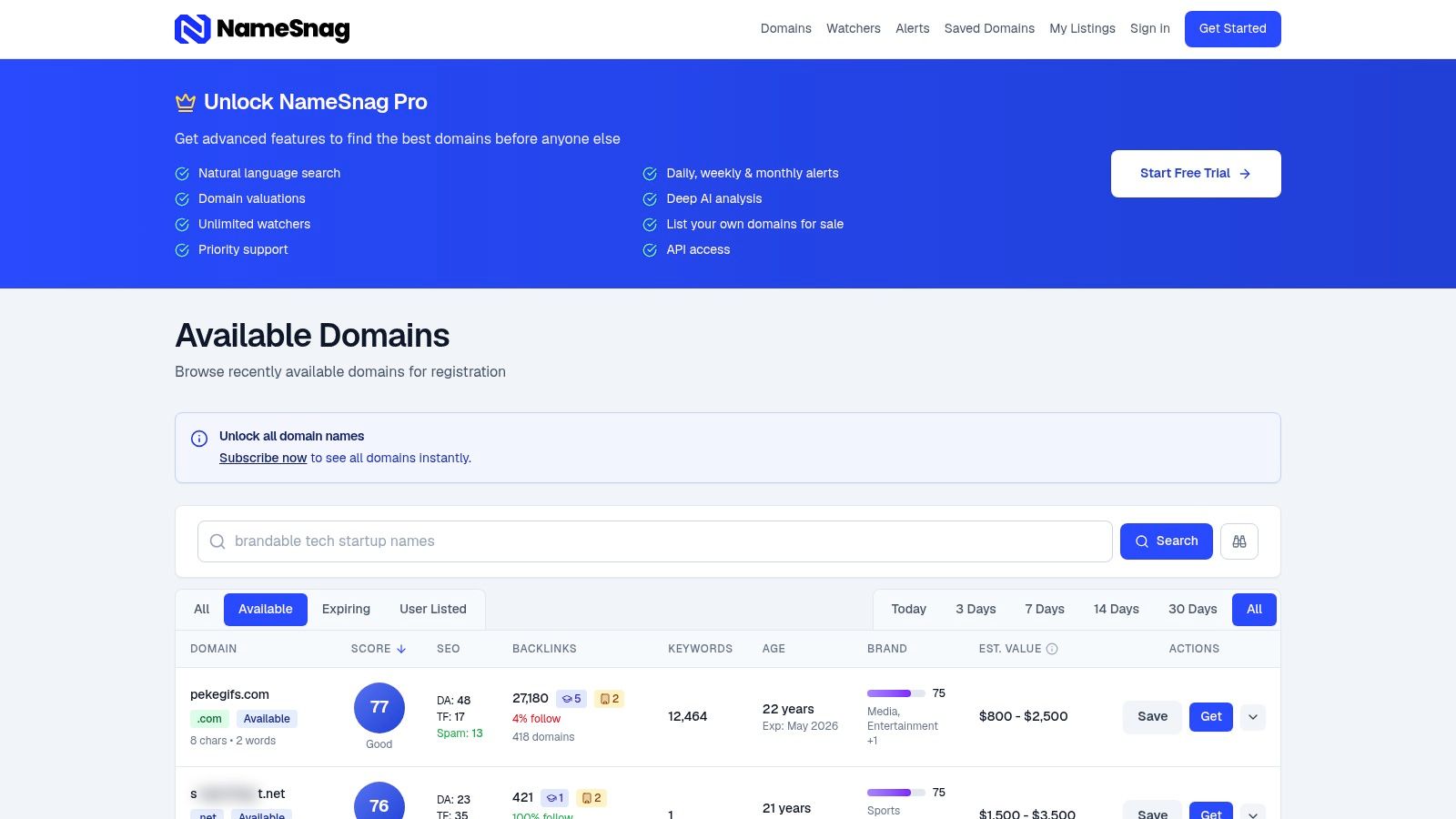
One lane is for domains you can act on immediately. Browse available domains and narrow your list to names that look brandable, older, and commercially plausible.
The second lane is for domains that haven't fully dropped yet. Browse expiring domains, then use the time filters like 3 Days, 7 Days, or 14 Days to focus on names close enough to research properly without drowning in noise.
From there, keep your process tight:
- Filter for relevance first: Don't start with age alone. Start with names you'd want to own.
- Inspect the backlink pattern: Natural editorial links beat inflated junk every time.
- Look for signs of mail-heavy past use: Support, hosting, forwarding, or webmail clues deserve extra scrutiny.
- Make a reuse decision: Build on it, redirect it, or pass. Indecision usually means the domain isn't clean enough.
The best finds don't require mental gymnastics. When a domain is right, the history supports the acquisition instead of forcing you to explain it away.
Your Final Go or No-Go Checklist
A good old email domain should make sense on paper and under pressure. If you have to keep inventing reasons to ignore the weird parts of its history, that's your answer.

Run through this before you buy:
Go signals
- The name still works today: It sounds credible, useful, and reusable.
- The backlink profile looks earned: The links fit a real former business or project.
- The history is understandable: You can explain what the domain was and why it went dormant.
- Email use appears manageable: Nothing suggests ugly operational leftovers.
No-go signals
- You're buying age instead of quality: Old isn't enough.
- The domain has trust friction: If signup or deliverability problems are likely, that cost follows you.
- The past use is murky: Unclear history usually means more cleanup than you expect.
- The domain doesn't fit your intended use: Metric chasing is how investors end up holding awkward inventory.
The bigger point is simple. The value of old email domains changes as provider policies tighten, so you need to judge current operational usefulness and deliverability reputation, not just age or former popularity, as explained in this deliverability-focused discussion of changing email domain value.
Buy old email domains for what they are now, not for the story you wish they still told.
If you want a faster way to sort promising domains from junk, NameSnag is worth a look. It's built for finding expired and expiring domains with real SEO and branding potential, which makes it useful when you're screening older names that need more than a surface-level glance.
Find Your Perfect Domain
Get access to thousands of high-value expired domains with our AI-powered search.
Start Free Trial