Domain flipping is really just buying an undervalued domain name and selling it for a profit. The game is to find a valuable name, snag it for a low price—often just the standard registration fee—and then sell it to an interested buyer for a healthy margin.
Think of it as digital real estate. It's that simple.
Your Guide to Digital Real Estate Investing
Welcome to the wild world of domain flipping. Forget physical land; here, you're investing in digital property. And no, this isn't some get-rich-quick scheme. It's a strategic business that pays off when you do your homework, stay patient, and develop a sharp eye for what makes a domain truly valuable.
This guide is your complete playbook. I'm going to cut through the fluff and show you exactly what gives a domain name its worth, where to hunt for the hidden gems, and how to price them for the best possible return.
Consider this your roadmap for navigating the domain market, from finding killer opportunities to closing the final sale. This flowchart breaks down the entire process into four core stages.
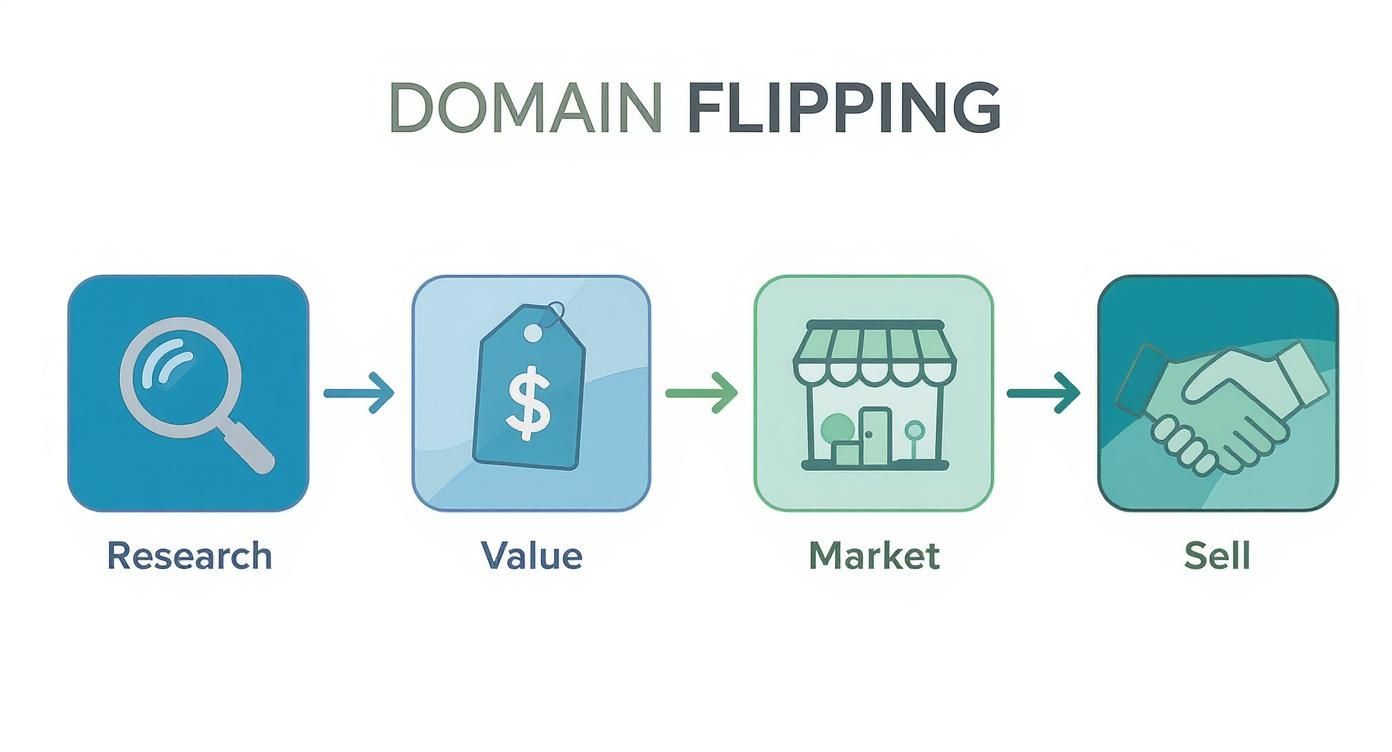
As you can see, the path from discovery to profit is a clear, repeatable process. Anyone can learn it.
The Modern Domain Flipper's Mindset
While a quick flip is always nice, the market has grown up. A 2025 survey showed that successful domain flipping is now more of a long-term investment game. Almost half of investors—about 48%—hold their domains for three years or more before selling.
That tells you something important: patience is a massive part of the formula now. This long-game approach means you need to pick domains with real, lasting appeal. If you want to dig deeper into this strategy, check out our detailed guide on domain name investment.
The king of top-level domains (TLDs) is, and has always been, .COM. It captures a whopping 65% of investments, which is five times more than the next in line, .ORG, at 13%.
This data hammers home a crucial point, especially for beginners: focusing on high-quality .COM domains and being ready to sit on them is a proven path to making money.
To give you a clearer picture, here’s a breakdown of how the whole process works from start to finish.
The Four Core Stages of a Profitable Domain Flip
This table breaks down the entire domain flipping process into four key stages, giving you a clear overview of the journey from discovery to profit.
| Stage | What You Do | Primary Goal |
|---|---|---|
| 1. Research & Sourcing | Hunt for undervalued domains across auctions, expiring lists, and marketplaces. You're looking for hidden potential. | Find domains with brandability, SEO value, or commercial appeal that others have missed. |
| 2. Valuation & Acquisition | Analyze key metrics like traffic, backlink history, and brand potential. Screen for any past penalties. | Accurately determine a domain's market value and acquire it for the lowest possible price. |
| 3. Value Enhancement | Perform quick fixes. Set up a simple landing page, clean up the backlink profile, or create a basic brand concept. | Increase the perceived and actual value of the domain to justify a higher selling price. |
| 4. Listing & Selling | List the domain on relevant marketplaces, reach out to potential buyers directly, and negotiate the final sale. | Sell the domain for the highest possible profit, handling the transfer smoothly and securely. |
Each stage requires a different skillset, but mastering this cycle is what separates the pros from the hobbyists.
Core Principles for Success
To actually succeed at this, you need to internalize a few core ideas that separate the profitable investors from everyone else.
- Value is Subjective but Measurable. A domain's worth is tied to concrete things: its brandability, keyword relevance, length, and history. You need to learn how to measure these.
- Patience Pays Dividends. The perfect buyer might not show up tomorrow. Holding a quality asset is often the most profitable move you can make. Don't get antsy.
- Research is Non-Negotiable. Never, ever buy a domain without checking its history, trademark status, and backlink profile. A few minutes of due diligence can save you thousands.
Ready to start building your digital portfolio? Let's dive in.
How to Find Domains That Actually Sell
Alright, let's get into the treasure hunt. This is the single most important skill in the whole game. Forget sitting there randomly typing clever phrases into a registrar—that's a lottery ticket, not a business plan. The real money is made by strategically sourcing domains that already have a history.
The difference between a profitable flip and a worthless registration fee boils down to one thing: your sourcing strategy. You're looking for domains that already have a story, a little bit of SEO history, and some built-in authority. This is where the magic of expired and expiring domains comes in.
The Goldmine of Expired and Expiring Domains
Think about it for a second. An expired domain isn't just a name. It's a digital asset that someone once valued enough to build a business or project on. It might have backlinks from authoritative sites, a decent age, and maybe even a trickle of leftover traffic. Getting all that for the price of a standard registration? That's the core of smart domain flipping.
This is where specialized tools become your absolute best friend. I personally use platforms like NameSnag to sift through the daily flood of dropped domains. It saves me from hours of manual, soul-crushing research.
For instance, you can find incredible opportunities by looking for Available domains. These are names that have completed their entire expiration cycle and can be registered immediately by anyone, at any registrar, for the standard fee. It's the fastest way to acquire a valuable asset.
This is a real-time look inside NameSnag, showing Available domains that dropped today.
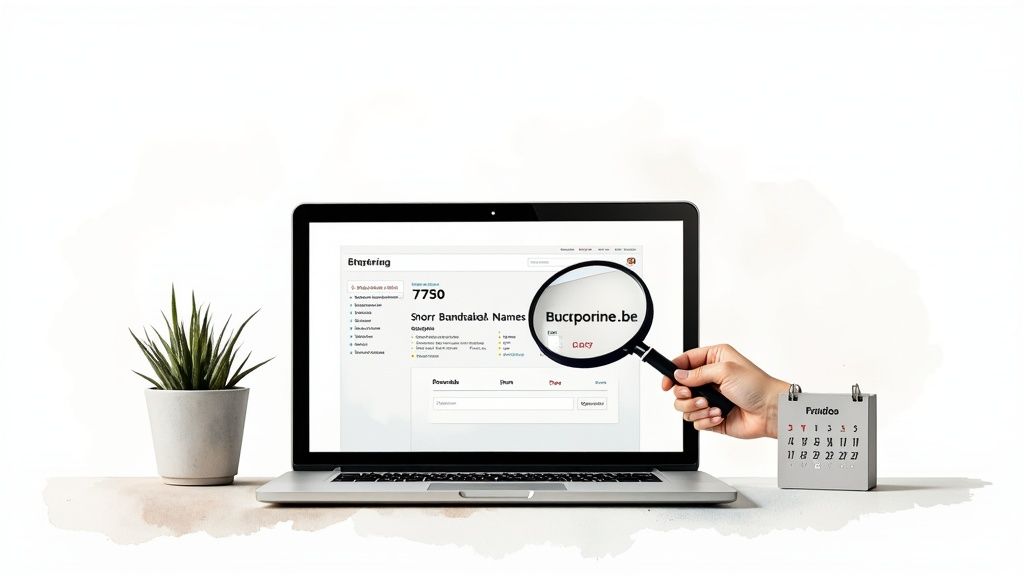
You can see key metrics like domain age and backlink counts at a glance, which helps you spot the potential winners in seconds.
A More Strategic Approach to Sourcing
For a more calculated move, I often switch my focus to Expiring domains. These are domains that have expired but are still in their redemption grace period, meaning they're about to drop. This approach gives you a crucial window of time—typically a few days or weeks—to do your homework.
Pro Tip: When you're hunting, use time filters to your advantage. I often set my search to "3 Days" or "7 Days" to focus on the freshest opportunities and avoid analyzing domains that have already been picked over by other investors.
This research phase is non-negotiable. It's your chance to analyze the domain's backlink profile, check its history on the Wayback Machine, and make damn sure it wasn't used for something spammy. By the time it drops, you'll know with confidence whether it's worth grabbing. To really master this, you need to understand the best ways to find expiring domains before they hit the open market.
What Makes a Domain a "Winner"
Beyond using the right tools, you need to develop an instinct for what makes a domain truly valuable. It's not just about raw SEO metrics; it's about brandability and commercial appeal.
Here’s a quick mental checklist I run through when I'm evaluating a potential flip:
- The Radio Test: Can you say the domain name out loud without needing to spell it? If someone hears "Get-The-Best-Number-4-Less.com," they'll be completely lost. But
SimpleLeads.com? That passes with flying colors. - Brandability: Does it sound like a real brand? Is it catchy, memorable, and professional? Short, punchy names often carry a much higher perceived value.
- .COM is King: While other TLDs (.net, .co, .io) can be valuable, the .com extension still holds the most authority and trust for most buyers. If you're just starting out, sticking to .coms is your safest bet.
- Keyword Richness: Does the domain contain a keyword with commercial intent? Something like
DenverPlumbers.comhas obvious, built-in value to a specific type of business. These are often far easier to sell than abstract brand names. - Avoid Red Flags: Stay away from domains with hyphens, numbers, or weird spellings. They're harder to remember and often look spammy. Also, be vigilant about potential trademark infringements—a quick search can save you a world of legal headaches down the road.
Combining a powerful sourcing tool with a sharp eye for these qualities is the secret sauce. It’s how you consistently find domains that people actually want to buy. Stop guessing and start hunting with a plan.
Valuing a Domain Without Guessing
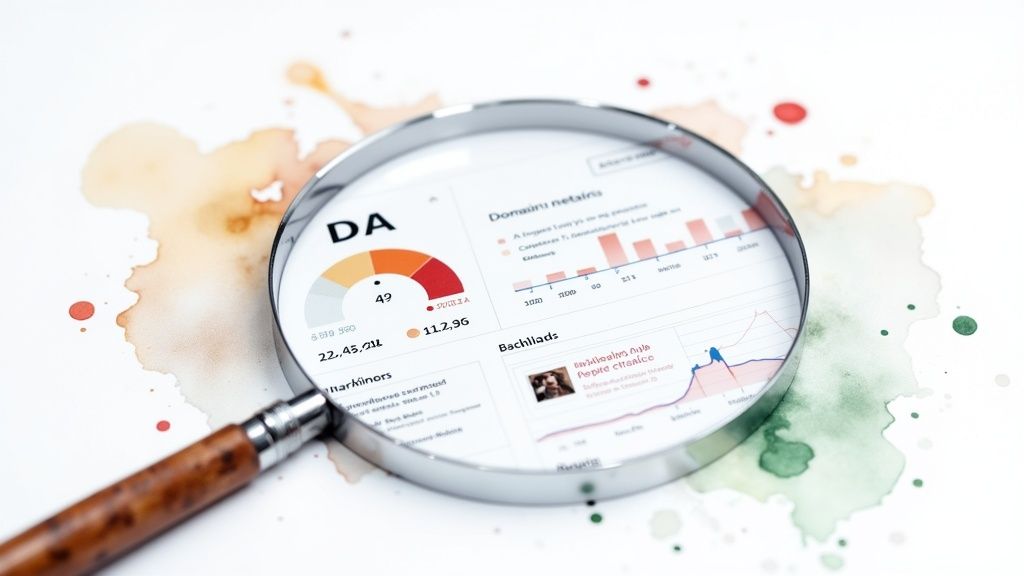
So you’ve found a domain. It passes the radio test, it feels like a winner, and you're already picturing the payout. Now for the million-dollar question—or hopefully, the ten-thousand-dollar question—what is it actually worth?
This is where so many aspiring flippers crash and burn. They either slap a fantasy price on a mediocre name or, worse, let a true gem go for pennies because they didn't know what they had.
Valuation is part art, part science. Your gut instinct for a killer brandable name is a great start, but you can’t take gut feelings to the bank. Serious buyers want to see data. They want history. They want proof of potential. Let’s break down the due diligence that separates a wild guess from a calculated, defensible price tag.
Digging into the Domain's Past
Every expired domain has a history, and you absolutely must play detective before pulling the trigger. A domain with a squeaky-clean past is infinitely more valuable than one that was used for a spammy link farm. Your first stop should always be the Wayback Machine (Archive.org).
This amazing tool lets you see snapshots of what was on that domain over the years. You’re looking for a few key things:
- Legit Use: Was it a real business? A personal blog? A legitimate project? A history of actual, honest use is a huge green flag.
- Spam Signals: If you click through a few snapshots and see pages full of gibberish text, casino links, or foreign-language spam, just walk away. It’s not worth the headache.
- Consistent Niche: A domain like
HealthyDogTreats.comthat was always a blog about pet nutrition carries more weight. That history builds topical authority that a new owner can inherit.
A clean bill of health from the Wayback Machine is your first major checkpoint. A shady past can torpedo a domain's value, no matter how good the name sounds.
Decoding the SEO Metrics That Matter
Beyond how it looked, a domain's real power is often buried in its SEO equity. This is the "built-in" authority that search engines already grant the name, and it’s what separates a $12 hand-registration from a $5,000 asset. For this part, tools like Ahrefs, Moz, or Semrush are indispensable.
The single most important metric is the backlink profile. A backlink is just a link from another website to this domain. Think of them as votes of confidence. High-quality backlinks from trusted, relevant sites are pure gold.
You're analyzing two things: quantity and quality.
- Quantity (Referring Domains): How many different websites link to this domain? Ten links from ten separate sites are far more valuable than ten links from just one.
- Quality (Authority & Relevance): Are the links coming from authoritative places like news sites, university pages (.edu), or respected industry blogs? Or from spammy blog comment sections? A single link from a major publication can be worth more than a thousand junk links.
A strong backlink profile is like inheriting a network of powerful endorsements. The new owner doesn't have to start from scratch, which saves them thousands of dollars and months of SEO effort. That's the value you're selling.
Another key metric is Domain Authority (DA) or Domain Rating (DR). These are scores (usually out of 100) that SEO tools use to predict a website's ranking potential. While it’s not a direct Google ranking factor, it’s a great at-a-glance indicator of a domain's overall strength. A domain with a DA of 20+ is already in a different league than a brand new one with a DA of 1. If you want to get a better handle on this, you can learn more about what goes into the Moz Domain Rating and how it works.
The Red Flag Checklist
As you're digging through the data, keep an eye out for these deal-breakers. Any one of them can turn a promising domain into a toxic asset.
- High Spam Score: Tools like Moz provide a "Spam Score" that flags potential penalties. Anything above a low single-digit score warrants extreme caution.
- Irrelevant Backlinks: Does your domain about dog training have hundreds of links from Russian gambling sites? That's a huge red flag for spammy link-building that Google has likely penalized.
- Trademark Troubles: This is the most important check of all. Before you buy, search the USPTO (United States Patent and Trademark Office) database. Do a few simple Google searches. Does the name infringe on an existing brand? Even a close variation can land you in legal hot water and make your investment worthless. Never skip this step.
By moving beyond simple guesswork and using a data-driven approach, you can confidently figure out what a domain is truly worth and back up your asking price with cold, hard facts.
How to Boost Your Domain's Value Before Selling
You’ve done the hard work, navigated the digital wilderness, and snagged a domain with serious potential. Now what?
You could rush to list it immediately, but that's like finding a vintage car in a barn and trying to sell it before even dusting it off. A little bit of prep work—what I call the 'staging' phase—can dramatically increase its perceived value and your final sale price.

This is where you shift from a hunter to a marketer. Your goal is to help potential buyers see the same vision you saw. Don't make them work for it; spell out the potential and make your domain look like an unmissable opportunity.
Ditch the Default and Build a Pro Landing Page
The single biggest mistake I see flippers make is leaving the default "This Domain is For Sale" page up. It’s bland, uninspiring, and frankly, it screams "amateur." Instead, put up a simple, professional 'For Sale' landing page. This is your digital storefront, and it needs to look the part.
A good landing page does more than just state a price. It sells the dream.
- Highlight Key Metrics: Clearly display the domain's age, Domain Authority (DA), and the number of referring domains. These are the stats serious buyers actually care about.
- Suggest Potential Uses: Don't assume buyers can see the potential. List out 3-5 business ideas or brand concepts the domain is perfect for. For
ArtisanCoffeeSupply.com, you could suggest an e-commerce store, a coffee roaster's blog, or a subscription box service. - Provide Clear Contact Info: Make it incredibly easy for an interested party to reach out. Include a simple contact form or a professional email address to start the conversation.
This simple step transforms your domain from just a name into a tangible business opportunity in the buyer's mind. It shows you're a professional who understands the asset's real value.
The Power of the Build-to-Sell Approach
If you're willing to go a step further to attract buyers looking for a turnkey asset, the 'build-to-sell' strategy is where the real money is. This doesn't mean you need to build a full-fledged company. It just means demonstrating the domain's viability with a minimal amount of effort.
A basic one-page website or a simple blog with a few well-written articles can work wonders. This proves the domain can be developed and can attract an audience. This small investment of time can seriously boost the domain's appeal, especially for buyers who want a head start.
A domain is just a name. A domain with a basic, well-designed site attached to it is a business-in-a-box. This small distinction can easily double or triple your asking price by attracting a different caliber of buyer.
This approach taps into a huge market. The website and domain flipping worlds are closely linked, and with the website flipping market expected to double by 2025, more buyers are hunting for assets with an existing online presence. Data shows that domain names contribute approximately 40% to a flipped website's value, which highlights how even a simple buildout can dramatically increase your profit. If you want to dive deeper, you can read the full research on website flipping statistics.
Small Touches That Make a Big Impact
You don't always need to build a full site to stage your domain effectively. Sometimes, it's the smaller, creative touches that help a buyer visualize the future and justify paying a premium.
Here are a few high-impact, low-effort ideas I've used:
- Create a Concept Logo: Use a free tool like Canva to design a simple, professional logo concept. Slapping this on your landing page instantly makes the brand feel more real.
- Compile Niche Research: Put together a one-page PDF with some basic market research. Include stats on the niche's growth, target audience demographics, and top competitors. This shows you've thought deeply about the domain's commercial potential.
- Secure Social Handles: If they're available, register the matching social media handles (Twitter, Instagram, etc.) for the domain name. Offering these as part of the package is a fantastic value-add that costs you nothing but a few minutes.
By investing a little time in staging, you're not just selling a domain name; you're selling a vision. You’re making it easy for the buyer to say "yes" and making your asset stand out in a very crowded marketplace.
Closing the Deal: Selling Your Domain Like a Pro
You’ve done the hard work of digging for gold, and now you’ve got a nugget in your hands. It's time for the best part: getting paid.
How and where you list your domain is just as critical as the research you put into finding it. The right platform and a smart strategy can mean the difference between a quick, profitable sale and a domain that just sits there, gathering digital dust for years.
Let's walk through how to navigate the sales process with confidence. Don't just toss your domain onto a random marketplace and cross your fingers. A strategic approach is what separates the pros from the hobbyists and maximizes your return.
Choosing Your Sales Arena
Not all domain marketplaces are built the same. They cater to different buyers, charge different fees, and offer wildly different tools. Picking the right one is like choosing the right neighborhood to sell a house—you want to be where your ideal buyers are already shopping.
Here's a quick rundown of the big players I use:
- Sedo: One of the oldest and largest marketplaces out there, Sedo boasts a massive global audience. It's a fantastic all-around choice, especially for those juicy keyword-rich and generic domains. Their commission is typically around 15%.
- Afternic: Since it's owned by GoDaddy, Afternic gives you incredible reach. It syndicates your listing across a huge network of registrars, so when someone searches for your domain at a partner site, your "for sale" sign pops right up. The commission is generally 20%, but it can be lower for domains registered directly with GoDaddy.
- Dan.com: Dan.com is a favorite among many domainers for its slick, clean interface and seller-friendly tools. You get more control over your listings and a tiered commission structure that often starts at a lean 9% if the buyer comes through their platform directly.
There's no single "best" platform. In fact, many successful flippers list their domains on multiple marketplaces at once to cast the widest net possible. The real key is understanding where your specific domain is most likely to find its perfect owner.
Setting Your Sales Strategy
Once you've picked your marketplaces, you need to decide on price. Just listing a domain with "Make Offer" can work, but it's an open invitation for a flood of time-wasting, lowball offers. A more structured approach usually gets much better results.
You've really got three main paths:
- Buy It Now (BIN): This is your fixed, take-it-or-leave-it price. It’s clear, straightforward, and attracts serious buyers who are ready to pull the trigger. Setting a BIN price signals confidence and often leads to faster sales by cutting out the back-and-forth.
- Accepting Offers: This can be a smart move if you're a bit fuzzy on a domain's exact value, or if it's a unique, brandable name with a wide valuation range. It opens the door to a conversation but requires patience and a steady hand in negotiations.
- Auctions: This is the big leagues, best reserved for high-demand, premium domains that you know will attract a bidding war. An auction creates a sense of urgency and can drive the price sky-high, but it's a terrible choice for an average domain that might not even get a single bid.
My Personal Tactic: I almost always set a reasonably high "Buy It Now" price but also enable the "Make Offer" option. This anchors the domain's perceived value up high, which scares off the worst of the lowballers, but it still leaves the door open for a serious, negotiated sale with a motivated buyer.
Crafting a Listing That Sells a Vision
Your domain listing is your sales pitch. A lazy, one-sentence description will get you exactly what it deserves: lazy, low-value offers. A great description, on the other hand, sells a vision. It helps a potential buyer see the future business, blog, or brand they could build.
Before you type a single word, ask yourself this: Who is my ideal buyer?
Are you selling to a startup founder hunting for a killer brand? A local plumber who needs a keyword-rich domain to get leads? An affiliate marketer planning their next niche site?
Speak directly to that person.
- For a Brandable Domain: Talk about how memorable and modern it is. Evoke a feeling. For a name like
Zenify.com, you’d want to highlight its connection to mindfulness, tech, and the booming wellness app market. - For a Keyword Domain: Focus squarely on the commercial intent and SEO power. For
BostonRoofRepair.com, you need to spell out the obvious benefits—its authority, its ability to rank locally, and its power to generate high-value leads right out of the gate.
The Art of Negotiation
If you're accepting offers, get ready to play the game. Your first offer will almost certainly be a lowball. Don't get offended or fire back an angry email; it's just the opening move.
Here are a few tips for handling negotiations like you've done this a thousand times:
- Never Accept the First Offer. It's almost never their best price. Think of it as a conversation starter.
- Counter Reasonably. Don't just hit "decline." Send back a counteroffer that’s a bit below your BIN price. This shows you're willing to talk but that you're firm on the domain's value.
- Be Patient. Don't look desperate for a sale. Sometimes, just waiting a day or two before responding to an offer can work wonders. It signals you're not in a rush.
- Know Your Walk-Away Price. Before you even start, decide on the absolute minimum you'll accept. Don't let emotion or a pushy buyer talk you down below it. Stick to your guns.
Once you and the buyer agree on a price, the final step is a secure transfer. Always use a trusted escrow service, like the ones built right into Sedo, Afternic, or Dan.com. Escrow protects both of you by holding the funds until the domain has been successfully transferred, guaranteeing a safe and smooth close to your profitable flip.
Your Top Domain Flipping Questions, Answered
Jumping into domain flipping feels a bit like learning a new language. You get the basic idea, but the practical, "what if" questions always start bubbling up. Let's run through some of the most common ones I hear from people just getting their feet wet.
How Much Money Do I Need to Start Flipping Domains?
This is the big one, and the answer is probably a lot less than you're imagining. You can absolutely get started with a budget of just $100 to $200. Seriously.
A typical domain registration runs about $10-$15 a year. The real magic happens when you find a killer domain that just expired—you can often grab it for that same standard registration fee. This is where a good tracking platform becomes your best friend. For instance, you can browse through Available domains on NameSnag right now and see what's out there for the price of a fancy coffee.
Your biggest initial investment won't be cash; it will be the time you spend digging for gold. It's infinitely better to buy one fantastic domain for $12 than ten mediocre ones that will just sit there collecting dust. I'd strongly recommend staying away from the high-stakes, big-money auctions until you have a few profitable flips under your belt and a bit more capital to play with.
How Long Does It Take to Sell a Domain?
Ah, the million-dollar question with no single answer. This is easily the most unpredictable part of the business, and it’s where patience becomes your most valuable asset.
A really hot, keyword-rich domain might get snatched up within a few weeks if the right buyer happens to be looking. But that's the exception, not the rule. It's far more common for a good domain to sit on the market for six months to two years, and sometimes longer.
You're not just selling a product off a shelf; you're waiting for that one perfect buyer who sees the exact same potential in the name that you do. It’s like fishing—you cast your line and wait for the right one to bite.
This is exactly why you should only ever invest what you're comfortable having tied up for a while. And always, always factor in the annual renewal costs. If a domain doesn’t sell in its first year, you’re on the hook to pay for another, so choose your inventory wisely.
What Are the Biggest Mistakes Beginners Make?
Honestly, learning how to flip domains is often about learning what not to do. I’ve seen newcomers make the same handful of painful mistakes again and again.
Here are the top three traps you need to sidestep at all costs:
- Falling in Love with a Bad Domain: So many beginners register names they think are clever or funny, but which have zero commercial value. A name like
MyAwesomeCoolSite4U.netmight make you chuckle, but no serious business is going to touch it. Stick to professional, brandable, and keyword-focused names. - Skipping the Homework: This is the single most catastrophic error you can make. You absolutely must check for existing trademarks before you even think about buying a domain. A quick search can save you from a legal nightmare that could make your investment totally worthless overnight.
- Pricing with Emotion: It’s so easy to see a few headline-grabbing, six-figure domain sales and assume your similar-sounding name is also a winning lottery ticket. That's a fantasy. Your pricing has to be grounded in hard data: what have similar domains sold for? What are the SEO metrics? Is there real, quantifiable market demand?
Dodge these common pitfalls, and you’ll already be miles ahead of most of the competition. Focus on quality, do your due diligence, and price your assets based on data, not daydreams.
Ready to find your first domain to flip? NameSnag cuts through the noise, using AI to analyze over 170,000 domains daily and surface the hidden gems with real SEO and brand potential. Stop guessing and start finding valuable domains today at https://namesnag.com.
Find Your Perfect Domain
Get access to thousands of high-value expired domains with our AI-powered search.
Start Free Trial