A good domain name keyword is more than just an address; it’s a bright, flashing neon sign that tells both people and search engines exactly what you’re about before they even walk through the door. Think of it like prime real estate in a bustling city. Having the right keyword in your domain isn't just an address—it’s a strategic asset that can give you a serious head start.
Your Domain Name Keyword Is an SEO Superpower
Let's get real for a second. Imagine you're opening a coffee shop. Would you rather set up on some quiet, unnamed back alley or on a corner right on "Espresso Avenue"? The second one instantly tells everyone what you sell and pulls in the right kind of crowd. A domain name with a relevant keyword does the exact same thing online, but without the crazy rent.
It gives you a running start in the SEO race. Before you’ve written a single blog post or designed a landing page, your domain shouts to Google, "Hey, this website is all about this specific thing." That built-in relevance is a powerful first impression that helps you connect with your target audience that much faster.
For anyone serious about growth, especially in competitive fields, a solid domain name keyword is a foundational piece of their Digital Marketing for Tech Companies. It's your initial handshake with search algorithms and potential customers alike.
The Immediate Benefits of a Keyword-Rich Domain
Choosing a domain that mirrors your niche isn't just a branding play; it’s a calculated SEO move with some very real perks. When your domain includes a term people are actively searching for, you gain instant clarity and a dose of authority right out of the gate.
This doesn't mean you should cram keywords into your URL until it’s a jumbled mess. It’s all about smart, thoughtful integration. A domain like nycpizzadelivery.com is crystal clear. But even a more brandable option like PizzaSlice.nyc still cleverly weaves in its core keywords.
A well-chosen domain name keyword does more than just describe your business—it pre-qualifies your traffic. The people who find you are more likely to be exactly who you're trying to reach.
Here are a few of the key advantages you can expect:
- Enhanced Relevance Signals: It's one of the clearest indicators you can send to search engines about what your site is about.
- Improved Click-Through Rates (CTR): When your domain name perfectly matches a search query, users are way more likely to click on it. It just feels right.
- Greater Memorability: A keyword-focused domain is often far easier for customers to recall and type directly into their browser.
This guide is going to demystify the whole process of finding and using a powerful domain name keyword. We'll skip the dry jargon and get straight to actionable strategies, whether you're hunting for freshly Available domains to register today or scouting high-potential Expiring domains that are about to become available.
From SEO Shortcut to Strategic Asset
Remember the wild west days of the early internet? Back then, a domain name keyword was like a secret handshake with Google. If you wanted to rank for “best plumber in NYC,” you’d just go register bestplumbernyc.com, toss up a basic website, and pretty much watch the traffic roll in. These were the glory days of what we called the Exact Match Domain, or EMD.
For years, this strategy worked almost too well. It was a blunt, powerful shortcut straight to the top of the search results, and marketers took full advantage. The logic was simple enough: if the domain perfectly matched what someone was searching for, it had to be the most relevant result, right?
This kicked off a digital gold rush, with people snapping up keyword-stuffed domains for every conceivable search term. The search results, however, started getting clogged with low-quality, thin websites that ranked purely because of their domain name, not because they offered any real value.
The Great EMD Shake-Up
Google, in its endless quest to clean up the search results, eventually caught on. In 2012, the search giant rolled out the "EMD Update," an algorithm change aimed squarely at devaluing low-quality sites that were coasting on their keyword-rich domains. Overnight, thousands of websites that had relied on their EMD as a crutch simply vanished from the first page.
The message was loud and clear: a keyword in your domain is no longer a golden ticket. It signaled a massive shift in how search engines think about domain names. The focus was moving away from simple keyword matching and toward a much bigger picture—a site's overall quality, authority, and user experience.
The 2012 EMD Update didn't actually kill keyword domains; it just forced them to grow up. It was the great filter that separated the spammy shortcuts from the legitimate, high-value strategic assets.
This change prompted a lot of SEOs to declare that the domain name keyword was dead. The new thinking was that branding was everything and keywords in a domain were just a spam signal. But as it turns out, that wasn’t the whole story.
The Strategic Comeback of Keyword Domains
In the years since the big update, something interesting happened. Keyword domains have made a quiet but powerful comeback, not as a cheap trick but as a legitimate strategic tool. Modern search algorithms have gotten much, much smarter. They can now tell the difference between a flimsy, low-effort site and a high-authority resource that just happens to have a relevant domain name.
Today, a domain like bikeTires.com or organicCoffee.store serves a new, more refined purpose.
- It’s an Instant Signal of Relevance: For both users and search engines, the domain immediately says, "This is what we're about." It's a foundational signal that helps establish your topical authority from day one.
- It Builds Trust and Credibility: A direct, relevant domain can feel more authoritative to a user searching for something specific. It just makes sense.
- It Still Offers an SEO Edge: Here's the kicker. When you pair a keyword-rich domain with excellent content, a clean backlink profile, and a great user experience, it can absolutely act as a powerful tiebreaker, giving you an edge over competitors.
The game has evolved. Instead of being a standalone trick, a great domain name keyword is now a foundational piece of a much larger SEO puzzle. It’s no longer about tricking the algorithm; it’s about providing clear, undeniable signals of relevance and authority from the very first impression. Understanding this history is key to finding and using these domains effectively today.
Choosing Your Weapon: EMDs, PMDs, or Brandable Domains?
So you're on board with using a keyword in your domain name, but now you're facing the big question: which kind should you go for? This isn't a one-size-fits-all deal. It's more like picking a tool from a toolbox—you wouldn't use a sledgehammer to hang a picture frame. The right choice depends entirely on what you're trying to build.
Your domain name is a foundational decision, setting the tone for your entire online identity. Let's break down the three main types you'll run into.
The Straight Shooter: Exact Match Domains (EMDs)
First up is the most direct option, the Exact Match Domain (EMD). This is the old guard of keyword domains. We're talking about a domain that perfectly mirrors a common search query, like BuyUsedLaptops.com or AustinRoofer.net. There's zero guesswork; a potential visitor knows exactly what you offer before the page even loads.
EMDs pack a punch for a few reasons. They scream relevance to both people and search engines, which can give you a real advantage in specific markets. If someone is literally typing "buy used laptops" into Google, your domain name looks like the most straightforward answer. That kind of clarity can seriously boost click-through rates from search results because it just feels right.
But there’s a big trade-off: they can be incredibly restrictive. What happens when your BuyUsedLaptops.com business decides to start selling new desktops or offering IT support? Suddenly, that ultra-specific domain feels like a straitjacket. It can box you in, making it a real headache to pivot or expand your brand beyond that single, narrow service.
The Flexible Hybrid: Partial Match Domains (PMDs)
This leads us to what is often the most strategic and popular choice: the Partial Match Domain (PMD). A PMD is a smart blend of a target keyword and a brandable element. It’s the best of both worlds, giving you a bit of that SEO relevance while leaving you room to build a real personality.
Think about domains like LaptopGurus.co or RoofingPros.com. They still have that core keyword ("laptop," "roofing"), but they’ve paired it with a word that injects some brand identity ("gurus," "pros"). This approach gives you fantastic flexibility. You get the benefit of keyword clarity without being stuck in a niche you might outgrow.
A Partial Match Domain gives you a solid SEO foundation while building a memorable brand. It tells people what you do and who you are.
PMDs are also just flat-out easier to find. Most of the good EMDs were scooped up years ago or are now for sale at eye-watering prices. That makes PMDs the most practical and strategic play for the vast majority of new websites and businesses.
The Long Game: Branded Keyword Domains
Finally, we have the most ambitious option: the branded keyword domain. This is a unique, often made-up name that, with enough time and effort, becomes the keyword itself. Think about Zapier or Slack. When those companies launched, the names meant absolutely nothing to anyone.
Through brilliant marketing and a product that actually delivers, Zapier has effectively become the new keyword for "workflow automation." This is the branding holy grail. It requires a serious investment of time and marketing dollars to pull off, but the reward is enormous. You literally own the search term in the minds of your customers.
This decision tree helps show how the strategy behind keyword domains has evolved. It's no longer a cheap trick; it's about building a real asset.
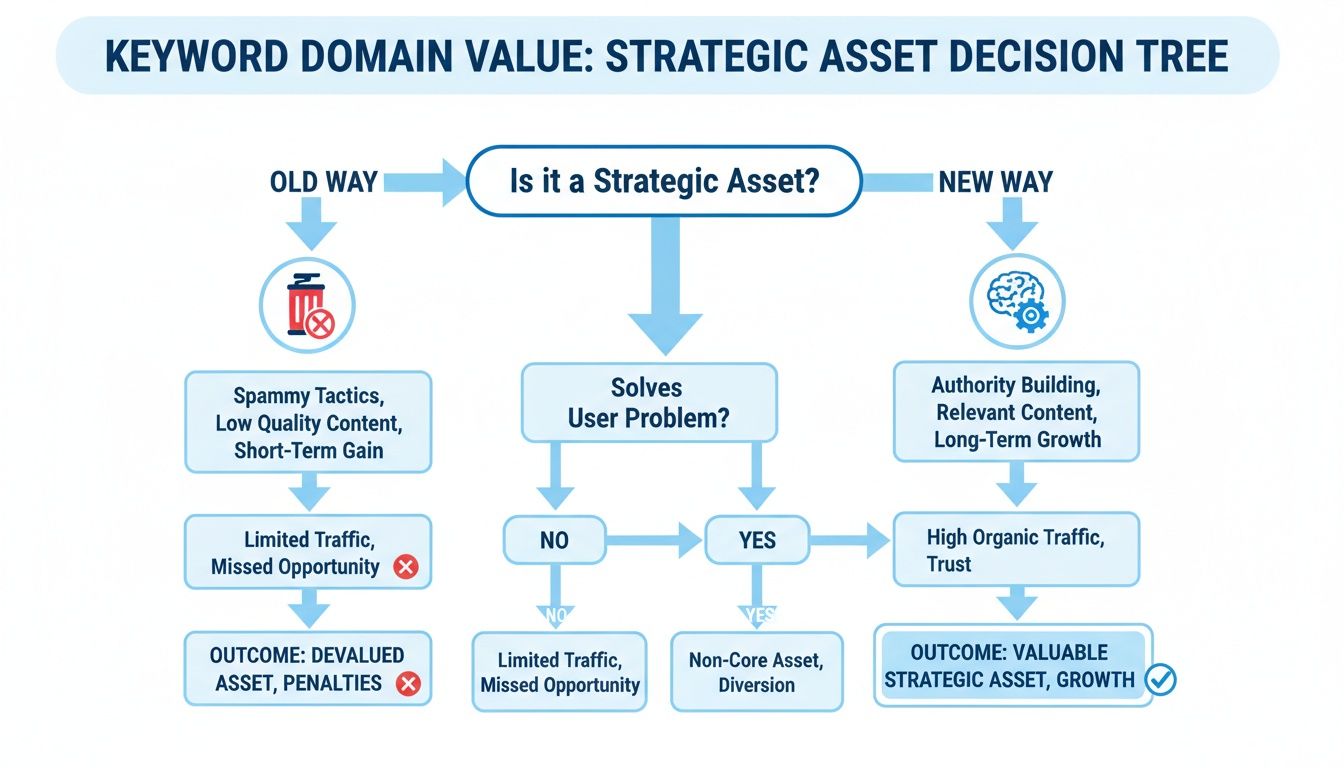
The key takeaway here is that today's keyword domains work best when they're part of a thoughtful, quality-first strategy—not just a spammy SEO shortcut. The most important thing you can do is align your choice with your long-term vision.
Balancing SEO Power with a Memorable Brand
The big debate in the domain world often boils down to a single question: should you chase a name that screams SEO or one that’s catchy and brandable? It’s the classic tug-of-war between raw keyword power and long-term brand equity. But here’s the thing—you don’t actually have to pick a side.
The smartest play is to find that sweet spot right in the middle. You’re looking for a name that gives search engines a crystal-clear signal about what you do, while also being something a real human can easily remember, say out loud, and type into a browser. This dual-purpose approach lays a foundation for both immediate search visibility and a brand that can actually grow for years to come.
Think of it like this: a purely keyword-stuffed domain is like a generic street sign—it's functional and direct, but totally forgettable. On the other hand, a purely abstract, brandable name is like a piece of modern art—it might be intriguing, but it needs a lot of explanation. The real goal is to create a name that’s like a landmark: both descriptive and memorable.
The Brandability Checklist
So, how do you know if a domain name keyword has that special blend of brand potential and SEO juice? It’s all about looking beyond the keyword itself and judging the name as a whole. A name that’s great for bots but terrible for people is a complete non-starter.
Before you pull the trigger on a domain, run it through this quick sanity check:
- Is it easy to say? If you have to spell it out over the phone, it’s probably too complicated. Word-of-mouth is still an incredibly powerful marketing tool, and you don't want to sabotage it from the start.
- Is it easy to remember? Ditch the hyphens, numbers, and clever-but-confusing misspellings. Simplicity is your best friend here. A domain like
QuickFixPlumbing.comis infinitely stronger thanQuick-Fix-Plumbing-247.com. - Is it short and sweet? Shorter domains are less prone to typos and just look cleaner on business cards and social media profiles. Aiming for 6-14 characters is a solid rule of thumb.
These simple tests help you weed out names that might look good in a spreadsheet but would flop in the real world. A great brand name should feel natural, not like it was spit out by a keyword-stuffing machine. If you want to dig deeper on this, check out our guide on what makes a good brand name.
Finding the Best of Both Worlds
Blending a keyword with a unique, brandable element is where the magic really happens. This strategy, often using what we call Partial Match Domains (PMDs), gives you a powerful hybrid. You’re signaling your relevance to search engines without sacrificing a memorable identity that customers can actually connect with.
And this isn't just theory; it’s a high-value strategy in the domain aftermarket. According to Sedo's Market Trends report, keyword-rich .com domains made up a whopping 65% of all high-value sales over $10,000 in 2023. The average price tag? A cool $25,000. This data makes it pretty clear: the market puts a serious premium on domains that are both descriptive and authoritative. You can find more insights in Sedo's domain market analysis.
The goal isn’t just to find a domain with a keyword; it’s to find a keyword that can become the foundation of your brand's identity.
For instance, instead of the generic EMD BestCarInsurance.com, a much stronger play might be something like CarSurance.com or AutoGuard.com. These names still contain a clear hint of the keyword ("car," "auto") but wrap it in a unique, ownable package. This approach gives you room to grow and evolve, so you're not locked into an overly specific name that might hold you back later. It’s the perfect balance of immediate SEO impact and long-term brand potential.
How to Find High-Value Keyword Domains
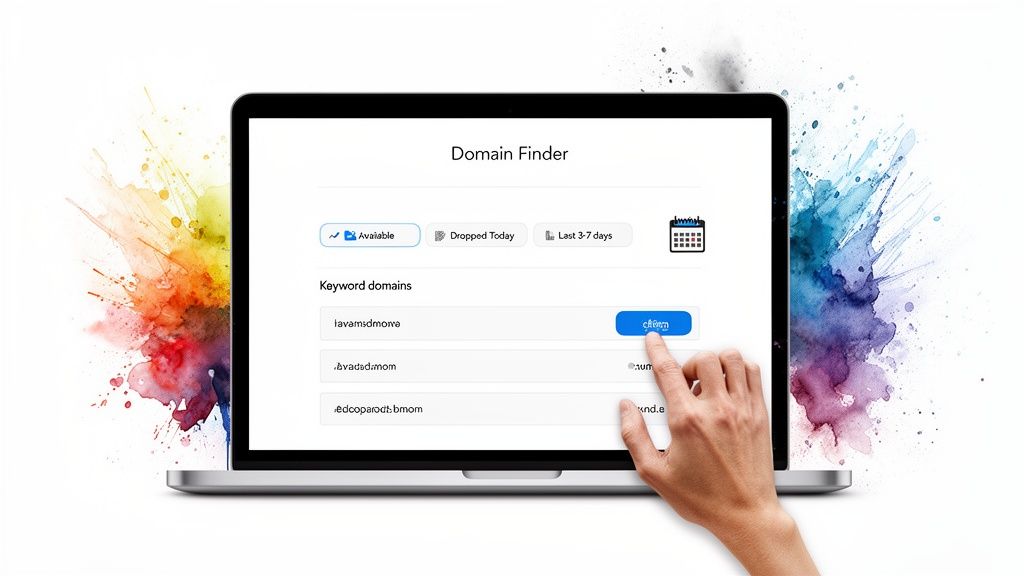
So, you're ready to start the hunt for your own slice of digital real estate. Let's be honest, though—manually sifting through endless domain lists feels like searching for a needle in a digital haystack. It’s tedious, you'll burn hours, and you’re more likely to throw in the towel than find a real gem.
There's a much smarter way to do this. Instead of brute-force searching, you can use modern tools to filter through the noise and surface high-potential domains with almost surgical precision. This is where you can get a serious leg up on everyone else.
Start with Smart Keyword Research
Before you can spot a high-value domain name keyword, you have to get your hands dirty with the fundamentals of How to Conduct Keyword Research. This isn't about landing on one perfect phrase; it's about understanding the entire universe of terms your audience actually uses.
Your goal is to build a "seed list" of core terms, related phrases, and words that feel like a brand.
- Core Keywords: These are the big, obvious terms that define your niche, like "organic coffee" or "vintage guitars."
- Secondary Keywords: Think of related terms and longer phrases people search for, like "single-origin beans" or "handcrafted telecaster."
- Brand Modifiers: These are words you can tack onto your keywords to make them brandable. Think words like "Roasters," "Labs," "Vault," or "HQ."
Once you have this list, you can start mashing them together in creative ways. A killer domain is often born from the fusion of a descriptive keyword and a memorable modifier. This is worlds more effective than just plugging random ideas into a registrar’s search bar. For a deeper dive, check out our piece on how to brainstorm keywords for domain names.
Target Freshly Available Domains
The truth is, the best domains get snatched up the second they become available. Timing is everything. You need a way to see what has just dropped, which gives you a first-mover advantage. This is where a dedicated domain discovery tool becomes your secret weapon.
Using a platform like NameSnag, you can specifically filter for Available domains that were just released and can be registered at any standard registrar right away. No auctions, no backorders—just find it and register it. This is the fastest way to go from discovery to ownership.
Use Time Filters to Your Advantage
To narrow your search even further and get the absolute freshest inventory, time filters are a game-changer. The domain market moves incredibly fast. A domain that dropped last week might as well be ancient history.
Focus your search using these specific time windows:
- Today: This filter shows you domains that have dropped in the last 24 hours. It's the most competitive, but it's also where you'll find the newest gems.
- 3 Days: A slightly wider net that catches anything you might have missed over a long weekend.
- 7 Days: This is a great balance, giving you a full week's worth of dropped domains to analyze without feeling completely overwhelmed.
By combining your keyword seed list with these precise availability and time filters, you transform your domain hunt from a game of chance into a repeatable, strategic process. You’ll spend less time digging and more time evaluating high-quality candidates that can give your project an immediate SEO and branding boost.
Your Pre-Purchase Domain Inspection Checklist
Finding a domain with a killer keyword feels like striking gold, but you need to pump the brakes before rushing to the checkout. A fantastic domain name keyword could be hiding a toxic past, one that can completely sabotage your SEO efforts right out of the gate. Buying a domain without looking under the hood is exactly like buying a used car without checking the VIN—you just might be inheriting someone else’s wreck.
This pre-purchase inspection is your essential pre-flight checklist. Think of it as ensuring the digital real estate you're about to buy is a solid foundation, not a condemned property with hidden liens and penalties. Skipping this step is one of the most common—and costly—mistakes you can make.
A domain's history is written in its backlinks, its previous content, and its ownership records. A name that looks perfect on the surface could have been used for spam, a private blog network (PBN), or something even worse. That negative history sticks, and you’ll be the one left trying to convince search engines that you’ve turned over a new leaf.
Analyzing the Domain's History and Backlinks
Your first job is to play detective. The single most important part of vetting any domain, especially an expired one, is dissecting its backlink profile. You’re looking for clues that point to a healthy, natural history—not one that was artificially inflated with spammy, black-hat tactics.
A clean backlink profile is just a collection of links from reputable, relevant websites. A toxic one, on the other hand, is practically screaming with red flags.
- Check for Irrelevant Links: If a domain about "dog training" has hundreds of links from foreign casino or pharmacy sites, that’s your cue to run. It's a massive, undeniable sign of spam.
- Look at Anchor Text: Is the anchor text varied and natural-sounding? If 90% of the links use the exact same keyword phrase, it’s a clear sign of old-school, manipulative link building that Google now actively penalizes.
- Evaluate Referring Domains: A handful of links from high-authority sites is worth infinitely more than thousands of links from low-quality directories and blog comments. Quality over quantity, always.
You'll also want to fire up the Wayback Machine to see what the site actually looked like in its past lives. Was it a legitimate business, or was it just a page full of spammy, auto-generated nonsense? This visual history gives you crucial context that raw metrics alone can never provide.
Scouting Expiring Domains and Performing Due Diligence
This inspection process becomes absolutely critical when you're targeting high-value expiring domains. These are domains that have expired but are still in a grace period before they're released to the public. This gives you a valuable window of opportunity to do your homework before you have to fight for it in an auction.
Platforms like NameSnag make this whole process a lot less painful by integrating spam checks and historical data right into their listings. This saves you from the headache of having to piece everything together manually across a dozen different tools.
Here’s what the list of expiring domains on NameSnag looks like, giving you a chance to vet them before they become available.
This kind of view lets you see key metrics at a glance, so you can quickly spot the promising candidates and toss the risky ones aside.
Remember, the value of a great keyword can be completely erased by a bad history. NameBio's database, which tracks over $3 billion in transactions, shows that keyword .coms averaged a staggering $18,500 per sale in 2024. But here's the catch: frequent ownership changes are a major red flag. Domains with over five owner flips in two years have a 75% higher risk of being tied to spam, which can render that keyword value totally worthless. You can dig into more of these domain market trends on NameBio.
The most valuable domain isn't the one with the best keyword; it's the one with the best keyword and a clean bill of health. A toxic past will always outweigh a great name.
Before you pull the trigger, it’s always a good idea to run the domain through a dedicated tool. You can learn more about how to evaluate a domain's real strength in our guide on using a domain name authority checker. This final check helps make sure you're making a smart investment that sets you up for long-term SEO success.
A Few Lingering Questions
Still have a few questions buzzing around about keyword domains? You’re not alone. Let's tackle some of the most common ones I hear.
Are Exact Match Domains Still Effective For SEO?
Yes, but they’re absolutely not the magic bullet they were a decade ago. Think of an EMD as a strong relevance signal, a head start, not a free pass to the top of Google.
It must be supported by high-quality content, a great user experience, and a natural backlink profile. A low-quality site slapped onto an EMD will still get crushed by better competitors. It’s a potential boost, never a shortcut.
What’s More Important: A Brandable Or Keyword-Rich Domain?
This is the classic tradeoff. The dream, of course, is a domain that’s both. If you have to pick one, it really boils down to your business model.
For a long-term brand—something you want people to remember and type in directly—a unique, memorable name is almost always the better bet. But for a niche affiliate site or a local service business, a keyword-rich domain can give you a much faster leg up in the search results. The real art is finding a creative blend of the two.
How Can I Check If An Expired Domain Has A Spammy History?
You have to put on your detective hat. Seriously. Use tools like the Wayback Machine to see what the site used to look like. Then, grab a backlink checker and scrutinize its link profile for anything that looks toxic or unnatural.
This is absolutely critical when you're scouting for high-potential expiring domains about to drop. Honestly, it's a ton of manual work, which is why platforms like NameSnag exist—they automate most of the heavy lifting by running spam checks and pulling together historical data, making the whole vetting process much, much simpler.
Ready to find your next high-value domain without all the manual grinding? NameSnag uses AI to sift through over 170,000 domains every day, surfacing keyword-rich gems with clean histories and real SEO potential. Find your perfect domain today at https://namesnag.com.
Find Your Perfect Domain
Get access to thousands of high-value expired domains with our AI-powered search.
Start Free Trial