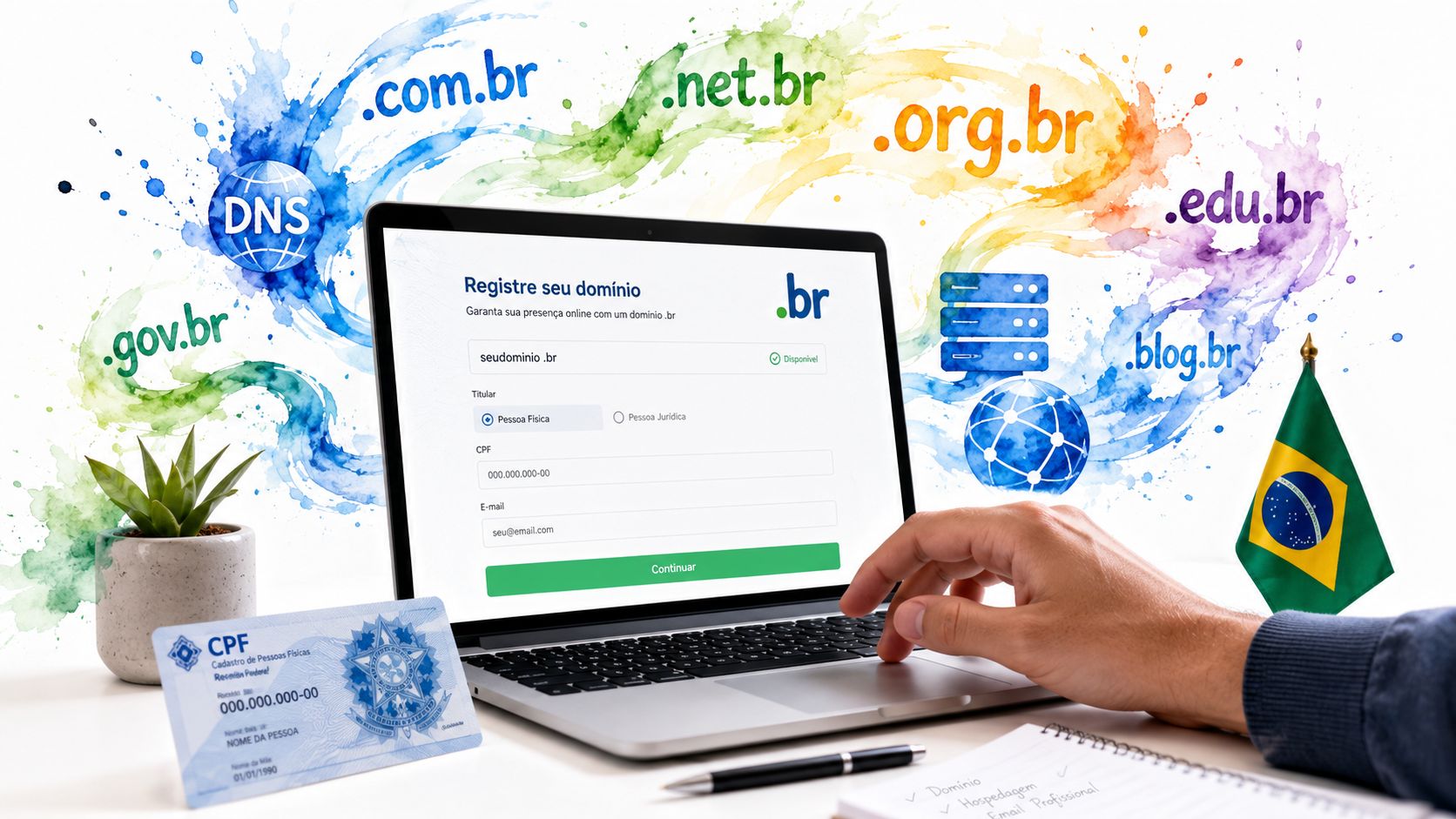
You search for a domain, type in the obvious version of your brand, and get the same cold answer every founder, SEO, and side-project addict gets: taken.
So you try a variation. Taken. Add a keyword. Taken. Swap the extension. Maybe available, but ugly. At that point, one often assumes the good names are gone and settles for something forgettable, bloated, or risky.
That's where the domain name game begins.
The people who win don't treat domain search like a one-time admin task. They treat it like asset hunting. They know some names are overpriced, some are legally dangerous, some are SEO landmines, and some are mispriced opportunities sitting in plain sight. The trick isn't just finding an available string of characters. It's learning how to spot a domain that can carry a brand, support rankings, or become a resale candidate later.
If you're still at the stage of checking a few registrar search boxes, that's fine. Everyone starts there. If you want a fast baseline before you get more strategic, it helps to browse available website domains just to get a feel for naming patterns, extension options, and what's realistically open.
Welcome to the Domain Name Game
The phrase domain name game sounds casual, but the market behind it is anything but small. As of Q3 2025, there were 378.5 million registered domain names worldwide, up by 10.1 million in six months according to Wix's domain statistics roundup. That matters because it tells you two things at once. First, the obvious names are under pressure. Second, the board keeps changing.
A lot of newcomers think the game is just “find a short .com.” That's amateur thinking. A good domain can be short, yes. It can also be aged, relevant, clean, brandable, geographically specific, category-defining, or subtly useful for SEO. The same way real estate investors don't judge property by paint color alone, experienced buyers don't judge domains by length alone.
The players who usually lose
They do one of these:
- They chase perfection: They spend weeks trying to get an exact-match fantasy that isn't available.
- They overpay for junk: They buy a name because it sounds decent, then realize the backlink profile is filthy or the renewal cost is painful.
- They ignore timing: They search once, get discouraged, and assume the market is static.
That last one is the biggest mistake. Domains move. Names expire. Registrations drop. Good opportunities come back into circulation if you know where to look and how to evaluate them.
Practical rule: Stop asking, “Is my first-choice domain available?” Start asking, “What kind of domain would actually help me win?”
That mindset shift changes everything. You stop being a frustrated shopper and start acting like an operator.
Why This Game Is Worth Playing
A domain isn't just a web address. It's a positioning asset.
That sounds obvious until you see how often people treat the domain like an afterthought, then pour money into branding, content, outreach, and ads on top of a weak foundation. A strong domain can make a business easier to remember, easier to trust, and in some cases easier to grow. A weak one does the opposite. It creates drag.
The money flowing through the category makes the point more clearly. The U.S. Web Domain Name Sales industry is projected to reach $10.1 billion in 2026, and IBISWorld says it expanded at a 4.2% CAGR from 2020 to 2025 according to IBISWorld's industry report. This isn't some weird side hobby for digital scavengers. It's a real asset market.
Domains do three jobs
Branding
The right name reduces friction. People remember it. They spell it correctly. They don't hesitate before typing it into the browser or saying it out loud on a podcast. That's not fluff. That's conversion hygiene.
A bad brand domain usually has one of three problems:
- It's hard to say
- It's easy to misspell
- It looks like a compromise
Customers notice compromise even when they can't explain why.
SEO leverage
An aged, relevant domain with a clean history can be useful. Not because age is magic on its own, but because older domains sometimes come with useful signals like established backlinks, citations, and topical context. If the history is clean and the old link profile makes sense for your intended use, you may be starting from a better place than a blank registration.
That doesn't mean every expired domain is gold. Most aren't. Some are burned out shells wearing a fake mustache.
Investment potential
Domains are one of the few digital assets that can be valuable before you build anything on them. A strong brandable name, a category-defining phrase, or a clean aged domain can all attract buyers for different reasons. People flip domains badly all the time because they buy names nobody wants. The better approach is to buy where utility already exists.
The best domains solve a problem for the next owner. If you can't name that problem, you're probably speculating, not investing.
How to Score a Winning Domain
Pros don't evaluate domains by gut feel alone. They use a stat sheet.
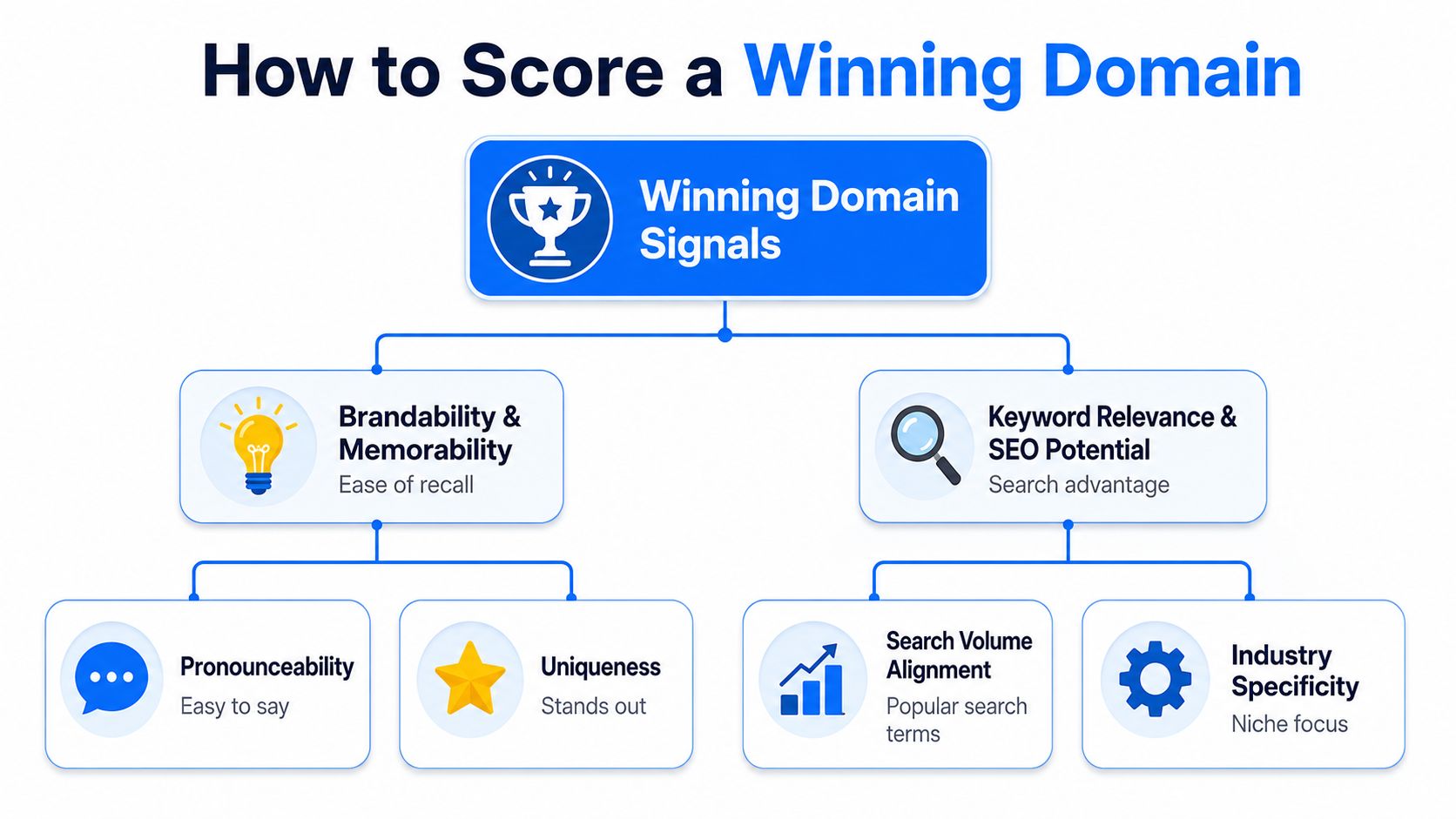
For practical purposes, I sort valuable domains into two buckets: the brandable gem and the SEO powerhouse. Some names do both, but most lean one way. If you don't know which game you're playing, you'll overvalue the wrong features.
If you're still shaping the bigger project around the name, this guide on planning a business website is useful because domain quality only matters if it fits the site you're going to build.
The brandable gem
A brandable domain wins on feel, recall, and flexibility.
It usually passes a simple test. If someone hears it once, can they type it later without asking for clarification? If the answer is no, move on. The market is full of names that look clever in a spreadsheet and die the second a real person says them out loud.
Look for these signals:
- Pronounceability: If people stumble over it, it's weaker than you think.
- Clean visual form: Avoid weird hyphenation, awkward doubled letters, or confusing substitutions.
- Room to grow: A name that's too narrow can trap the business later.
- Distinctiveness: Generic sludge blends in. You want something memorable without becoming gimmicky.
Short is helpful, but clarity beats short. I'd rather own a slightly longer name that people remember than a tiny one that sounds like a typo.
The SEO powerhouse
This type of domain earns attention because of its history, not just its wording.
Its value often sits in signals like age, backlink quality, referring domains, topical relevance, and whether the historical use aligns with your future plan. Think of those as performance stats. A domain with a strong-looking metric profile but a garbage history is like a player with inflated numbers against weak opponents. It won't hold up.
A quick evaluation table helps:
| Signal | What you want | What sends me running |
|---|---|---|
| Referring domains | Real sites, relevant context, varied sources | Obvious junk clusters or irrelevant spam |
| Domain history | Consistent, legitimate prior use | Casino, pills, AI gibberish, or churn-and-burn pages |
| Anchor text | Mostly natural and branded patterns | Over-optimized money terms everywhere |
| Brand fit | A name that still makes sense for the next project | Good metrics attached to a useless identity |
What doesn't work
A few traps keep catching beginners:
Buying on one metric alone
A single authority metric can make a bad domain look respectable.Ignoring renewal economics
A cheap acquisition can still be expensive to hold if the extension has premium pricing.Confusing keyword relevance with value
A keyword in the string helps only when the domain is usable, clean, and commercially sensible.
I've watched buyers talk themselves into weak domains because the metric screenshot looked nice. Screenshots don't rank sites. Clean assets do.
The Hunt for Available and Expiring Gems
The domain name game becomes exciting once you stop relying on standard registrar search alone, revealing two very different hunting grounds.
One is for names you can grab immediately. The other is for names that are on deck and worth stalking before they drop.
Available domains
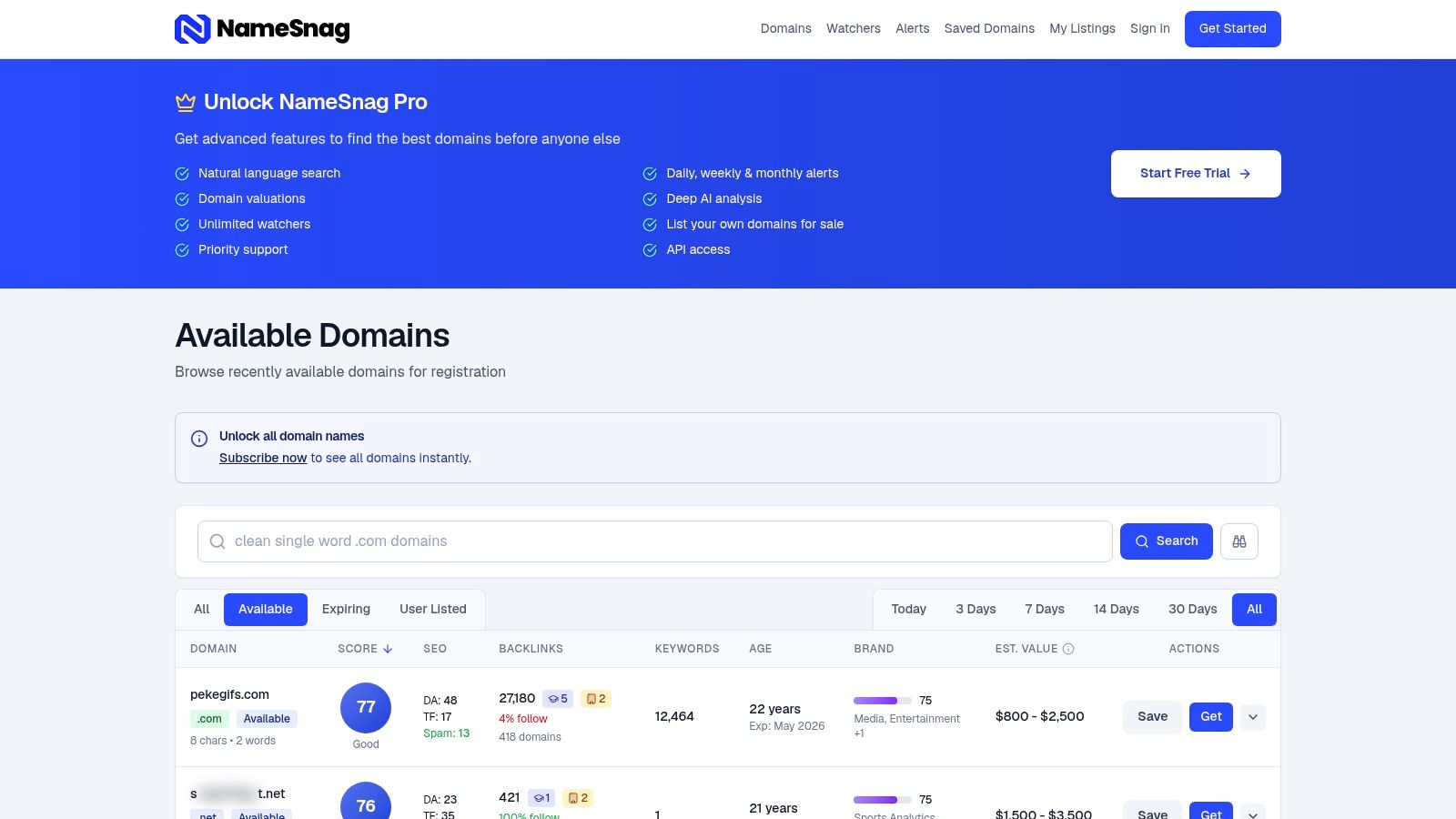
These are dropped domains that can be registered right now. No waiting, no auction drama, no mystery timeline. If you know what you're looking for, this is the fastest way to land a usable asset before someone else notices it.
The practical move is to review available domains with a short time filter first. “Today” is great for fresh opportunities. “3 Days” and “7 Days” widen the pool without turning your search into a swamp.
This type of search works best when you already know your criteria:
- Brand hunters should scan for pronounceable, clean names with obvious commercial use.
- SEOs should prioritize relevance and historical cleanliness over surface-level charm.
- Flippers should be ruthless about hold cost and resale logic.
Available-domain hunting rewards speed, but not recklessness. A fast bad buy is still a bad buy.
Expiring domains
Expiring domains are different. These names have expired but are still moving through the post-expiration timeline. That means you can watch them, evaluate them, and decide whether they're worth pursuing before they fully drop.
The move here is to review expiring domains with wider windows like “7 Days,” “14 Days,” or “30 Days” if you're building a watchlist instead of trying to pounce today.
The reason this matters is simple. Some domains need patience. You may spot a strong candidate, investigate its history, check trademark exposure, decide whether the old backlinks are still useful, and wait for the right moment. That's a cleaner process than panic-buying whatever happened to be available five minutes ago.
For a good primer on the mechanics behind these release cycles, this article on domain drop catching is worth reading.
Two hunting styles, two mindsets
| Hunting ground | Best for | Main advantage | Main risk |
|---|---|---|---|
| Available | Immediate builds and quick grabs | You can act now | Impulse buys |
| Expiring | Higher-upside monitored targets | More time to evaluate | Waiting too long |
There's another wrinkle if you work with gaming-related domains or niche extensions. Some newer gTLDs come with very different economics than standard registrations. For example, .GAME is an open gTLD with no geographic or professional restrictions, supports registrations from 1 to 10 years, has a 35-day grace period and 30-day redemption period, and supports IDNs according to Astral Internet's .GAME extension details. That predictability can help if you monitor expiry cycles.
But don't assume niche means cheap. .game registration pricing is materially higher than mainstream extensions, with current prices listed from about $288.82 to $749.00 across registrars on TLD-List's .game pricing page. That changes the math fast. Carry costs matter.
Your Pre-Purchase Due Diligence Checklist
Buying a domain without due diligence is how people inherit somebody else's mess.
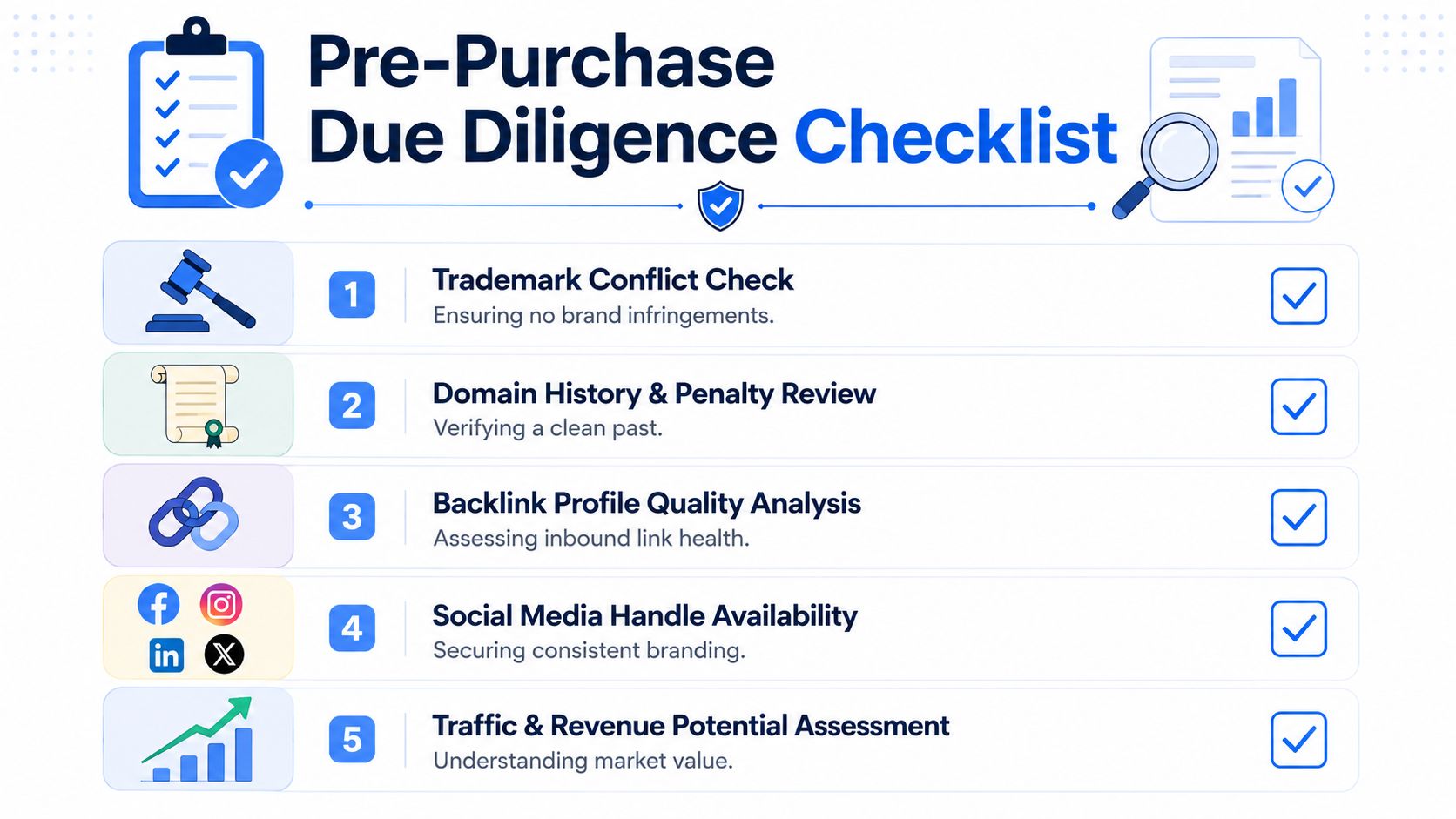
The boring checks are what separate good acquisitions from expensive mistakes. I've seen domains that looked excellent at a glance and turned toxic the moment you checked trademark exposure, historical use, or backlink quality. If you skip this part, you're not being decisive. You're being lazy.
If your project has any chance of becoming a real brand, it also helps to understand brand enforcement strategies for businesses before you commit to a name and start printing it everywhere.
The non-negotiable checks
Trademark review
Search trademark databases before you buy. Don't play lawyer yourself, but don't pretend obvious conflicts are fine either. A domain that leans on someone else's mark can become unusable fast.History review
Check archived versions of the site. You want to know what lived there before. Was it a real business, a hobby site, a clean publisher, or a spam furnace?Backlink audit
Look beyond the top-line metric. Scan anchors, source quality, and topical relevance. A profile full of nonsense can wreck the value of an otherwise appealing name.Index and reputation sanity check
If the domain has signs of prior abuse, deindexing, or email misuse, treat that as a warning, not a challenge.
A lot of buyers obsess over whether someone might try to bully them out of a domain later. That can happen, but it's generally not the main practical risk. Openprovider notes that buyers should check trademark databases and domain history before purchase, and reports that reverse domain name hijacking was found in only 1.3% of UDRP decisions in Q2 2025 in its article on common domain name mistakes. The bigger everyday risk is simple: buyers skipping legal and historical due diligence.
A cleaner workflow
I use a basic pass-fail filter:
- Pass it if the name is useful, the history is understandable, and the risk profile is acceptable.
- Pause it if something looks odd but might be explainable.
- Kill it if the trademark issue is obvious or the history is dirty enough that I'd need to talk myself into it.
For a deeper framework on evaluating quality signals before purchase, this guide on domain score is a good complement to manual checks.
A domain with strong numbers and bad history is not a bargain. It's a cleanup project.
Three Winning Plays with Real Domains
You don't need a giant portfolio to play well. You need the right play for the right objective.
The niche site catapult
Say you find an expired domain that used to host a legitimate site in the same topic you want to target now. The backlink profile is relevant, the name still makes sense, and the old site wasn't spammed into the ground. That's a candidate for a niche content build.
The mistake amateurs make is buying any aged domain and forcing a new project onto it. Relevance matters. If the old domain talked about hiking and your new site is about accounting software, the mismatch is obvious. Even if some metrics look nice, the asset doesn't fit the play.
A good niche site catapult starts with alignment. Name, history, links, and future use should point in the same direction.
The startup brand slam
A founder doesn't always need an aged SEO asset. Sometimes the right move is a clean, memorable name with enough personality to own a market position.
This play is less about metrics and more about friction. Can investors remember it? Can customers type it? Can a podcast host say it once without spelling every letter afterward? If yes, you may have a winner even if the domain has no prior SEO value at all.
Restraint matters. Founders often ruin good brand options by adding unnecessary words, awkward modifiers, or trend-chasing spellings.
If a domain needs a long explanation, it's not helping your startup. It's taxing it.
The quick flip
This play attracts the most noise because everyone likes the fantasy of cheap buy, fast resale. In practice, it is less glamorous. Most quick flips fail because the buyer bought a name they personally liked instead of one another buyer would reasonably want.
A better flip candidate usually has at least one of these traits:
- Clear buyer category: You can name the kind of company that would want it.
- Strong utility: It solves a naming problem, not just an aesthetic preference.
- Manageable carrying cost: You can hold it without resentment if it doesn't sell quickly.
The cleanest flips are the ones where value is obvious to the next buyer without a giant sales pitch.
Your Secret Weapon to Win the Game
Winning the domain name game comes down to three things: judgment, process, and speed.
Judgment tells you what kind of asset you're looking at. Process keeps you from buying junk. Speed matters because good domains don't sit around waiting for indecisive buyers to feel ready.
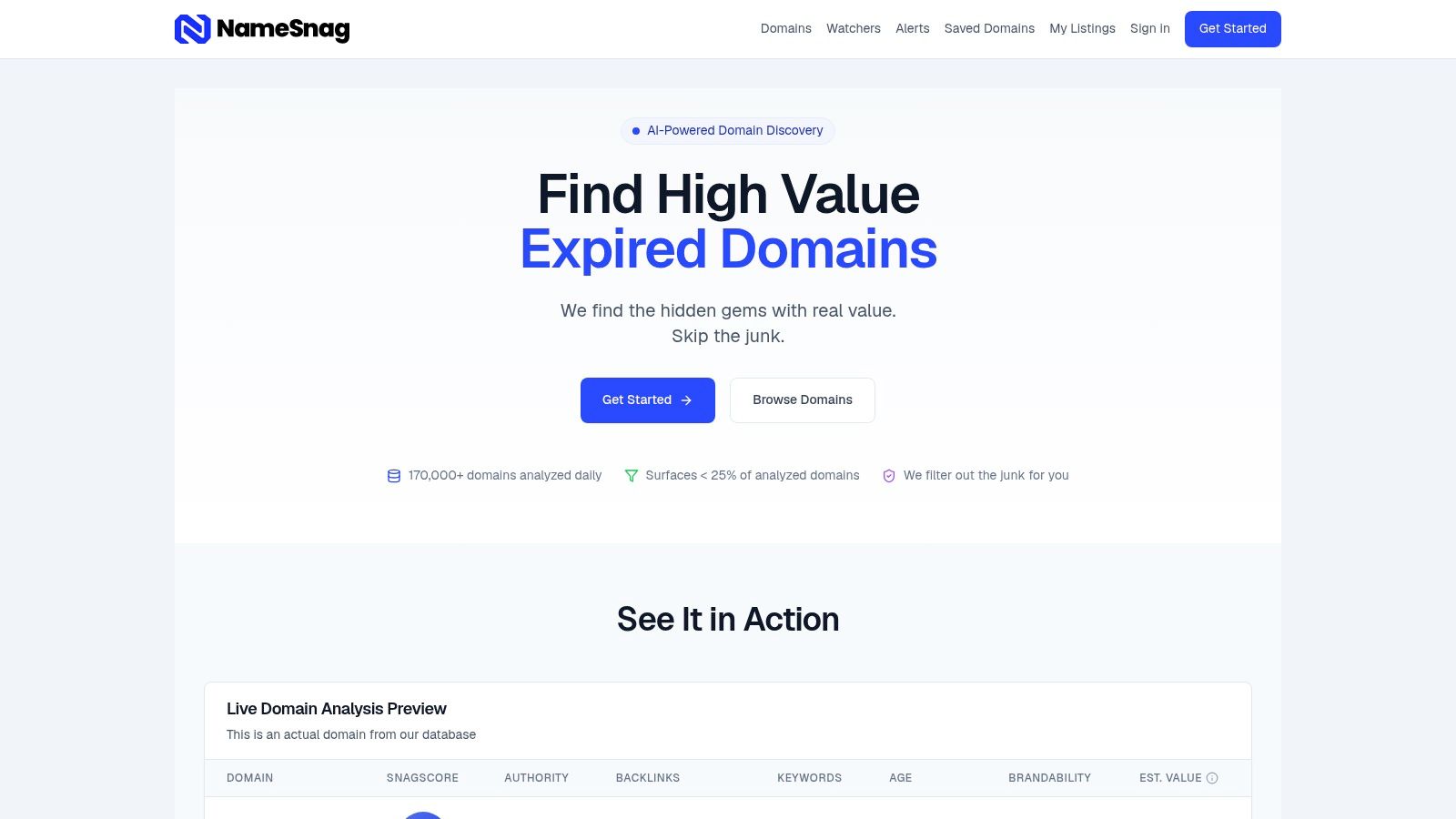
That's why serious buyers use tools that cut the manual grind. If you're still jumping across multiple tabs, trying to compare branding potential, age, backlinks, and spam risk by hand, you're moving too slowly. A platform that centralizes the search, surfaces quality signals quickly, and helps you monitor opportunities before the crowd shows up gives you a real edge.
For another angle on competitive acquisition, this guide on how to win a domain is worth your time.
The unwritten rule of this game is simple. The best buyers aren't just smarter. They're faster at ruling bad names out and more disciplined about acting on the right ones.
If you want a faster way to hunt clean, high-potential domains without drowning in junk, try NameSnag. It helps you spot available and expiring opportunities, evaluate SEO and brandability signals in one place, and move before slower buyers catch up.
Find Your Perfect Domain
Get access to thousands of high-value expired domains with our AI-powered search.
Start Free Trial