
You've probably done the classic sprint already. You pick a business name, check a registrar, and discover the obvious .co.nz is gone, the short .nz is gone, and what's left looks like a typo somebody forgot to delete.
That's normal.
Good domain name registration in New Zealand isn't just a checkout task. It's a search problem, a branding decision, and a small bit of asset management. People who treat it like buying a parking ticket usually end up with clunky names they tolerate. People who treat it like acquiring digital property usually get something they can build on for years.
The New Zealand namespace is also not some sleepy backwater. It's a large, established market with 755,569 active .nz domains in July 2025, after hitting 758,495 in June 2023, and the total was cited at 764,987 registered .nz domains in March 2026 in a summary of NZ domain growth. That matters because competition is real. The easy names were taken a long time ago.
So You Want a Kiwi Domain Name
A familiar scenario. A founder wants a tidy, memorable name. They try the exact business name on a registrar. Unavailable. They add “group”. Still gone. They add “nz” to the left of the dot, which is how you get names that feel like a compromise before the site even launches.
That's the point where individuals either overpay, settle, or get weird.
The better move is to stop searching like a customer and start searching like an investor. Investors don't just ask, “What can I register right now?” They ask, “Which name gives me trust, recall, flexibility, and maybe a little resale logic if my plans change?”
Practical rule: A decent domain helps people find you. A great one also helps them remember you after they leave.
In New Zealand, there's another twist. Your extension choice sends a signal. .co.nz still feels established for commercial use. .nz feels cleaner and more modern. Some names work beautifully in one extension and awkwardly in another. If you don't choose the extension first, you can waste hours chasing the wrong version of the same idea.
I've also seen people get stuck because they only hunt for brand new registrations. That's rookie behaviour. Some of the best names show up after a previous owner lets them lapse. Those are often better than anything you'd invent at 11:30 pm with a notebook full of synonyms.
If you're serious about domain name registration in New Zealand, the goal isn't just “find something available.” It's “find something worth owning.”
Choosing Your Perfect NZ Flavour
The extension is not decoration. It changes the feel of the name, the audience expectation, and sometimes how much explanation you'll need to do offline.
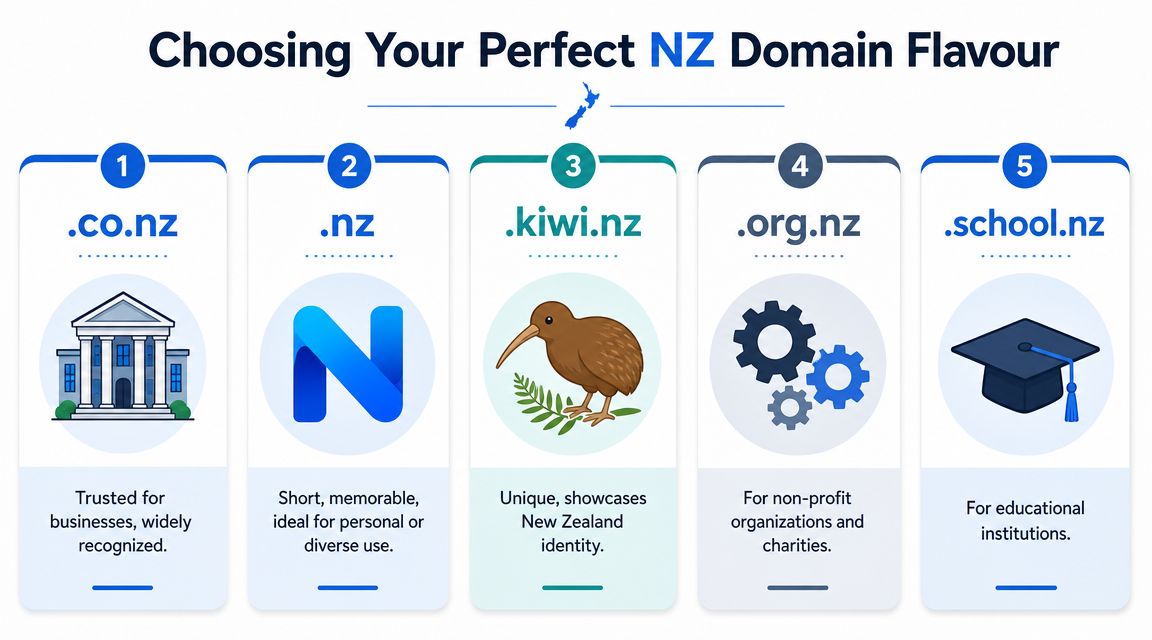
The main options people actually use
Here's the short version.
| Extension | Best fit | Brand signal |
|---|---|---|
| .co.nz | Businesses, trades, established commercial sites | Familiar, trustworthy, traditional |
| .nz | Startups, personal brands, product-first companies | Clean, modern, compact |
| .org.nz | Non-profits, charities, community groups | Mission-led, organisational |
| .kiwi.nz | Identity-led projects, playful local brands | Distinctly New Zealand |
| .school.nz | Schools and education-specific entities | Specific, formal, sector-based |
Who should use .co.nz
If you want the least friction with New Zealand customers, .co.nz is still the default safe bet.
It suits:
- Local service businesses like tradies, consultants, agencies, retailers
- Companies with offline sales where people may hear the name once and type it later
- Brands that want immediate familiarity without explaining the extension
This extension works because it feels expected. That's boring, but boring can be useful. Trust often starts with not making people think too hard.
Who should use .nz
.nz is the sharper suit.
It suits:
- Startups that want a shorter brand
- Personal brands where the exact name matters
- Digital-first companies that care about memorability and cleaner visuals
A short domain on .nz often looks better on packaging, social profiles, pitch decks, and email signatures. If your brand is minimal, modern, or design-conscious, this can be the better choice.
For founders deciding between image and familiarity, I usually suggest checking the broader brand system first. If the business has a strong visual identity and naming logic, pairing the domain decision with bespoke branding strategies can help you choose the extension that fits the brand instead of just the one that happens to be available.
The strongest domain choices usually look obvious in hindsight. That only happens when the name and brand are doing the same job.
The niche and moderated options
.org.nz is straightforward. If you're a charity, advocacy group, club, or association, it signals the right thing without extra explanation.
.kiwi.nz is more selective. It can be charming, but not every business should touch it. If your whole identity is proudly local, informal, and personality-heavy, it can work. If you're aiming for corporate trust, it may feel too cute.
.school.nz is sector-specific, so use it when the institution itself benefits from that clarity.
Then there are moderated or restricted spaces such as government-related domains. Those aren't casual public registrations, and they operate under separate approval rules rather than standard checkout flows.
If you want a broader map of country-code choices beyond New Zealand, this country domain extension list is handy for comparing how different ccTLDs signal geography and trust.
The Art of the Kiwi Domain Hunt
Typing one phrase into a registrar search box is not domain hunting. It's wishful thinking with a loading spinner.
Effective domain hunting begins when you widen the field. Good hunters look for variations, adjacent brand angles, dropped names, and soon-to-expire names that other buyers haven't noticed yet.

Start with names that behave well
Before you chase availability, test the name itself.
A strong NZ domain usually has these traits:
- Easy pronunciation so somebody can hear it once and type it correctly
- Low ambiguity with no weird spelling tricks unless the brand can carry them
- Commercial flexibility so the name won't trap you if the business expands
- Clean extension fit because some labels sound better on .co.nz while others belong on .nz
If a name needs a long explanation, it's not premium. It's homework.
Use two hunting lanes, not one
Most buyers search only for fresh hand registrations. That misses the better pond.
I split domain hunting into two lanes:
- Available names that just dropped
- Expiring names worth watching before they drop
Dropped names can be gold because somebody else already did the initial naming work years ago. Sometimes the domain is short, on-brand, and unexpectedly free again. For immediate opportunities, scan available domains that just dropped and tighten the time window if you want only the freshest names.
Expiring names are different. They're still in that awkward in-between stage where the previous registration has lapsed but the domain hasn't fully returned to open availability. That's where planning pays off. A watchlist built from expiring domains that may drop soon gives you a better shot at names with history instead of whatever leftovers happen to be free today.
What to look for in an expired .nz candidate
Not every expired domain is a prize. Some are dead weight with a nice spelling.
Check for:
- Brandability first. If it sounds awkward, skip it.
- Past relevance. A domain with a history wildly unrelated to your project can create cleanup work.
- Old backlinks and mentions. Prior authority can be useful, but only if the history is clean and topically sensible.
- No obvious spam fingerprints. Strange naming patterns, junky language, or obvious abuse are enough reason to move on.
Insider move: If a dropped domain is good enough that you feel urgency, register it immediately. “I'll come back later” is how someone else ends up owning your favourite find.
Register through the right kind of provider
Once you've found a winner, don't get sloppy at the finish line. The Domain Name Commission advises registrants to use a .nz authorised provider for registration, and it also warns people to verify their details and track renewals because expiry can cost you the domain, as explained in the official .nz registration guidance.
That matters more than people think. Plenty of domain mistakes aren't naming mistakes. They're admin mistakes.
The strongest hunting habit is simple. Build a shortlist. Watch expiring opportunities. Grab quality drops fast. Then register through an authorised provider with your details correct on day one.
Securing Your Slice of Digital Aotearoa
You've found the name. Now the boring part becomes important.
A lot of domain pain comes from rushing checkout, clicking through settings, and forgetting that a domain is an account-bound asset. The purchase itself is easy. Keeping control is where people get caught.
Picking a registrar without being cheap in the wrong place
Price matters, but tiny price differences shouldn't decide this on their own.
When choosing a .nz registrar or provider, pay attention to:
- Account usability because you will eventually need to edit DNS, renew, or transfer
- Support quality if you're non-technical or moving fast
- Clear renewal management so there's no mystery around expiry notices
- Privacy options if you don't want personal details floating around more than necessary
The cheapest interface is often the one you swear at six months later.
The checkout bits people ignore
For standard public .nz names, registration tends to feel quick. Don't confuse quick with foolproof.
New .nz registrations can involve mandatory email verification, and registrations can be renewed for up to 10 years, as outlined in GoDaddy's summary of about .nz domains. That gives you long-term holding flexibility, which is useful if the domain is central to your brand or part of a broader portfolio.
Two practical moves help here:
- Verify the email immediately. Don't leave it until later and wonder why the domain feels half-settled.
- Renew for a longer horizon if the name is core. If this is the business name, treat it like infrastructure, not a casual yearly purchase.
If you want a clearer explanation of why registrars care so much about the inbox tied to the domain account, this guide on domain registration and email fills in the operational side.
Privacy and ownership hygiene
WHOIS privacy isn't glamorous, but it's usually sensible. If the registrar offers a privacy or contact protection setting, review it carefully and enable the option that fits your use case.
Then do the unsexy admin:
- Save the renewal date in more than one place.
- Store registrar login details somewhere your team can access.
- Document who owns the account if an agency, developer, or employee handles setup.
Buy the domain in an account you control. Developers can help. Agencies can help. Neither should quietly become the real owner of your brand asset.
That single habit prevents a ridiculous number of future arguments.
Beyond Registration DNS and Hosting First Steps
A registered domain without DNS and hosting is just a nice label with nowhere to go.
Individuals don't need a deep networking lesson. They need enough understanding to get a site live, connect email or a website platform properly, and avoid breaking things by guessing.
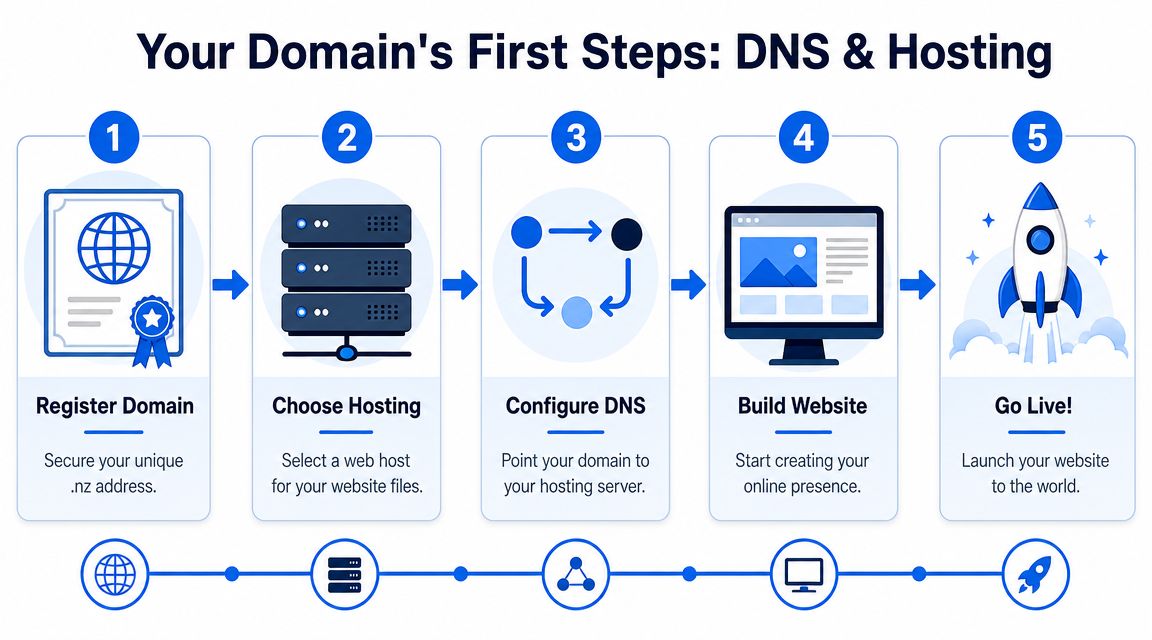
DNS in plain English
Think of DNS as the internet's address book. Your domain is the memorable front door name. DNS tells browsers where the actual website lives.
The basics most owners run into are:
- A record. This points the domain toward the server that hosts the site.
- CNAME. This points one name to another name, often used for subdomains or platform connections.
You don't need to memorise the jargon. You only need to know which service is asking for what, and where in your registrar dashboard to place it.
For a more beginner-friendly walkthrough, this explanation of what DNS entries are is useful when the control panel starts looking like cockpit instruments.
Hosting comes next
Hosting is the plot of land. The domain is the sign at the gate.
If you're using Shopify, Squarespace, or another site builder, you'll usually connect the domain by following that platform's setup prompts. If you're using traditional web hosting, your host gives you the DNS details to enter at the registrar.
For teams comparing local providers, this overview of hosting solutions for NZ tech companies is a practical starting point if you want New Zealand-focused hosting context rather than generic overseas advice.
A simple first target is enough:
- Connect the root domain
- Get the www version behaving properly
- Publish a coming soon page
- Test the site on mobile and desktop
This walkthrough is worth watching before you start clicking around settings:
The exception for government domains
Public registrations are one thing. Government-managed names are another.
If you're applying for a .govt.nz domain, approval is case by case and typically takes 1 to 2 working days, with clear naming needed to reduce confusion with other entities, according to the NZ Digital application guidance. That's a very different rhythm from ordinary public registration, so public-sector teams should plan earlier than they think they need to.
Advanced Strategies Renewals Transfers and Flipping
Once a domain is live, most owners go back to their actual business. Fair enough. But if you want fewer future headaches and better upside, think like a domain investor even if you only own one name.
Investors treat domains as managed assets. They guard renewals, track transfer readiness, and keep an eye on names that could strengthen a brand, a content project, or a future sale.
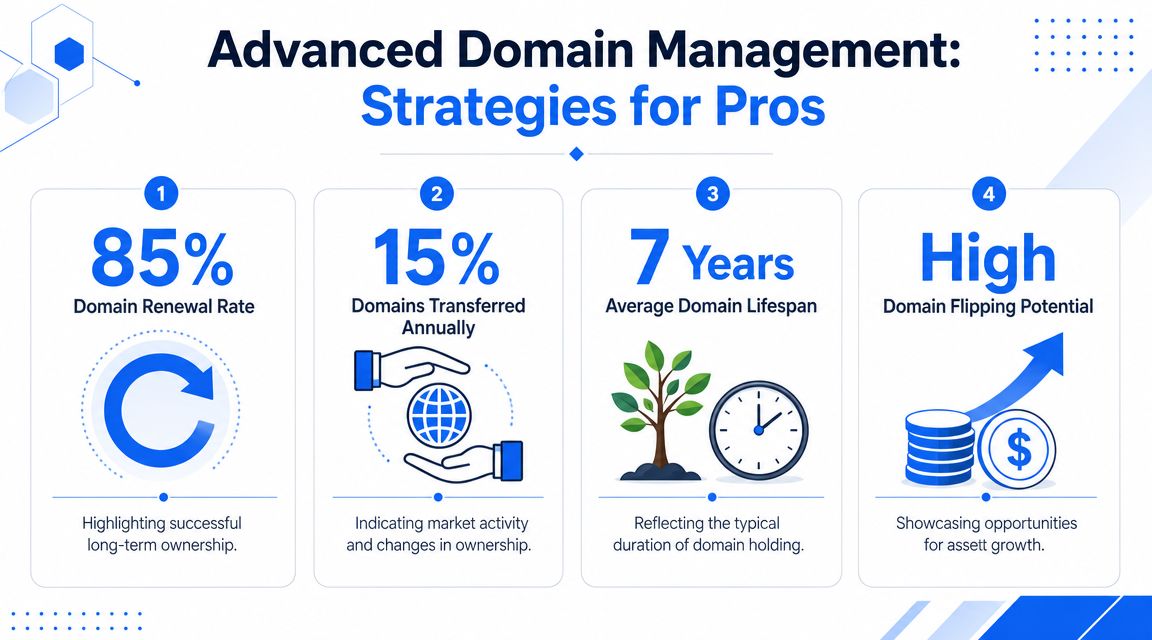
Renewals are strategy, not admin
Losing a good domain because of a missed renewal is the dumbest way to create a crisis. It happens because people treat renewal notices like utility bills instead of asset alerts.
The investor mindset is simple:
- Renew core domains early
- Keep payment methods current
- Separate keeper domains from experimental ones
- Review your portfolio before renewal season rather than after
A strong business domain deserves a longer leash. If the name anchors your company, don't manage it like a side project.
Transfers without chaos
Transferring a domain to a new provider can be sensible if support is poor, billing is messy, or DNS tools are awful. The mistake is doing it casually during a launch, migration, or major campaign.
Use this quick decision table:
| Situation | Best move |
|---|---|
| Bad support, good timing | Transfer |
| Upcoming site launch | Wait until stable |
| Domain expiry approaching | Renew first, then transfer |
| Team confusion about account ownership | Fix admin access before anything else |
The transfer itself isn't the danger. Bad timing is.
A transfer should feel boring. If it feels dramatic, the prep work wasn't done properly.
Flipping and value creation
Flipping isn't only for full-time traders. A founder, SEO, or agency can still use investor logic.
A good .nz domain can create value in a few ways:
- Brand resale potential if the name is clean and commercially broad
- SEO advantage when an expired domain has relevant history worth rebuilding on
- Defensive ownership by controlling adjacent brand names before someone else does
- Project optionality when a niche name can become a microsite, campaign asset, or saleable property later
The key is discipline. Don't collect random names because they were available. Buy names with a reason.
Public-sector rules are a different world
New Zealand also has a separate process for government-managed spaces such as .govt.nz, .parliament.nz, .health.nz, and .mil.nz. That service is free for eligible central and local government organisations, and applications are handled manually on a case-by-case basis, taking 2 to 10 working days, according to NZ Digital's government domain guidance.
That matters because public-sector domain strategy isn't just about grabbing a free name. Naming clarity, eligibility, and internal governance all matter more than speed.
For everyone else, the lesson is simpler. Treat your domain like an asset from the first day. Buy carefully. Renew deliberately. Transfer only when it improves control. If you ever sell, rebuild, or expand, you'll be glad you didn't treat the name as an afterthought.
If you want to find better .nz opportunities instead of settling for whatever a registrar search box happens to return, NameSnag is worth a look. It's especially handy when you want to scan dropped names, watch expiring domains before they hit the open market, and separate genuine opportunities from recycled junk.
Find Your Perfect Domain
Get access to thousands of high-value expired domains with our AI-powered search.
Start Free Trial