Stop Digging for Trash, Start Finding Domain Treasure
Let's be honest. Hunting for a great expired domain feels like dumpster diving. For every rare gem with clean backlinks and real brand potential, there's a mountain of spammy junk waiting to waste your afternoon. You open one tab for archive history, another for backlinks, another for WHOIS, then one more to check whether the thing is available. That workflow gets old fast.
A good expired domain finder doesn't just show names. It helps you eliminate bad bets before they cost you money or poison a project. That matters whether you're buying for redirects, building niche sites, flipping names, or trying to secure a brandable domain with some history behind it. If you care about SEO, you already know backlink quality and risk screening matter just as much as raw authority metrics. If you need a refresher on one signal people often misuse, this guide on the essential metric for local SEO performance is worth a quick read.
The tools below aren't ranked by who shouts the loudest. They're ranked by job-to-be-done. Some are best for raw discovery. Some are best for spam screening. Some are best when timing matters and you want to get ahead of the public feeding frenzy. If you want the best expired domain finder for your workflow, start with the job, not the marketing copy.
1. NameSnag
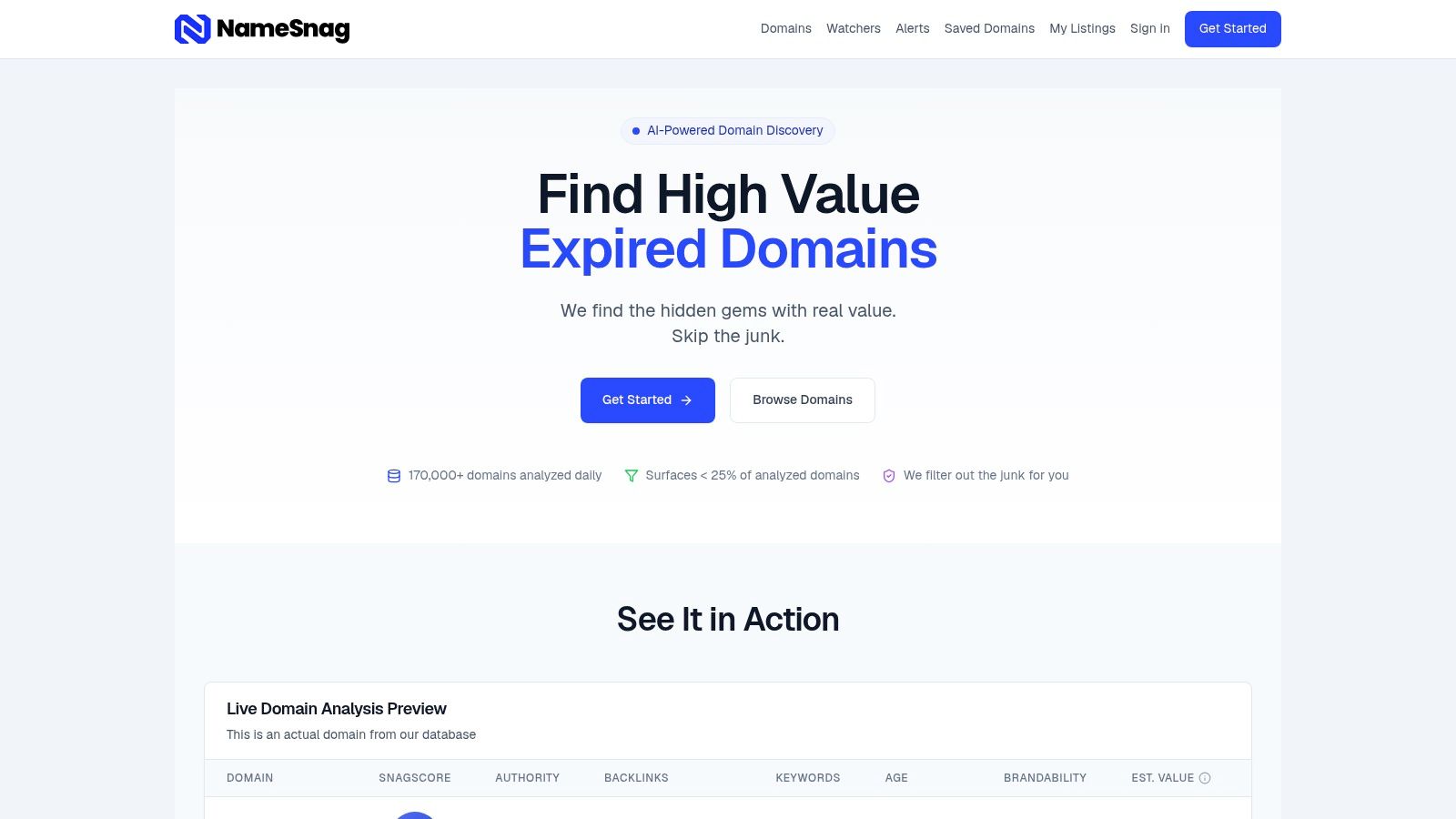
You find a domain with decent authority, clean-looking anchors, and a price low enough to feel like a steal. Twenty minutes later, you are still checking archive snapshots, backlink patterns, and ownership history because one bad signal can turn a bargain into dead weight. NameSnag is built for that exact job. It shortens the gap between discovery and a confident yes or no.
That makes it a strong fit for buyers who care less about browsing giant lists and more about screening candidates fast. If the goal is SEO, domain flipping, or finding a brandable name with some age behind it, the tool puts value and risk in the same workspace instead of making you stitch the process together yourself.
Why it works in practice
NameSnag centers its workflow on scoring and filtering, which is the right approach for anyone who reviews more than a handful of names per week. The platform uses SnagScore to combine signals like authority, backlink quality, age, and brandability into one decision aid. I would never buy strictly off a proprietary score, and serious buyers should not either. But I will use one to cut a list down fast, then inspect the finalists manually. That is where time gets saved.
The bigger advantage is timing. NameSnag is useful before a domain becomes obvious to everyone else. If your workflow depends on getting ahead of open registration, that matters more than another column of raw metrics. Their guide to finding expired domains efficiently explains the logic well.
Practical rule: Use scoring to sort. Use history checks to decide. Use alerts to win before the crowd shows up.
NameSnag also puts real attention on pre-release monitoring. That is smart. Buyers who wait until a domain is publicly available are often competing for leftovers or paying up after the market has already noticed. DomCop makes a similar point in its expired domain tools overview, where it separates expired, auction, and drop-stage inventory because each stage needs a different buying strategy.
Best for
- SEO operators who want faster triage: Good for narrowing a large pool into a shortlist worth checking in Ahrefs, Majestic, or archive history.
- Brand-first buyers: Brandability is part of the evaluation instead of something you consider at the end.
- Investors who win on timing: Watchlists and alerts help before a name turns into a public bidding war.
- Teams handling volume: API access and exports matter once you move past one-off hunting.
The trade-off is straightforward. NameSnag is strongest as a decision accelerator, not a replacement for judgment. If a name looks unusually good, verify the backlink profile, old site content, and ownership pattern yourself. That extra step is still necessary. The benefit is that you only spend that effort on a few serious candidates instead of wasting an afternoon on fifty weak ones.
If you want a clearer read on the lifecycle side, NameSnag's breakdown of what happens when a domain expires is useful context. It explains why some opportunities are buy-now plays and others are worth tracking patiently.
2. ExpiredDomains.net
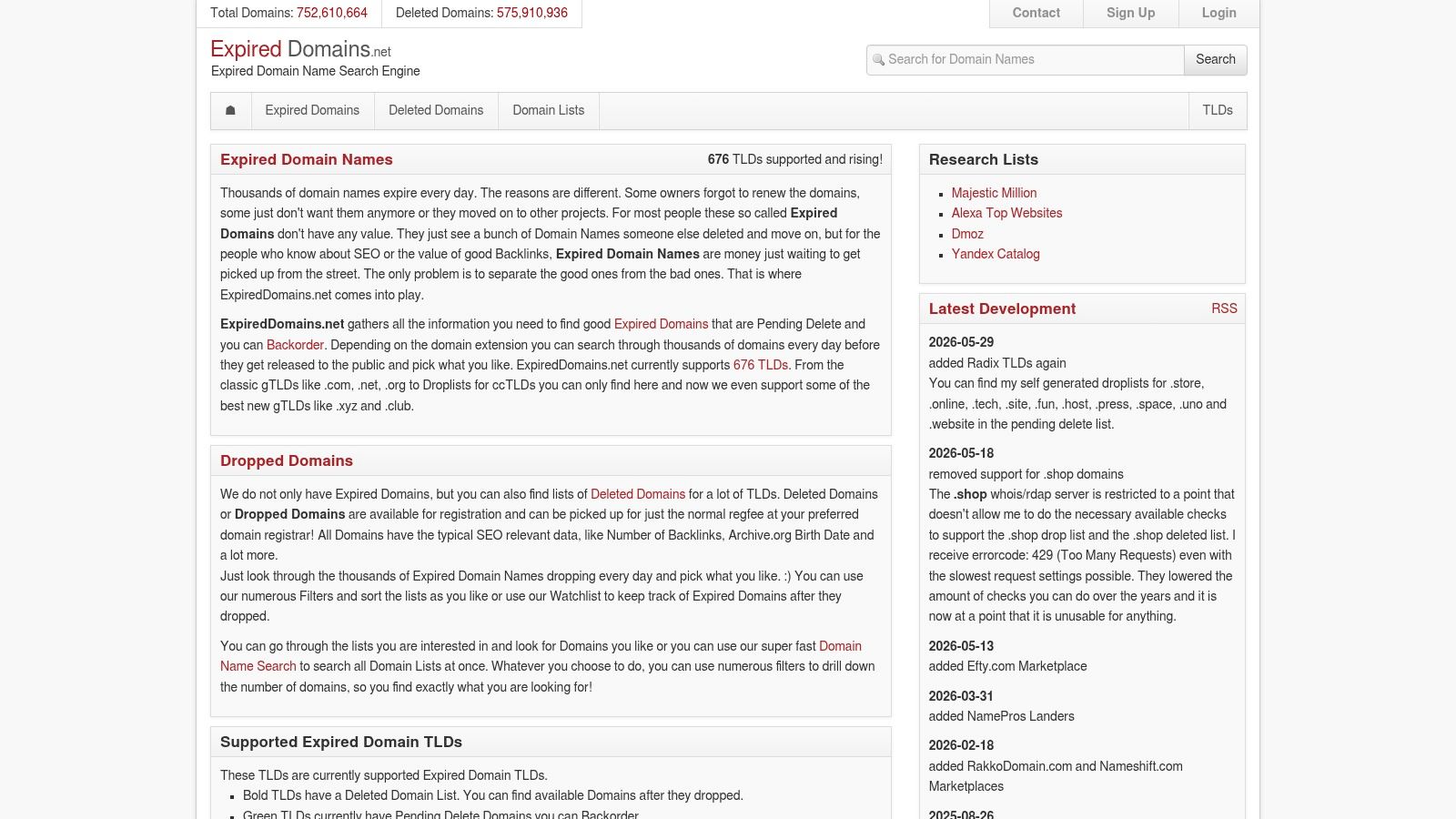
ExpiredDomains.net is still the giant public scrapyard. That's not an insult. It's why almost everyone in this game has used it at some point. If you want raw inventory breadth, it serves as your starting point.
According to ExpiredDomains.net, it offers daily updated domain lists across 676 TLDs and lets users search through thousands of domains every day before they're released to the public. That scale matters because great names vanish fast, especially once they move from pending delete into open release.
When it's the right tool
Use ExpiredDomains.net when your main job is discovery, not decision-making. It's the best place to cast a wide net, build saved searches, and surface names from multiple corners of the market without paying for the privilege.
The flip side is obvious the minute you use it seriously. The platform gives you lots of columns, lots of filters, and lots of domains. It does not protect you from bad judgment. If you don't know how to read archive history, backlink patterns, and odd ownership changes, the database will happily hand you trash at scale.
Big list tools are good at finding needles. They're also good at selling you hay if you don't filter hard.
That's why I treat it as the top-of-funnel option. Pull ideas here. Build lists here. Then verify elsewhere.
Best for
- Budget buyers: It's the default free starting point.
- Breadth-first researchers: Great when you want a bird's-eye view across TLDs and marketplaces.
- People who know their filters: Saved searches become powerful once you stop using it like a random browsing tool.
For newer buyers, this companion guide on the art of finding expired domains helps close the gap between “I found a domain” and “I found a usable domain.”
Direct site: ExpiredDomains.net
3. DomCop
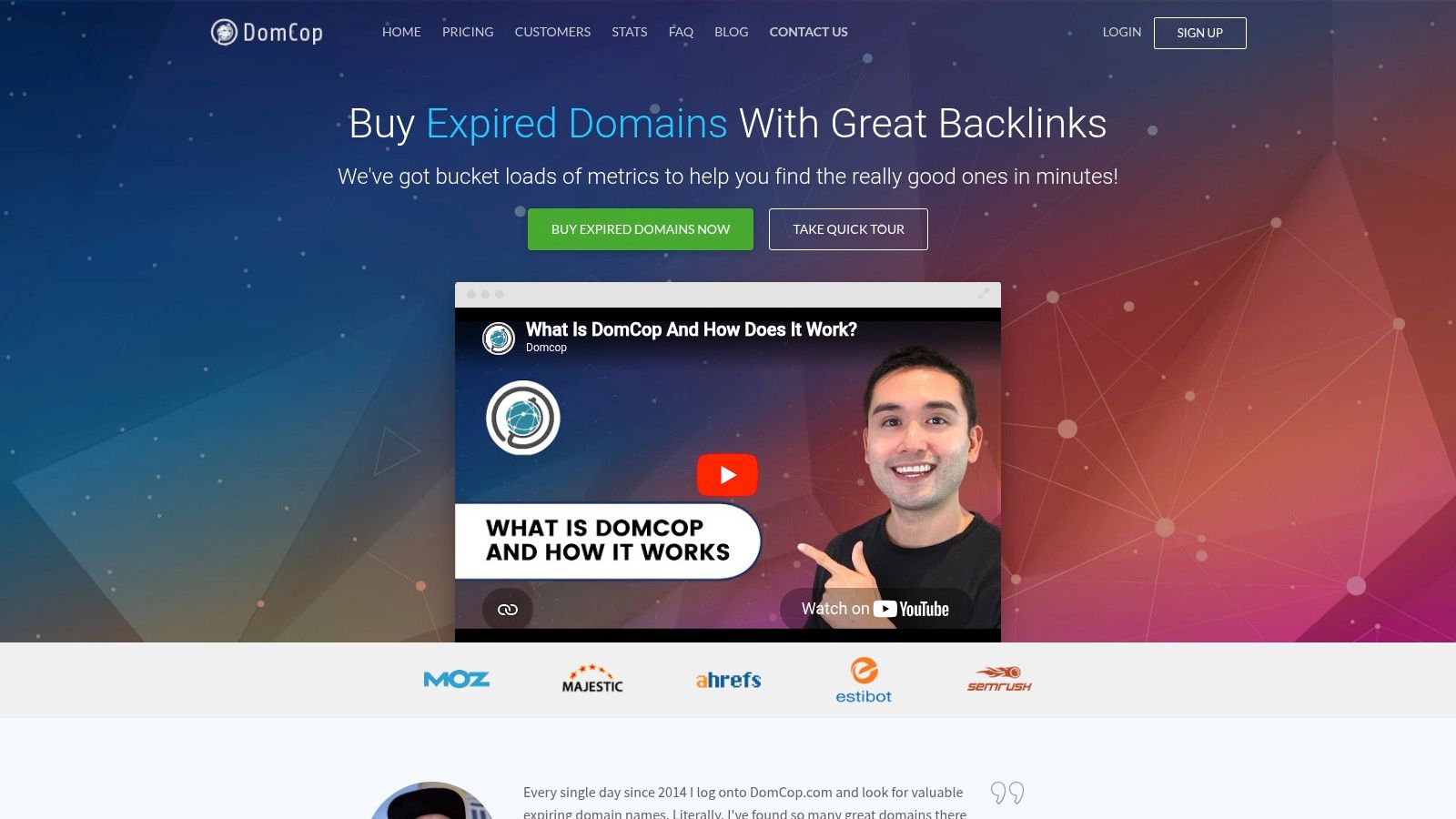
DomCop is for buyers who think in filters first. It's not trying to charm you. It's trying to compress a messy research process into a sortable dashboard.
That's useful because expired-domain evaluation has become metric-driven. Priority Prospect recommends filtering by age, DA, high CF and TF, then validating indexation and backlink quality before purchase. The same guide also advises targeting websites with a DR of 40 or higher and backlinks from highly authoritative sites, which gives you a concrete view of how practitioners define worthwhile inventory in the first place, as shown in Priority Prospect's expired domain guide.
Where DomCop earns its keep
DomCop shines when you already know what signals you care about and you want to screen a lot of domains without manually opening every candidate. It pulls major SEO metrics into one interface and saves a pile of time for agency work, PBN screening, redirect research, and portfolio hunting.
Its best use case is not “find me one cool domain.” It's “show me all the domains that fit my floor.” If your process starts with minimum authority, backlink quality, age, and status filters, DomCop fits naturally.
- Best for SEO campaigns: Strong when you need authority thresholds before you even look at names.
- Best for shortlist building: Useful when you want to export candidates and do deeper review later.
- Best for buyers with process: The more disciplined your criteria, the more value you get.
The downside is that DomCop can push you into metric worship. A neat dashboard makes it tempting to trust the numbers and skip the ugly work. Don't. Backlinks can decay. Site history can get weird. Anchor text can hide the poison until you look.
Direct site: DomCop
4. SpamZilla
SpamZilla is what I'd use when the first question is not “how strong is this domain?” but “what's wrong with it?” That's the right question more often than people admit.
A lot of expired domains look great until you check old snapshots, anchors, and link neighborhoods. Then you realize somebody spent years turning the domain into a landfill. SpamZilla is good at triage. It helps you kill bad candidates quickly so you can spend your attention on the few that survive inspection.
Best use case
If you buy for SEO, SpamZilla's value is speed of elimination. It's not glamorous, but it's profitable. You don't need every promising domain. You need fewer bad purchases.
What I like about this category of tool is the mindset it enforces. Start with suspicion. Then let the domain earn your confidence. That's smarter than falling in love with a nice metric and trying to talk yourself into it.
A domain with decent authority and a rotten history is not a bargain. It's cleanup work you didn't ask for.
Where it fits
- Safety-first SEO buyers: Good when penalties and toxic links are your main concern.
- Small teams: Handy if you can't afford to spend hours reviewing archives manually.
- Second-pass vetting: Strong companion tool after broad discovery somewhere else.
The trade-off is that spam automation is still automation. It's a filter, not a final verdict. Use it to reduce the pile, then inspect survivors manually.
Direct site: SpamZilla
5. Domain Hunter Gatherer
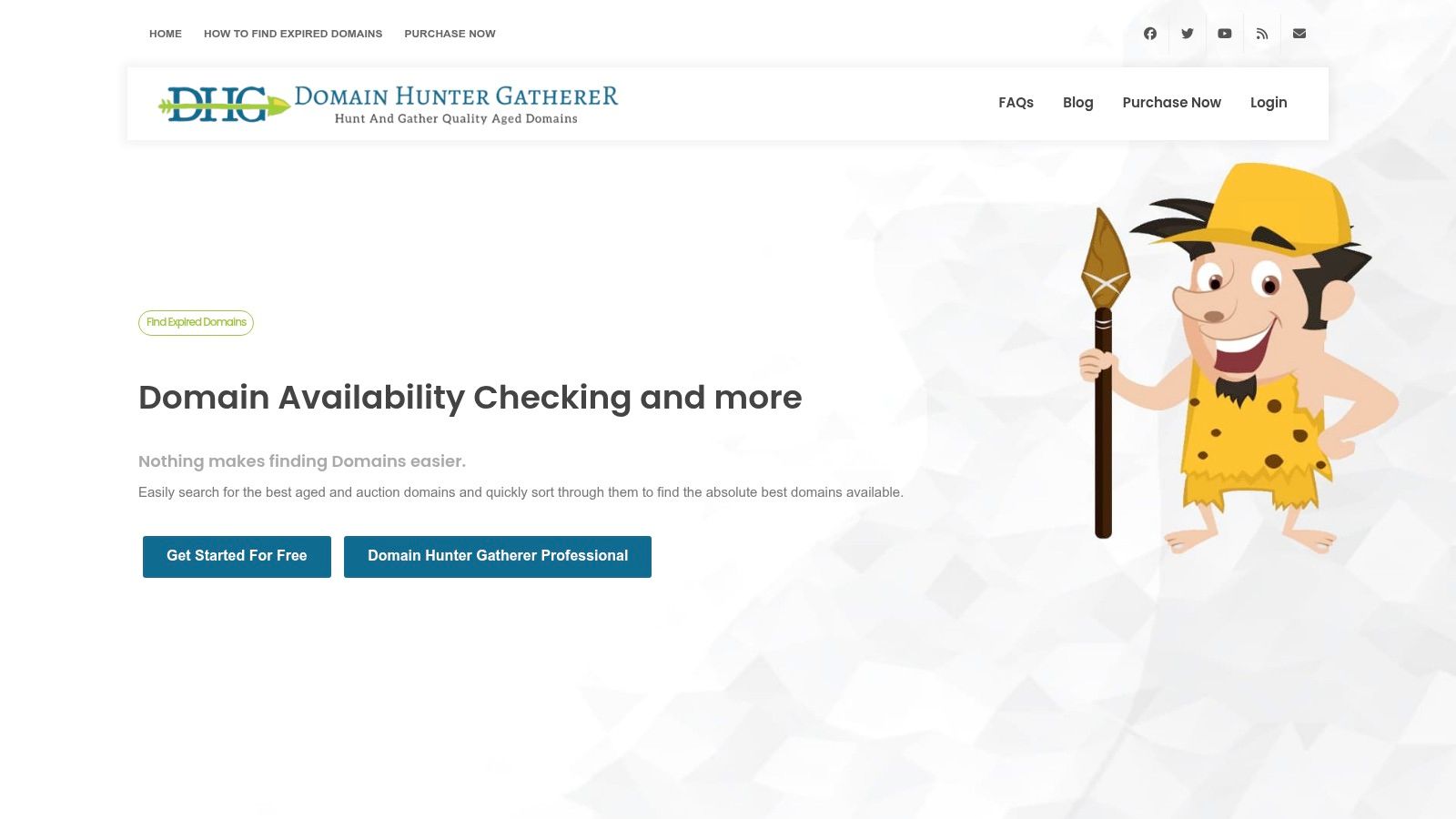
Domain Hunter Gatherer plays a different game. Instead of focusing only on public auction feeds, it goes hunting for opportunities other buyers never bother to surface. That makes it attractive when you want lower-competition names and you don't mind getting your hands dirty.
This is the tool for people who'd rather crawl than bid. If your favorite phrase is “register fee,” DHG will make more sense than another auction dashboard.
Why some buyers swear by it
The appeal is simple. Public lists create public competition. A crawler can surface names before they become obvious. That's useful for niche projects, rebuilds, and smaller SEO plays where a clean, relevant domain beats a flashy auction winner every day of the week.
DHG also suits buyers who think context-first. Instead of starting with a giant market list, you can start with a topic, a set of sites, or a backlink trail and work outward from there.
- Best for finding hidden opportunities: Useful when you want less crowded acquisitions.
- Best for niche relevance: Good for topic-specific searches instead of generic authority hunting.
- Best for tinkerers: The software approach rewards patience and experimentation.
The downside is friction. Installation, setup, crawling strategy, and quotas all make this less friendly than a browser-based platform. If you want instant clarity, you won't love it. If you want unusual finds, you might.
Direct site: Domain Hunter Gatherer
6. GoDaddy Auctions
GoDaddy Auctions matters because inventory matters. If you're serious about expiring domains, you can't ignore one of the biggest registrar-run marketplaces. A lot of names pass through here before they ever have a chance to become hand registrations.
What makes it practical is structure. GoDaddy clearly separates expiring, auction, and closeout inventory in its guidance, which is useful because different stages call for different tactics. Expiring names require patience and discipline. Closeouts reward speed and bargain hunting. Auctions punish emotional bidders.
How to use it without getting cooked
GoDaddy Auctions is not where you browse casually and magically “find value.” It's where you show up with filters, a ceiling price, and the willingness to walk away. That's especially true because competitive names tend to attract last-minute action.
The platform is best when you already know the kind of inventory you want. Think aged brandables, exact-match commercial names, local service domains, or authority names with obvious rebuild potential. It's worse when you're just window-shopping.
- Best for premium expiring inventory: Especially strong for legacy extensions.
- Best for closeout hunters: Unsold names can still have life left in them.
- Best for disciplined bidders: You need a max bid and a cold heart.
The downside is that newcomers often misread auction heat as proof of quality. Sometimes a bidding war means the domain is great. Sometimes it means two people got attached.
Direct site: GoDaddy Auctions
7. NameJet
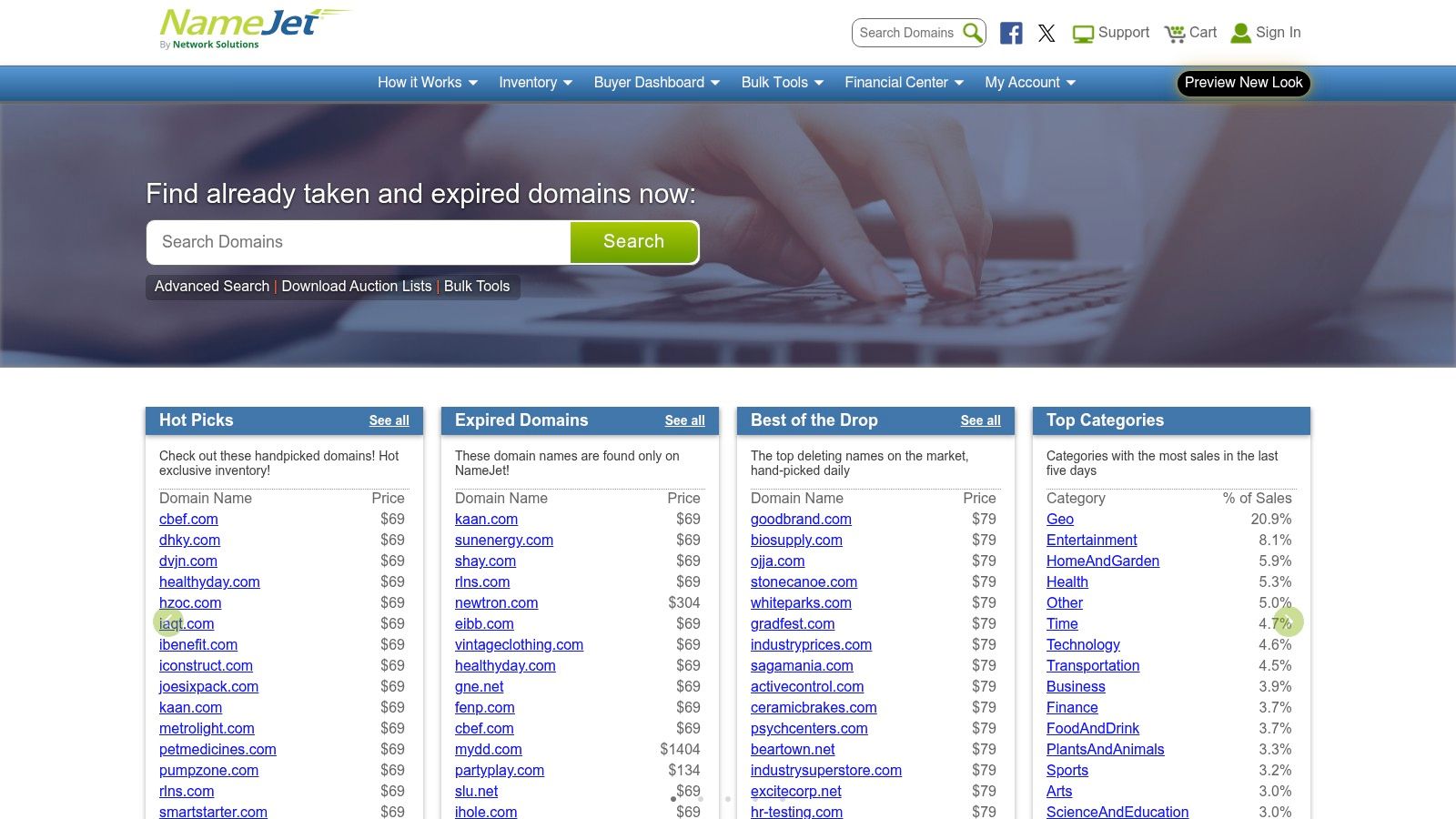
NameJet is a backorder-first platform, and that changes the psychology. You're not always walking into a giant public scrum. You're staking a claim early and seeing whether other buyers want the same prize badly enough to force an auction.
That makes NameJet useful for targeted hunting. If you have a specific domain or style of domain in mind, it's a cleaner fit than broad list tools that encourage endless browsing.
Who should use it
NameJet works well for domain investors who already know their lane. If you specialize in aged .com, .net, or .org names, or you like monitoring registrar-partner inventory, it deserves a place in your workflow.
Its private-auction dynamic can also be less noisy than fully open marketplaces. Not cheap. Not easy. Just a little more controlled.
The best backorder platforms reward conviction. If you only place orders on names you'd actually be happy to own, you make fewer impulsive mistakes.
Trade-offs that matter
- Pros: Strong for pre-release targeting and focused acquisition.
- Cons: Lower browsing breadth than giant aggregators, and premium names still get expensive fast.
If you're the kind of buyer who keeps a watchlist instead of doom-scrolling auction pages, NameJet makes sense.
Direct site: NameJet
8. SnapNames
SnapNames sits in a similar lane to NameJet, but I wouldn't treat them as interchangeable. Serious buyers use multiple backorder venues because inventory sources and buyer behavior differ. Sometimes the edge is not a better metric. It's showing up where fewer competitors are looking.
This platform is useful for pre-release and expiry opportunities through registrar partners. If you only search one marketplace, you're limiting your own shot count for no good reason.
Why it belongs on the list
SnapNames is solid when your job is coverage across backorder ecosystems. It gives you another stream of domains that may never become a cheap hand registration, and it keeps you from depending too much on one auction venue's inventory.
Its free backorder placement model also makes it easier to spread selective bets across names you've already screened. That's practical as long as you stay selective and don't confuse low-friction ordering with smart ordering.
- Best for diversifying deal flow: More hunting grounds, fewer blind spots.
- Best for backorder buyers: Good if your workflow starts before full public release.
- Best as a companion platform: Works better as part of a stack than as your only tool.
The downside is familiar. Multiple interested buyers still turn one promising name into an auction, and that can erase the appeal quickly.
Direct site: SnapNames
9. DropCatch
DropCatch is for one specific job. Catching domains the moment they drop. If that's your game, this platform belongs in the conversation.
Timing becomes the whole strategy. Broad discovery tools help you build a list. DropCatch helps you turn a list into actual acquisitions when the domain reaches pending-delete and public release territory.
Best at one thing
If you want deleted names that are too competitive to grab manually, DropCatch is one of the obvious options. It's especially relevant when you'd rather fight at the drop than bid through the full expiring-auction lifecycle.
That creates a very different decision process. You don't just ask whether a domain is good. You ask whether it's good enough to justify a backorder before anyone else does.
- Best for pending-delete targets: Strong for buyers who monitor drop timing closely.
- Best for aggressive acquisition: Good when manual registration is unrealistic.
- Best for buyers who plan ahead: Your edge comes from prep, not improvisation.
If you're new to this corner of the market, NameSnag's guide to domain drop catching is a good primer on why this stage is so competitive and how backorders differ from regular auction buying.
Direct site: DropCatch
10. Dynadot Expired Auctions
Dynadot Expired Auctions is where bargain hunters should spend more time than they usually do. It doesn't have the same giant-marketplace aura as GoDaddy, and that's exactly why it can be useful.
Cleaner interface, registrar-level inventory, and potentially lower bidder density make it attractive when you want opportunities without the same amount of noise. It's not a secret goldmine. It's just a less crowded room.
Why experienced buyers keep it in rotation
Smaller marketplaces reward patience. You won't see the same volume, but you may see better buying conditions on the names that do show up. That matters if you care about ROI more than bragging rights.
Dynadot is especially worth checking for closeout-style hunting and overlooked names that don't trigger broad-market frenzy. Those aren't always glamorous names, but they can be useful names.
- Best for value seekers: Good when you want lower competition rather than maximum inventory.
- Best for closeout scavenging: Unsold domains can still be viable.
- Best for secondary-market coverage: Helpful as part of a wider registrar-marketplace mix.
The downside is simple. Less inventory means fewer total shots. If you rely on it alone, you'll miss too much. If you add it to a broader workflow, it can produce very nice wins.
Direct site: Dynadot Expired Auctions
Top 10 Expired Domain Finders Comparison
| Product | Core features | Quality (★) | Price/value (💰) | Target audience (👥) | Unique selling points (✨) |
|---|---|---|---|---|---|
| NameSnag (Featured Pick) 🏆 | AI SnagScore, spam-free verification, live analysis, Early Access Alerts, API | ★★★★★ | 💰 Free trial; weekly/monthly/annual; affordable tiers | 👥 SEOs, branders, domain investors, flippers | ✨ SnagScore + automated penalty checks; centralized Moz/Majestic/Ahrefs; early alerts |
| ExpiredDomains.net | Massive free aggregator, extensive filters, saved searches | ★★★★☆ | 💰 Free | 👥 Researchers, bargain hunters, broad-market scouts | ✨ Breadth of listings (600+ TLDs), powerful free filters |
| DomCop | Expired/expiring/archived lists, export, third-party metric integration | ★★★★☆ | 💰 Paid (higher-end), credit system | 👥 Serious SEOs, professional investors | ✨ Metric-first workflow; bulk enrichment via credits |
| SpamZilla | Automated spam checks, backlink miner, 70+ filters, daily alerts | ★★★★☆ | 💰 Paid (good ROI vs manual checks) | 👥 Risk-averse buyers, rehabbers, SEOs | ✨ Strong automated spam triage; backlink anchor insights |
| Domain Hunter Gatherer (DHG) | Desktop crawler, auction search, DomRecovery content tools | ★★★★☆ | 💰 Paid (desktop licenses, tiered features) | 👥 Power users, opportunistic SEOs, DIY hunters | ✨ Finds register-at-fee expireds; modular crawler tools |
| GoDaddy Auctions | Huge inventory, expiring auctions, closeouts | ★★★★☆ | 💰 Membership to bid; auction fees | 👥 Domain investors seeking volume; .com/.net hunters | ✨ Unmatched inventory depth; frequent closeout deals |
| NameJet | Backorder + private auctions, pre-release exclusives | ★★★★ | 💰 Backorder fees + auction bids (often $69+ min) | 👥 Backorder-focused investors, legacy gTLD seekers | ✨ Private auction model reduces open-market frenzy |
| SnapNames | Free backorders, auctions between backorderers, buy-now options | ★★★★ | 💰 Free to backorder; pay if you win | 👥 Backorder users diversifying sources | ✨ Pre-release pipeline from registrar partners |
| DropCatch | Drop-catching network, flat backorder fees, public auctions | ★★★★ | 💰 Flat fees (e.g., ~$59 typical); marketplace fees | 👥 Competitive drop-catchers, .com/.net hunters | ✨ High success rate catching pending-delete names |
| Dynadot Expired Auctions | Registrar-run auctions, closeouts, proxy bidding | ★★★★ | 💰 Lower competition; standard auction fees | 👥 Bargain hunters, smaller-scale investors | ✨ Cleaner UI, often less bidder density for bargains |
Your Next High-Value Domain Is Waiting
You spot a domain with clean anchors, a decent archive trail, and a price that still leaves room for profit. Two hours later, you find a past spam phase, a sketchy redirect, or an auction queue full of stronger bidders. That is the real job here. Finding names is easy. Finding names that fit the goal, survive due diligence, and still make financial sense is where good investors separate themselves.
The best expired domain finder depends on the outcome you want. SEO buyers need fast filtering and history checks. PBN builders need aggressive spam screening. Flippers need pricing discipline and broad auction coverage. Brand-first buyers need shortlists they can move on before the market notices. Treat the tool as part of the workflow, not the decision-maker.
A usable process stays in the same order every time. Source domains first. Filter by the signals that matter for your use case. Review history and link quality. Then bid or register. Investors who skip straight to checkout usually pay for someone else's leftovers.
One practical test is simple. Can the tool help you check authority signals, backlink quality, age, traffic clues, and risk flags without bouncing across five tabs? That is where time gets lost, and time loss usually turns into bad buys. ExpiredDomains.com reflects that broader screening mindset, and Namecheap's guidance points buyers toward archive history, backlink review, historical organic traffic, blacklist checks, Google Safe Browsing, and WHOIS history before purchase, as summarized by ExpiredDomains.com.
If speed matters, NameSnag stands out because it shortens the messy middle between discovery and action. As noted earlier, it works well for both immediate registration opportunities and upcoming expirations, which matters if your strategy shifts between quick wins and planned acquisitions. That job-to-be-done focus is what makes it useful. It reduces sorting time so you can spend more effort on judgment.
The same rule applies outside pure domain investing. A domain only becomes valuable when it supports a real business objective, whether that is rankings, lead generation, resale margin, or brand positioning. This breakdown of how to compare ecommerce SEO offerings makes that point well. Buying the domain is only step one. Monetizing the asset is the part that pays.
If you want a faster route to clean opportunities, try NameSnag. It combines discovery, scoring, spam screening, and early-access monitoring in one place, which cuts vetting time and helps you act before weaker buyers even know the name is worth chasing.
Find Your Perfect Domain
Get access to thousands of high-value expired domains with our AI-powered search.
Start Free Trial