
I once searched for chef ding houston the way normal people search for dinner. Ten minutes later, I was no longer thinking about Kung Pao chicken. I was staring at a classic small-business domain puzzle with enough loose threads to make an SEO sweat and a domain investor smile.
The Messy Digital Footprint of Every Local Business
Type in chef ding houston and you run into the kind of online clutter that shows up everywhere in local search. One site is live. Another domain exists. A review profile sends mixed signals. A directory gives you one version of the business, and another platform hints at something else. For diners, it's annoying. For SEOs and domain hunters, it's useful.
Chef Ding gives you a very clean example of this pattern. Current sources don't address recent developments or ownership changes in the last 12 months, and the presence of multiple domains, including chefdingtx.com, chefdinghouston.com, and chefdingasiancuisine.com, points to either rebranding, digital migration, domain neglect, or some combination of all three, according to Chef Ding Houston's current web presence.

Why this mess happens
Most local businesses don't run a tidy digital stack. They open a restaurant, claim a listing or two, launch a site, switch vendors, add online ordering, forget an old domain, then leave half of it untouched for years. Nobody's sitting there with a master spreadsheet of brand assets.
That creates a weird but valuable trail:
- Old domains linger because a past web designer registered one variation and the owner registered another.
- Listings conflict because directories update at different speeds.
- Ordering platforms stay fresher than review sites because they directly affect revenue.
- Brand signals split across domains, citations, menus, and mentions.
If you work local SEO, you already know the business listing layer is where a lot of chaos begins. If you need a quick refresher on why this matters, this breakdown of Google Business Profile is worth reviewing because one mismatched business profile often cascades into messy citations across the web.
The investor trick hiding in plain sight
The diner asks, "Is this place still open?"
The domain investor asks, "Which web assets still carry trust, links, and local intent?"
That question changes everything. You stop reading the web like a customer and start reading it like an asset map.
Practical rule: Conflicting business data isn't automatically a bad sign. It often means the business was active long enough to leave a broad digital footprint.
This is also where reputation matters more than people think. Before touching any local business domain, I like to think about what the name may already signal to users, links, and search engines. That's why this guide on domain name reputation is useful. A domain can be available and still be a terrible buy if the historical baggage is wrong.
Chef Ding isn't interesting because it's a restaurant. It's interesting because it's a real-world example of a business with enough age, enough signals, and enough digital inconsistency to create opportunity.
And that pattern shows up all over local search.
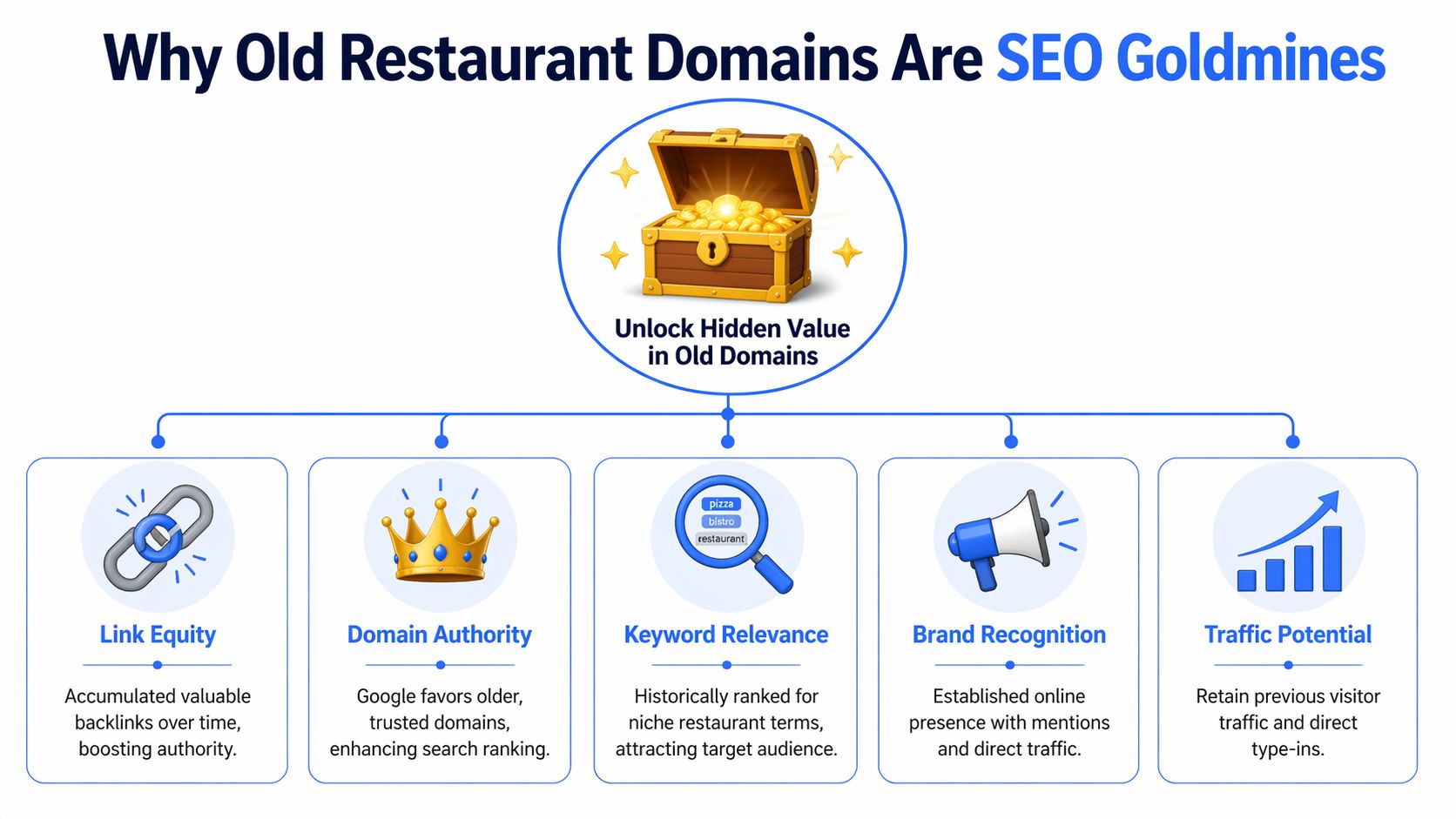
Why Old Restaurant Domains Are SEO Goldmines
A restaurant domain gets interesting when it has history. Not hype. History.
Chef Ding Asian Cuisine was established in 2010 and has operated for over 15 years in Houston as of 2026, with 201 visitor reviews on Restaurant Guru, which creates a long-running foundation of local trust signals tied to the business name and web presence, according to Chef Ding Inc. on Manta. That kind of age doesn't guarantee SEO value, but it gives you something new domains don't have, which is accumulated context.
What old local domains tend to carry
A domain tied to a long-running restaurant can collect signals from places that look boring on the surface but matter in practice.
| Asset type | Why it matters |
|---|---|
| Directory citations | They reinforce name, address, and brand consistency over time |
| Review mentions | They create natural branded references |
| Menu and ordering pages | They attract niche intent around cuisine and location |
| Legacy backlinks | They may pass useful authority if the profile is clean |
The key point is simple. A local business domain doesn't need national press to matter. It only needs enough real-world use over a long enough period.
Why restaurant names punch above their weight
Restaurant domains often carry highly specific search intent. A user searching a business by name, plus a city or neighborhood, isn't casually browsing. They're trying to order, visit, call, or confirm the business exists.
That means an old domain can be useful in several ways:
- Branded intent: People search the exact restaurant name.
- Local modifiers: Searches often include Houston, Memorial, or nearby area terms.
- Cuisine overlap: Chinese food, takeout, delivery, lunch specials, and dish names create adjacent relevance.
- Direct type-in potential: Some users still go straight to the likely domain.
A lot of business owners never capitalize on this. Their site becomes stale, but the domain still holds residual value from years of online references.
Old restaurant domains can fail as businesses and still succeed as SEO assets.
If you're building local sites or niche content projects, the idea isn't to blindly buy every old food domain you see. The trick is to separate clean, relevant aging from junk with inflated-looking metrics. That's where understanding traffic from expired domains helps, because the value often comes from a mix of historical brand demand, lingering backlinks, and topic alignment.
What actually works and what doesn't
What works is buying domains with believable history tied to a real market. Chef Ding's footprint fits that mold because it reflects an actual business that people searched for, reviewed, and ordered from.
What doesn't work is chasing random aged domains with no commercial identity. A domain can be old and still useless if it never built recognition, never earned natural mentions, or changed hands so many times that its past is muddy.
If you're a restaurant owner rather than an investor, the inverse lesson applies. A clean site rebuild and basic citation maintenance can still do a lot to boost your restaurant's online presence, especially before your brand fragments across multiple domains and directories.
Spotting Red Flags and Green Lights in a Digital Footprint
When I audit a local business footprint, I don't start with metrics. I start with contradictions.
Chef Ding is a good specimen because it has both encouraging signs and caution signs. That's exactly what you want in a case study. Purely clean situations teach you nothing, and obvious disasters are rarely worth the time.

Green lights worth noticing
Some signals say, "This domain family may still be commercially meaningful."
Chef Ding has positive traction in review history. Despite conflicting information online, Tripadvisor includes praise calling it "the best Chinese joint in the Memorial/Energy Corridor area" for takeout, which is the kind of branded sentiment that can support SEO value around a legacy domain, as shown on Chef Ding's Tripadvisor listing.
Here are the green lights I care about most:
- Active money pages: If ordering pages or delivery integrations are live, someone still values the traffic.
- Branded review language: Reviewers using the business name naturally is better than generic mentions.
- Location continuity: A stable address across platforms helps validate the entity.
- Commercial intent baked into the brand: Cuisine plus city searches can be monetizable even after a site ages out.
Red flags that should slow you down
Now the other side. Mixed status signals can hide a domain that's neglected, disputed, or not worth reviving.
The biggest red flags in a footprint like this are:
Conflicting closure signals
If one major profile suggests the business is closed while an ordering ecosystem appears alive, you need to confirm whether you're looking at stale listings or an actual winding-down process.Too many brand variants
Multiple domains can be an opportunity. They can also mean fractured branding, duplicate content, and a backlink profile split into pieces too small to matter.Static official pages
A live site that never changes isn't always a dead asset, but it often means the brand is drifting without supervision.
If the business looks alive only on platforms that process orders, treat every other signal as historical evidence, not current truth.
This is the part many investors skip. They see age and stop asking questions. Bad move. A local domain can have clean-looking age and still carry a messy footprint that limits resale, redirect, or rebuild options.
A quick audit rhythm
Use a simple review pattern and keep it fast:
- Check branded search results first
- Compare official site, ordering pages, and review platforms
- Look for one strong commercial signal
- Look for one serious contradiction
- Decide whether this is clean opportunity or expensive confusion
For a deeper walkthrough on screening domain quality visually, this video is a solid companion before you go further.
What works is disciplined skepticism. What doesn't work is assuming every old local domain is a hidden gem. Some are. Some are just old.
How to Hunt for Available and Expiring Domains
Once you spot a business with a footprint like chef ding houston, the hunt stops being theoretical. You have a keyword, a city, several domain variants, and a clear local niche. That's enough to start searching with purpose instead of doom-scrolling domain lists.
The first distinction that matters is simple:
- Available domains have already dropped and can be registered right away.
- Expiring domains are in the grace period and may become available soon.
That difference changes your playbook. With available names, speed matters. With expiring names, monitoring and timing matter.
Start with the business, then widen the net
Chef Ding's digital operation includes multiple websites and Grubhub-integrated delivery within a 5-mile radius, which shows it isn't just a single brochure site but a small online ecosystem. The same source notes that similar Texas spots may sit in the $500K to $1M annual revenue range, which is why domains tied to businesses like this can carry real commercial relevance, according to Chef Ding Houston's terms and conditions.
That gives you a practical hunt pattern:
- Search the exact brand variant.
- Search city-plus-cuisine variants.
- Search nearby neighborhood terms.
- Search broader category names that may have similar local-link profiles.
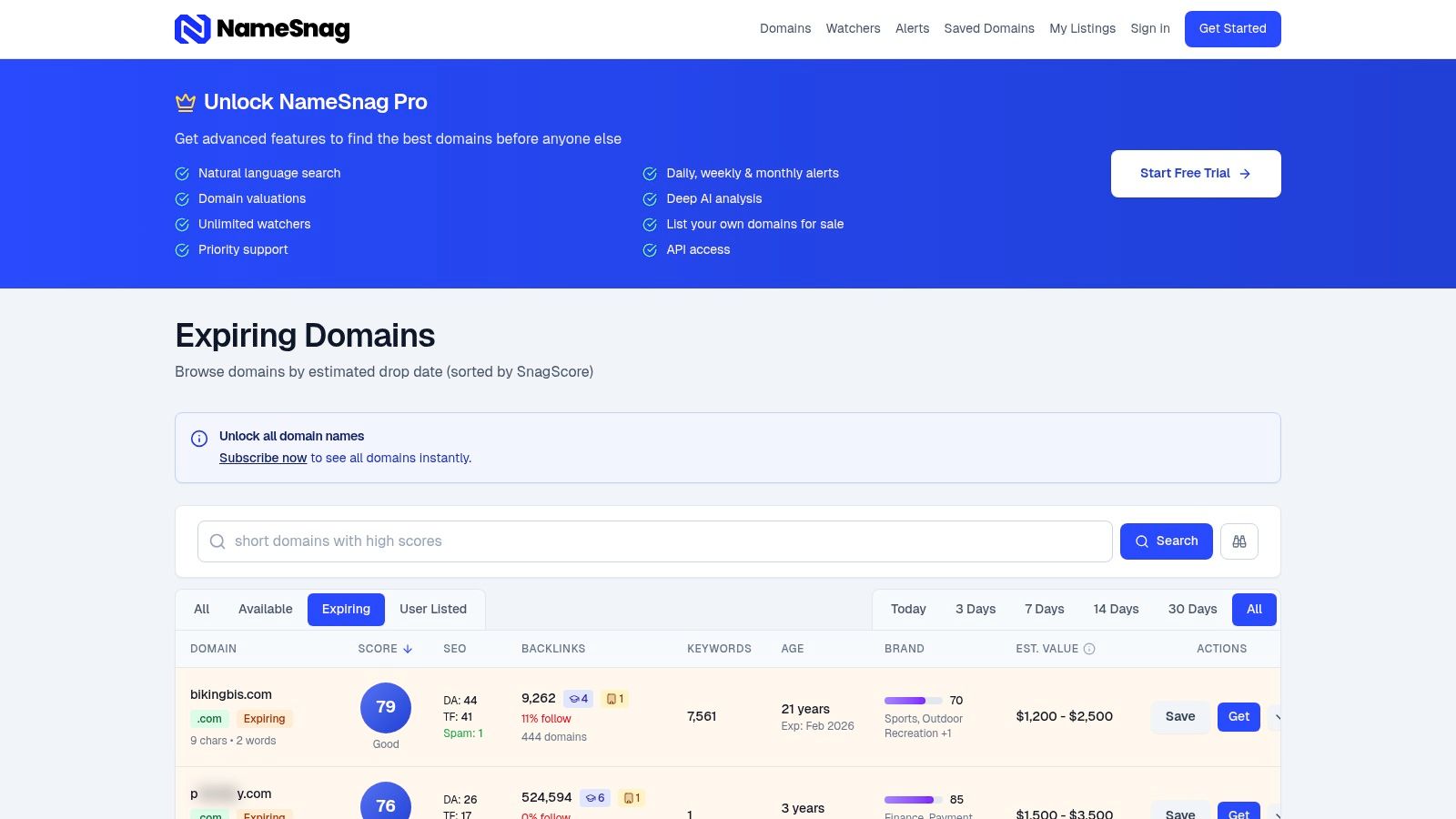
The two lists I check first
If I'm working this niche, I split the search into two buckets.
Immediate pickups I check available domains first because the lowest-friction wins often come from names that already dropped and nobody noticed. Within these, weirdly useful local brand variants hide.
Watchlist candidates
Then I go through expiring domains because restaurant and local-service names often sit in grace periods before anyone realizes they have value.
The time filters matter more than commonly perceived. Today is good for active hunting. The wider windows are better when you want to map a niche and spot naming patterns in a city.
A practical search sequence
Don't just search "Chef Ding." That's too narrow.
Use a sequence like this:
- Exact-match brand terms: chef ding, chef ding houston, chef ding memorial
- Cuisine-location combinations: houston chinese takeout, memorial chinese restaurant
- Brand-adjacent opportunities: nearby local restaurants with old footprints and weak sites
- Category terms with intent: asian cuisine houston, chinese delivery memorial
A broader sweep turns one business case into a mini market map. Sometimes the best domain isn't the one you started with. It's the neighboring business with a similar citation history and weaker competition.
Field note: One restaurant search often reveals a cluster of neglected local domains in the same vertical.
If you want a more systematic walkthrough of the drop cycle, this guide to finding expiring domain names lays out the timing and process cleanly.
What works better than waiting for a miracle
What works is building a repeatable routine around one niche and one geography. Search by cuisine, then street, then neighborhood, then city-wide modifiers. Watch the old local names with signals.
What doesn't work is betting everything on one exact-match domain and waiting around. Good domain hunters don't fall in love with a single target. They build a bench.
Five Profitable Plays for Your Newly Snagged Domain
You grabbed a strong local domain. Great. The money comes from the next decision, not the purchase itself.
With a domain tied to a footprint like chef ding houston, I usually think in terms of fit. Does the name have brand value, redirect value, lead value, content value, or flip value? Pick the lane early. Half the waste in domain investing comes from vague post-purchase plans.
1. Rebuild a hyperlocal authority site
This works when the domain has recognizable local intent and enough clean history to support a content relaunch.
A rebuild doesn't need to mimic the original restaurant. In many cases, it shouldn't. You can reposition around a broader local angle, such as Chinese takeout in the Memorial area, neighborhood food guides, or a city-specific Asian dining resource. The advantage is relevance. You're not forcing a random topic onto an aged local domain.
2. Redirect into a related local property
This is the quiet operator move. If you already own a relevant local project, a clean domain can be useful as a supporting asset.
The catch is relevance. A domain with restaurant history should point to something close enough to make sense. Redirecting a local food domain into an unrelated SaaS site is how people waste decent assets and invite disappointment.
Relevance does the heavy lifting. The redirect is just the transport.
3. Build a lead-gen property around food intent
Restaurant searchers have high action intent. They want reservations, takeout, delivery, menus, or alternatives nearby. That creates room for a local lead-gen site if you execute carefully.
A smart version looks like this:
- Neighborhood pages: Focus on Memorial, Energy Corridor, or nearby dining intent
- Cuisine pages: Chinese takeout, lunch specials, delivery-friendly spots
- Conversion paths: Calls, booking referrals, or sponsored placements
- Editorial angle: Keep it useful enough that local users don't bounce instantly
4. Package and flip the domain with a story
Domains sell better when the buyer can immediately understand the angle.
Chef Ding's contrast with more modern culinary branding is useful here. A snagged domain in this lane could be repositioned around traditional Chinese identity versus contemporary fusion concepts. That kind of differentiation matters in Houston's $2.5B food market, and the contrast is especially visible when set beside chefs like Jio Dingayan, whose style blends Texas BBQ with Japanese umami, as discussed in this Houston chef video profile.
The point isn't to force a narrative. It's to show a buyer what the name could become.
5. Use it as a niche content testbed
Some domains are too interesting to flip immediately and too niche for a full-scale business. That's fine. Use them as test sites.
I like this option when the domain has enough topic alignment to support:
- restaurant comparison content
- local dining guides
- delivery-focused landing pages
- cuisine-specific affiliate experiments
This is often the best "learn while earning" move because the downside is limited and the upside includes both SEO data and resale potential.
The trade-off most people ignore
A strong local domain can do several jobs, but it usually does one job best. If the name is highly branded, flipping or rebuilding may beat redirecting. If the history is useful but the brand is weak, redirecting may win.
The mistake is trying to keep every option open. That sounds flexible. In practice, it delays execution.
Stop Searching for Dinner and Start Hunting for Domains
chef ding houston is the kind of search commonly made without thinking. They want food, hours, a phone number, maybe a menu. Fair enough.
A domain investor should see something else. Multiple domains. Mixed platform signals. Old brand history. Commercial intent. Enough confusion to scare casual buyers away, but not enough to erase the underlying value. That's where overlooked opportunities live.
The broader lesson isn't about one Houston restaurant. It's about how local businesses leave digital residue everywhere. A restaurant opens, grows, changes vendors, adds ordering, forgets a domain, leaves reviews behind, and slowly creates a web of signals nobody fully cleans up. That mess is annoying for customers. It's productive for people who know how to evaluate domains.
You don't need a perfect business case. You need a footprint with believable history and usable intent. Sometimes that's a domain you can rebuild. Sometimes it's one you redirect. Sometimes it's a lead-gen machine. Sometimes it's a clean flip to a buyer who understands the niche better than the original owner ever did.
Diners will keep using local search like consumers. They'll compare star ratings, scan menu photos, and move on.
You can do something smarter. Use those same searches to map neglected digital assets in the wild. Search restaurants, clinics, contractors, salons, repair shops, and neighborhood services. Check the brand variants. Look for stale sites, active ordering or booking flows, and split domain histories. The pattern repeats more often than you'd expect.
Once you see it, you can't unsee it.
If you want to turn that instinct into a repeatable workflow, NameSnag is built for exactly this kind of hunt. You can scan available and expiring domains, filter by timing, and move from random browsing to targeted acquisition before the obvious names get picked clean.
Find Your Perfect Domain
Get access to thousands of high-value expired domains with our AI-powered search.
Start Free Trial