
A domain investor once told me the best brand lessons don’t come from pitch decks. They come from ordinary storefronts with a real customer counter, a real owner, and a name someone had to put on a sign.
That’s why oregon mountain coffee company is worth studying. Not because it’s flashy, but because it’s the kind of small business that shows you what brand equity looks like before a spreadsheet ever catches up.
Your Next Big Idea Might Be a Small Coffee Company
Independent coffee shops are good training grounds for brand analysis because they can’t hide behind venture capital fog. You see the product, the story, the local trust, and the naming choices all at once. If the brand works, it works in public.
Oregon mountain coffee company has that useful kind of clarity. It reads like a grounded local brand, the sort of place built on familiarity, routine, and taste rather than buzzwords. For domain investors and SEOs, that makes it a sharp case study because the signals are easier to read.
A lot of people evaluate brands backward. They start with traffic tools, then obsess over links, then maybe glance at the business itself. That’s upside down. Start with whether the company feels real enough to deserve a strong domain presence in the first place.
A small local brand with honest positioning often teaches you more than a bloated online-only brand with borrowed authority.
That’s also why operators still study fundamentals when launching coffee businesses. If you want a practical outside perspective on what makes a coffee concept work in practice, the expert advice from Allied Drinks Systems is worth a look. It’s useful because it forces you to think beyond aesthetics and into setup, operations, and customer experience.
For apprentices in the domain game, here’s the punchline. A business like this lets you practice the full stack of evaluation:
- Story quality: Is there a believable origin?
- Commercial clarity: Does the name instantly tell you the category?
- Local authority: Does the market have a reason to trust it?
- Search potential: Is the digital footprint something you could build on?
- Brand ceiling: Can the name stay local, or stretch further?
That’s not a coffee review. That’s asset analysis.
The Origin Story and Authentic Brand DNA
The first thing I look for in any brand is simple. Can I explain why it exists without sounding like I’m reading ad copy?
With oregon mountain coffee company, the answer is yes. According to the company’s Our Story page, it was established in Medford, Oregon, by owner Travis Woodrum, who brought a privately roasted family blend recipe to the location previously occupied by Coffee Depot. The company hosted its grand opening on April 19, 2010, emphasizing organic, ethically sourced beans and building its place in the local specialty coffee scene.
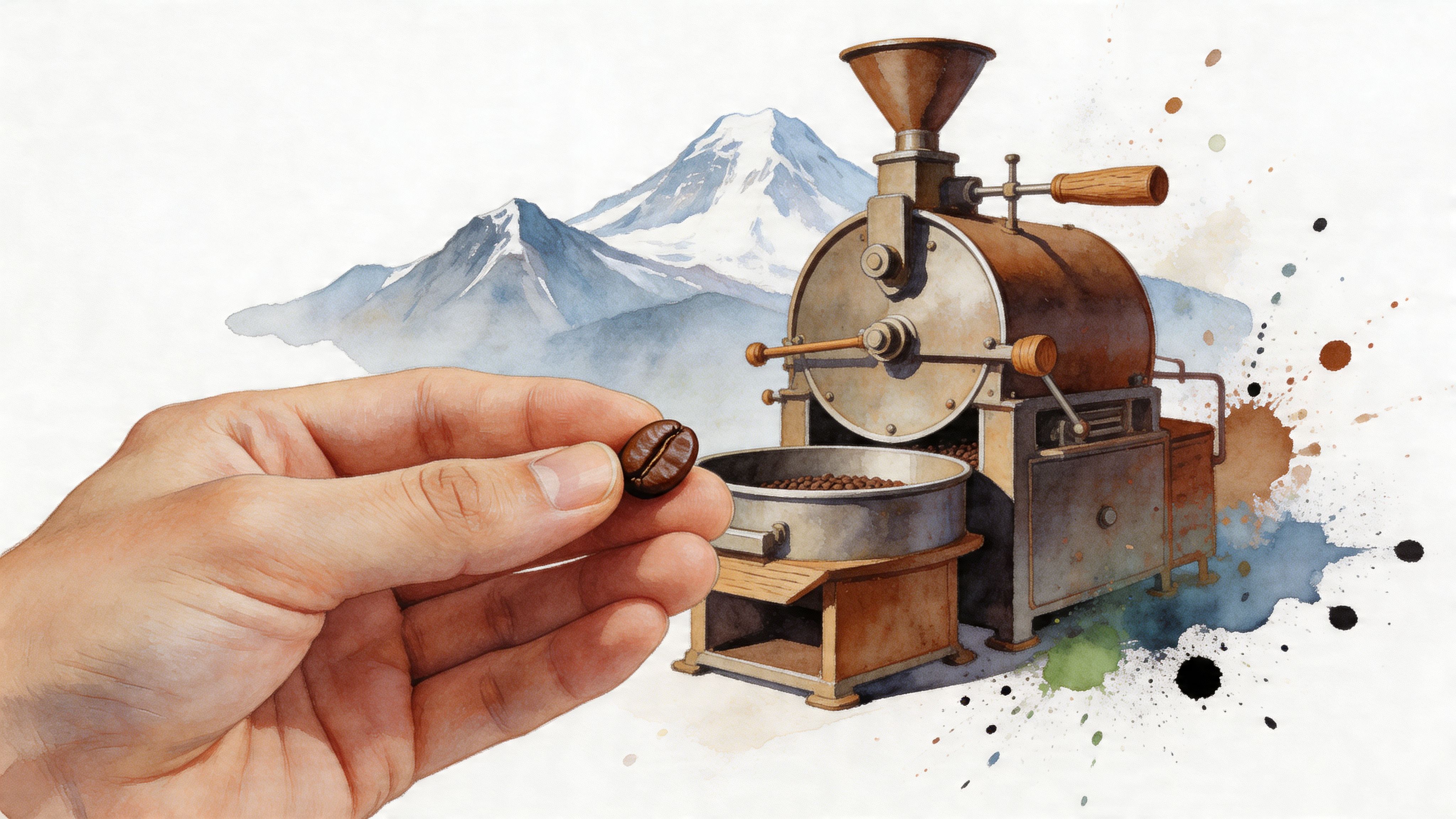
That matters more than is commonly understood. Investors love “story” until they have to define it. A proper definition: a story is valuable when it’s specific, verifiable, and hard for a competitor to counterfeit.
Why this story works
A family-owned coffee company built around a private family blend has something many startups would kill for. It has a reason to exist that doesn’t feel manufactured.
A generic coffee brand can claim quality. A brand tied to an owner, a place, and a handed-down recipe claims identity. That’s stickier. Customers may first buy coffee, but they remember the business because it feels anchored.
Three pieces of this origin story do heavy lifting:
| Brand element | Why it matters | Investment read |
|---|---|---|
| Family blend recipe | Gives the product a personal anchor | Harder to clone than generic “premium coffee” language |
| Medford roots | Creates local credibility | Strong for community SEO and local recall |
| Prior coffee location | Reduces friction in customer trust | Suggests continuity rather than a cold start |
That last part is sneaky-good. Taking over a location that already served coffee means the brand didn’t have to teach the market what the space was for. It inherited a behavioral pattern, then overlaid a fresh identity on top.
Authenticity is not fluff
People in SEO sometimes dismiss “authenticity” because it doesn’t fit neatly into a metric box. Bad habit. Authenticity affects branded search, word-of-mouth, review tone, local mentions, and repeat direct traffic. You may not always measure it cleanly at first, but you feel its fingerprints everywhere.
Oregon mountain coffee company also positioned itself around organic, ethically sourced beans, plus a focus on single-origin coffees, house espresso blends, and daily filter options on its own story page. That mix is strong because it combines principle with product. “Ethically sourced” by itself can sound airy. Add single-origin and house blends, and now the promise becomes concrete.
Investor’s rule: If a brand’s story survives fact-checking and still sounds good, you’re looking at usable brand DNA.
What apprentices should steal from this
Not the coffee. The framework.
When you inspect a small brand, ask these questions first:
Was the business born from something personal?
Founder-backed stories usually sound cleaner because they are cleaner.Can the story be verified on owned properties?
If the origin is only floating around on third-party mentions, be cautious.Does the product line support the story?
A family-roast origin works well with small-batch positioning. That’s coherence.Does the location strengthen the brand instead of trap it?
“Oregon” and “Mountain” create imagery, not just geography.
A weak brand tries to sound premium. A strong brand sounds inevitable. This one has that advantage.
Customer Reputation as a Valuation Metric
A brand’s self-description is the opening argument. Reputation is the verdict.
Oregon mountain coffee company gives us a useful setup because its product claims are crisp. On the company website, it describes a roasting approach built on small-batch roasting, premium organic and fair trade Arabica beans, and a goal of producing smooth, full-bodied flavor. The site also states that this process preserves cup scores typically above 80/100 on SCA scales, with roast targets of 12-15 minute roast times at 200-220°C, yielding significantly higher aroma retention than industrial methods, according to the company’s main website.
That’s not light marketing fluff. It’s operational language. And operational language gives you something to test against public sentiment.
Read reputation like an investor
When I review a local brand, I don’t just ask whether customers “like it.” That’s lazy. I look for alignment between the company’s product promises and the words customers keep repeating in public.
For a coffee roaster, I care about patterns like these:
- Flavor confirmation: Do people describe the coffee in ways that match the brand promise?
- Freshness cues: Do they talk about roast quality, aroma, or consistency?
- Human experience: Do they mention staff, owner presence, or community feel?
- Return behavior: Do reviews sound like one-time novelty visits or habit purchases?
If the company promises smooth, full-bodied coffee and customers keep praising balanced taste, that’s market validation. If the company talks quality but the feedback centers on convenience only, the product claim may be weak.
Public reviews are not decoration. They’re unpaid positioning audits.
Track patterns, not emotional one-offs
A single glowing review means nothing. A single angry review means nothing too. You want recurring language.
That’s where brand monitoring becomes less of a nice-to-have and more of a discipline. If you manage or evaluate brands at scale, LLMrefs' insights on brand tracking are a useful reminder that mentions across platforms tell you how the market is classifying a business.
Here’s the practical scoring lens I’d use for a local coffee brand:
| Signal | Weak read | Strong read |
|---|---|---|
| Review language | Generic praise with no specifics | Repeated mention of flavor, freshness, and experience |
| Sentiment consistency | Mixed or erratic impressions | Stable tone across platforms |
| Brand recall | People talk only about location | People reference the coffee and the brand identity |
| Defensibility | Easy for competitors to mimic | Product quality and story seem linked |
The big lesson for apprentices is this. Reputation compounds where product and identity match. If a business says “small-batch, organic, fair trade Arabica” and customers experience something memorable in the cup, that brand starts generating its own momentum. That kind of trust can outlive ad campaigns.
Deconstructing the Digital Footprint and SEO
Now for the common pitfall of rushing in too early. SEO is not the brand. SEO is the residue the brand leaves behind.
That matters with a local business like oregon mountain coffee company because the digital footprint can be modest and still valuable. You do not need giant authority numbers to have a meaningful web asset. You need a footprint that looks clean, coherent, and earned.
What you can assess without inventing metrics
We are not going to fake Domain Authority, traffic estimates, or backlink counts. That’s amateur hour. If you don’t have the data, say what you can observe.
For a business like this, I would examine five buckets:
Brand-query clarity
Does the domain match the business name closely enough that branded search is straightforward?Topical alignment
Does the site content and copy clearly reinforce coffee, roasting, sourcing, and local identity?Entity consistency
Are the business name, story, founder references, and location details coherent across owned pages?Local trust signals
Do mentions, directory listings, and local references appear natural rather than spammy?History risk
Has the domain lived a clean life, or was it repurposed from something messy?
That last one gets overlooked all the time. Before you get excited about any business domain, study the archive trail and prior usage. A clean story on the front end doesn’t mean the domain itself has a clean past. If you need a practical process, this domain history check guide lays out the exact mindset you should use before assigning value.
What a healthy local SEO footprint looks like
A local coffee brand doesn’t need to behave like a national publisher. It needs to send consistent relevance signals.
That usually means the strongest digital footprint is built from a mix of sources such as:
- Owned pages that explain the business clearly
- Local business citations with matching details
- Natural mentions from local communities or regional coverage
- Social signals that reinforce location and product identity
- Branded searches that connect the business name to the right category
If I saw that pattern, I’d be encouraged. If instead I saw thin pages, mismatched naming, or old irrelevant backlinks, I’d mark the asset down quickly.
Quick filter: A good local domain doesn’t need a giant backlink profile. It needs a believable one.
Press matters more than people admit
For small brands, press mentions can punch above their weight. Not because they magically “boost rankings,” but because they create entity reinforcement. They tell search systems and humans that the business exists in a broader context than its own website.
If you’re trying to understand how earned announcements can support discoverability without turning into spam, this guide to press releases for SEO is useful. Read it as a discipline note, not a shortcut.
That distinction is important. Smart SEO for a local brand isn’t about tricking the algorithm. It’s about documenting reality well enough that search engines can trust what they see.
My read on the domain as an SEO asset
Here’s my blunt take. The value of this domain from an SEO perspective is not in raw scale. It’s in alignment.
The brand name, the origin details, the coffee-specific positioning, and the local identity all fit together. Search likes clean relationships. Users do too. That kind of consistency gives a smaller site a sturdy base.
I’d judge the digital asset on these criteria:
| SEO factor | What I’d want to see | Why it matters |
|---|---|---|
| On-site clarity | Immediate understanding of what the business is | Reduces ambiguity for users and search |
| Branded relevance | Name and domain working together | Supports recall and navigational searches |
| Link naturalness | Local and topical mentions over random junk | Suggests trust instead of manipulation |
| Historical cleanliness | No ugly past uses | Protects future growth potential |
Apprentices love to chase “authority” as if it’s one number. That’s the wrong habit. Learn to recognize structural cleanliness. A clean domain with coherent relevance is often a better buy than a louder domain with baggage.
The Domain Name and Brandability Scorecard
Let’s talk naming. Oregon Mountain Coffee Company is not short. It is not sleek. It is not the kind of name a startup founder brags about in a seed round.
And yet, it works.
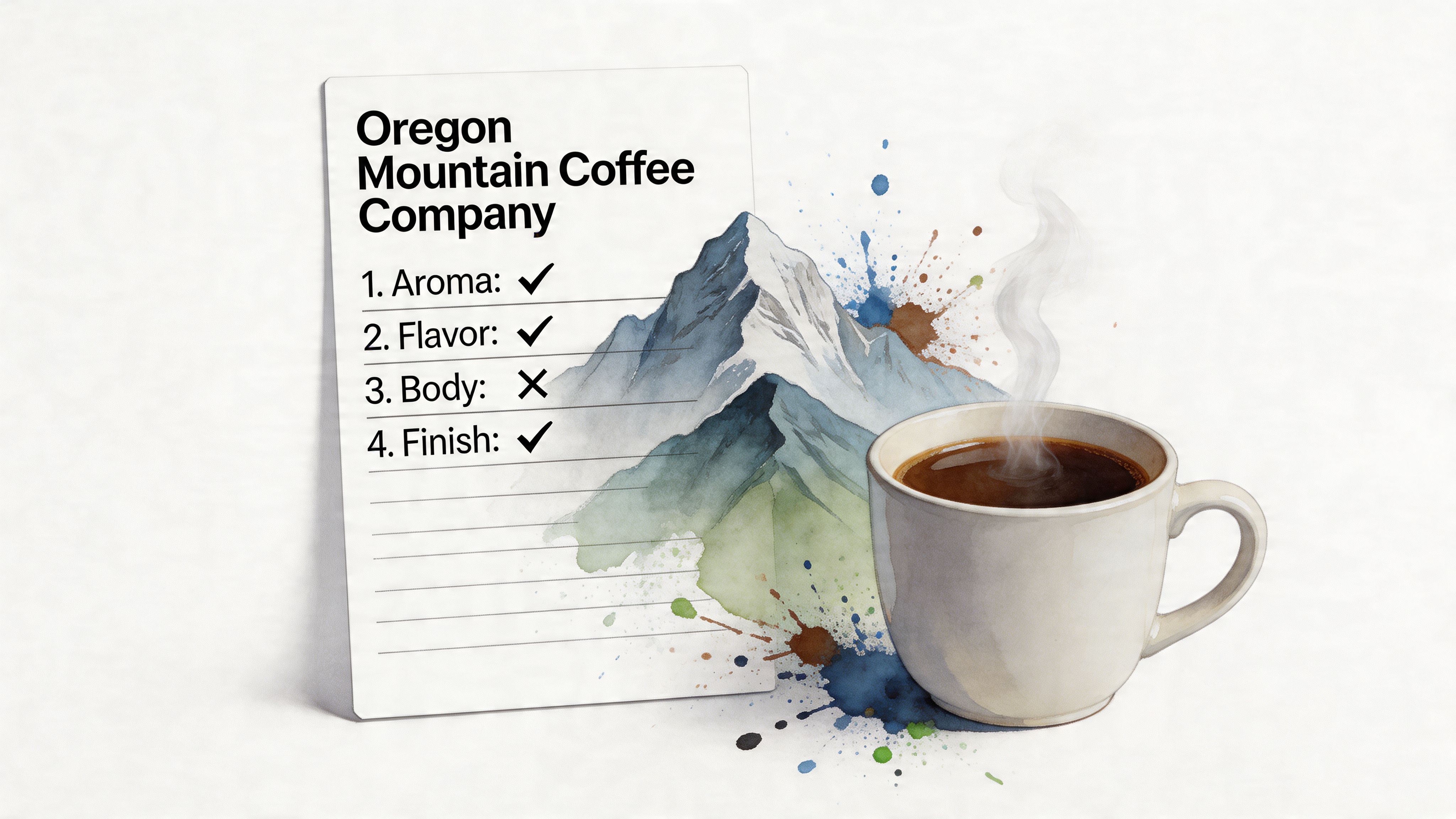
A lot of domain rookies make the same mistake. They confuse brevity with value. Short helps, sure. But a domain earns its keep when it’s memorable enough, relevant enough, and trustworthy enough for the category it serves.
The scorecard
Here’s how I’d grade this brand name.
| Dimension | Score | Why |
|---|---|---|
| Memorability | Good | Long, but vivid. “Oregon” and “Mountain” create imagery. |
| Category clarity | Excellent | Nobody wonders what the business sells. |
| Local fit | Excellent | The geography reinforces a regional identity. |
| National scalability | Mixed | Strong lifestyle feel, but still region-anchored. |
| Legal distinctiveness | Mixed | Descriptive and geographic names can be trickier to defend broadly. |
That mix is common with local businesses. You gain immediate clarity, but you give up some flexibility.
Where the name wins
The name does several smart things at once.
First, it plants the business firmly in a place-based identity. “Oregon” carries a certain set of associations. Outdoors, craftsmanship, regional pride, and a rugged premium feel. “Mountain” adds atmosphere, which is better than adding another dry product word.
Second, “Coffee Company” is old-school in a good way. It doesn’t try to sound techy or precious. It tells the buyer, plainly, what sits behind the brand.
If you’re studying domain naming in detail, this guide to brandable domain names is worth reading because it separates names that merely describe from names that stick.
The best descriptive names aren’t plain. They carry a setting, a mood, or a point of view.
Where the name gets boxed in
Now the criticism. The name is long enough that it invites abbreviation in speech and memory. That’s not fatal, but it does mean the brand needs consistency everywhere. Long names can survive. Sloppy long names cannot.
It also plants a flag in one region. That can be a strength if the company wants to sell “Oregon” as part of the appeal. It can be a limitation if the business later wants to feel universal rather than place-specific.
Founders need honesty here. Don’t choose a geographic domain and then act surprised when customers interpret it geographically.
Here’s a quick practical checklist I use when evaluating names like this:
Can a customer say it after hearing it once?
If yes, length matters less.Does each word add value?
In this case, yes. “Oregon,” “Mountain,” and “Coffee” each do distinct work.Would removing one word improve it?
Maybe. But trimming also risks flattening the imagery.Can the business grow without fighting the name?
Locally and regionally, yes. Broad lifestyle expansion gets harder.
A short visual break helps here because naming decisions are easier to judge when you can see the concept in action.
My verdict
I’d call this a strong local-regional brand name, not a perfect universal one.
That’s not a knock. Most profitable businesses do not need universal names. They need names that build trust fast, fit the product authentically, and create a world people want to step into. Oregon mountain coffee company does that well.
Finding Your Own 'Oregon Mountain Coffee' Domain
Many domain hunters look for fireworks. That’s why they miss the good stuff.
The better play is to look for names with quiet commercial logic. Place plus product. Mood plus category. A believable identity that a real business could wear without sounding ridiculous. That’s the lesson from oregon mountain coffee company.
The hunting pattern that works
You’re not looking for random expired domains with numbers and scars. You’re looking for names that have one or more of these traits:
- Geographic atmosphere such as river, valley, coast, grove, canyon
- Clear product fit such as coffee, tea, bakery, roasters, studio
- Natural phrasing that sounds like an actual storefront, not a keyword dump
- Room to brand so the domain can support a story, not just rankings
That means combinations like “valley tea,” “coast bakery,” or “canyon roasters” can be more useful than something technically shorter but emotionally dead.
A practical search routine
If I were training an apprentice, I’d tell them to use two search tracks.
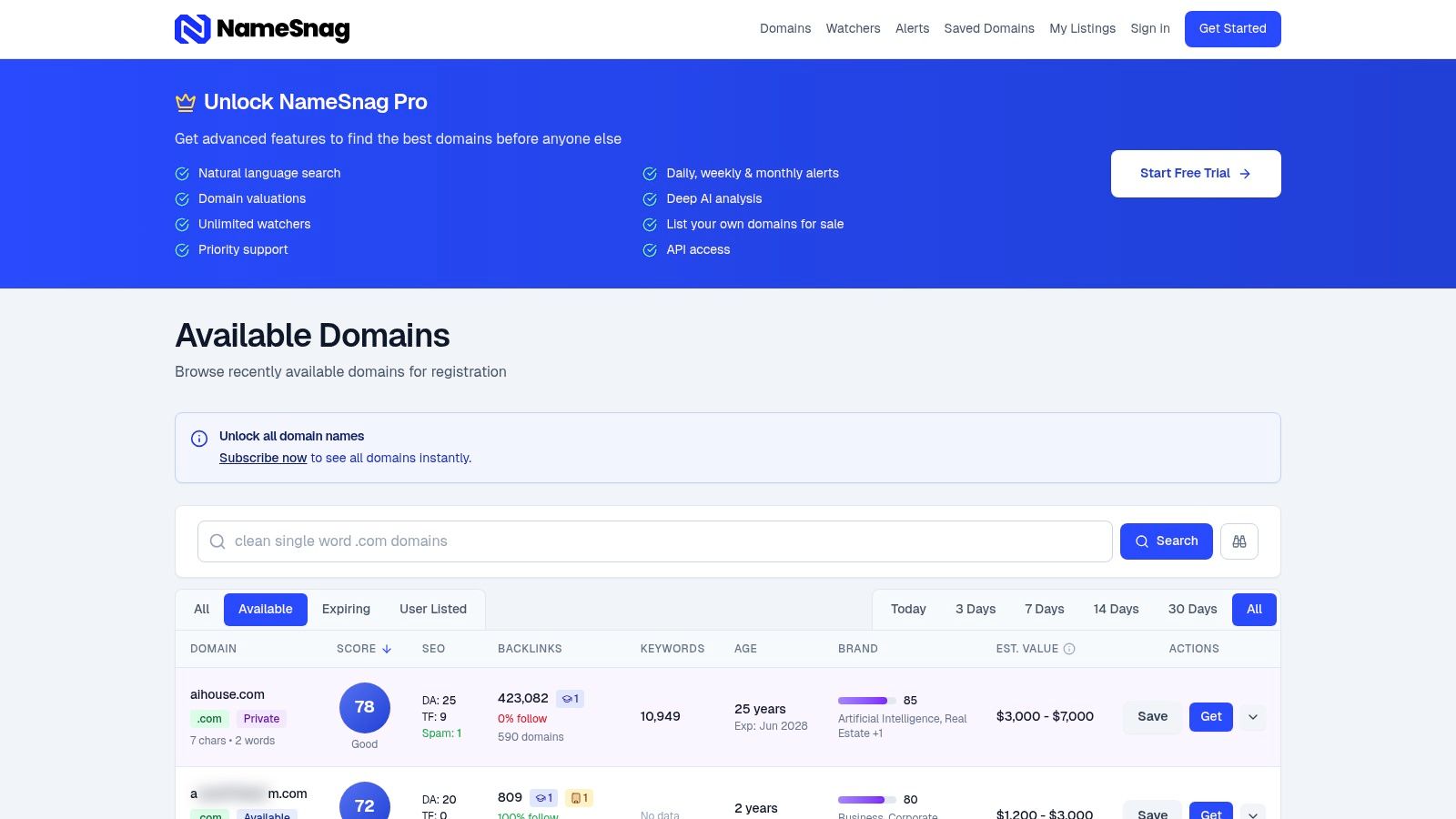
First, look for domains you can register immediately through the available domains feed. That’s your fast lane. Filter by current availability, then work through keyword themes tied to place, craft, food, hospitality, or regional lifestyle.
Second, scan the expiring domains feed for names that haven’t dropped yet but may become available soon. That’s where patience pays off. A lot of clean, commercially sensible names sit in limbo before someone notices them.
Here’s the sequence I recommend:
Start with one identity word set.
Think river, mountain, pine, harbor, desert, orchard.Pair it with a business category.
Coffee works. So do tea, bakery, studio, supply, goods.Filter by timeframe.
If you want speed, use the default current window. If you want breadth, widen to the longer time filters.Review the names out loud.
If a name sounds clunky when spoken, skip it. Domains are heard as often as they’re read.Check for history and obvious baggage.
A decent name with a dirty past is still a bad buy.
Good domain hunting feels less like gambling and more like casting for a role. The name should already look right wearing the brand.
What to avoid
A few traps catch beginners every day:
| Bad habit | Why it hurts |
|---|---|
| Chasing only short names | You ignore commercially usable longer names |
| Overvaluing exact keywords | You end up with robotic, forgettable domains |
| Ignoring pronunciation | Hard-to-say names leak trust |
| Skipping history checks | Old spam can poison a good-looking asset |
A local-style brand name can be powerful because it gives a future business owner a running start. You’re not just buying letters. You’re buying a believable premise.
That’s the sweet spot. Find the domain that already sounds like it belongs on a cup, a sign, a shipping label, or a Google Business Profile. Those are the names that get built.
Your Brand Building Blueprint and Final Takeaways
Here’s the framework. Keep it simple enough to use in the wild.
Start with brand DNA. Oregon mountain coffee company passes that test because the origin feels grounded, specific, and owned by a real person with a real reason for starting the business. If the story is thin, every later metric deserves more skepticism.
Then check reputation. Don’t get hypnotized by star averages alone. Look for repeated language that confirms the company’s core promise. For a coffee brand, that means customers should echo flavor, consistency, freshness, and experience in their own words.
After that, inspect the digital footprint. You’re looking for coherence, not fantasy. A useful domain asset has a clean story, relevant positioning, and a believable web presence. It doesn’t need inflated mythology.
Finally, judge the name itself. Is it memorable enough? Does it fit the category fast? Can it scale at least as far as the business likely needs to go? If the answer is yes, you may have a real asset even if the name isn’t short and sexy.
Here’s the blueprint in one glance:
- Origin first: A verifiable story beats polished nonsense.
- Market proof next: Public sentiment should match the product promise.
- SEO third: Look for alignment, clean history, and trust signals.
- Name last: Judge memorability, clarity, and strategic ceiling together.
If you want to sharpen your naming instinct, this breakdown of what makes a good brand name is worth reading. It’s useful because it pushes you past “sounds cool” and into actual evaluation criteria.
My final take is blunt. Oregon mountain coffee company is not valuable because it’s trendy. It’s valuable as a lesson in how real-world credibility, product clarity, and a workable domain can stack into durable brand equity.
That’s the game. Find names attached to businesses, or business concepts, that make sense before the metrics scream. The loud opportunities usually get overpriced. The quiet ones often get built.
If you’re hunting for domains with that same hidden-gem feel, NameSnag is built for exactly that job. Use it to sort through available and expiring domains, cut past the junk, and surface names with real branding and SEO potential before the crowd catches up.
Find Your Perfect Domain
Get access to thousands of high-value expired domains with our AI-powered search.
Start Free Trial