Trying to rank a brand-new website from zero can feel like pushing a boulder uphill. But what if you could skip the line? That's the core idea behind using expired or expiring domains—they’re established digital properties with a history that search engines already know and, in many cases, trust.
This strategy is a blast because it gives you an instant leg up, handing you valuable backlinks and authority that would otherwise take months, if not years, to earn from scratch.
Why Expiring Domains Are an SEO Goldmine

Think about it like this: you want to open a new coffee shop. You could build from scratch on a vacant lot and hope people show up. Or, you could take over the lease of a beloved café that just closed—a place with a prime location, a built-in reputation, and regulars who still walk by out of habit. An expiring domain is that beloved café.
Instead of starting with a Domain Authority of zero and begging for your first backlink, you're acquiring an asset that already has a trust factor baked in. This pre-existing authority can give you a serious competitive advantage right out of the gate, whether you're building a new niche site, a private blog network, or just trying to give your main business a boost.
The Endless Supply of Digital Real Estate
The sheer number of domains hitting the market every day is mind-boggling. With over 378.5 million registered domains out there, the turnover is constant. Renewal rates for the big players like .com and .net hover around 75.3%, which means roughly 25%—tens of millions—are let go every single year.
This creates a massive, constantly refreshing inventory for savvy SEOs and marketers who know what they’re looking for. It's a treasure hunt where new maps appear daily.
Available vs Expiring Domains What Is the Difference
Before you start your hunt, it's crucial to understand the two flavors of domains you'll come across. One lets you move fast, while the other is where the big-game trophies are often found. Getting this right will shape your entire approach.
This quick comparison should help clear things up:
| Attribute | Available (Dropped) Domains | Expiring (Pending Delete) Domains |
|---|---|---|
| Status | Already deleted, free for anyone to register now. | Expired, but still in a grace/redemption period. Not yet available. |
| Acquisition | Instant registration through any registrar (e.g., Namecheap, GoDaddy). | Requires a backorder service or winning an auction. |
| Cost | Standard registration fee (usually $10-$15). | Can range from $60 (for a backorder) to thousands in an auction. |
| Competition | First come, first served. Speed is key. | Often competitive, with multiple people bidding for high-value names. |
| Best For | Quickly building out a PBN or finding decent, low-cost domains. | Securing premium, high-authority domains with strong link profiles. |
So, what's the bottom line? Available domains are all about speed and simplicity, letting you grab a decent name on the spot. Expiring domains are where the real power often lies, but you'll need a bit of strategy—and sometimes a bigger budget—to snag them.
Understanding this lifecycle is fundamental. By targeting the right type of domain at the right time, you can effectively capture that inherited authority. To learn more about putting these assets to work, check out our deep dive into using domains for SEO.
Defining Your Domain Hunting Mission
Jumping into the world of expiring domains without a clear plan is a classic rookie mistake. It’s like walking into a supermarket when you’re starving—you’ll grab a bunch of shiny things that look good but don’t actually make a meal. To find real gems, you have to know exactly what you’re looking for before you even start the hunt.
Your mission shapes every decision you'll make. Are you trying to find a powerhouse domain to 301 redirect to your main site for a quick SEO boost? Or are you looking for a clean, aged domain to build out a new affiliate site? Maybe you're just in it for the flip, focusing purely on brandability and resale potential.
Each of these goals requires a completely different approach. You wouldn't use the same criteria to find a PBN domain as you would for a new startup brand, right? Nailing down your purpose from the get-go is the most critical part of this entire process.
What's Your End Goal?
Let's get practical. The "why" behind your search dictates the "what." A domain's value is entirely relative to how you plan to use it.
Here are a few common scenarios I see all the time and what they mean for your search filters:
Building a Niche Authority Site: Your number one priority here is topical relevance. You're hunting for a domain with a squeaky-clean history and, ideally, backlinks from other respected sites in that specific niche. For example, if your project is about sustainable gardening, a domain with old links from environmental blogs or university agriculture departments is pure gold.
Boosting an Existing Site (301 Redirect): This is where raw authority metrics take center stage. You want a domain with a high number of quality referring domains and strong authority scores to pass that "link equity" over to your money site. Relevance still matters, of course, but you can sometimes get away with a slightly broader topic match if the authority numbers are just too good to pass up.
Flipping Domains for Profit: This game is all about perceived value. You're looking for brandability—something short, memorable, and preferably a .com. Commercial keywords in the name can be a huge plus. SEO metrics are a bonus, but they mainly serve as a selling point for your future buyer.
My two cents: Don't try to be a jack-of-all-trades on a single hunt. Focus on one mission at a time. If you mix your criteria, you’ll end up with a list of domains that are just "okay" for several purposes but perfect for none.
Decoding the Core SEO Metrics
Once you have your mission locked in, you need to understand the language of domain metrics. These numbers are your compass. They'll guide you toward treasure and help you steer clear of the junk. Different tools use different names—Moz, Majestic, Ahrefs—but they all try to quantify a domain's authority.
Let's break down the big ones you'll encounter constantly:
Domain Authority (DA) / Domain Rating (DR): This is a predictive score from 0-100 that tries to guess how well a site will rank. It's a fantastic at-a-glance metric, but remember it's mostly based on the quantity and quality of backlinks. Think of it as a quick summary of a domain's overall link profile strength.
Trust Flow (TF): This one, from Majestic, is all about the quality of the links. It measures how trustworthy a domain is based on its proximity to a list of highly trusted "seed" sites. A high TF is a great sign that the backlinks are from reputable, authoritative sources, not spammy link farms.
Citation Flow (CF): Also from Majestic, this metric measures the quantity of links, or "link juice." It predicts how influential a domain might be based simply on how many other sites link to it, regardless of their quality.
What you're really looking for is a healthy relationship between these last two. A high Trust Flow relative to the Citation Flow is the sweet spot. A domain with a TF of 20 and a CF of 25 is infinitely more valuable and trustworthy than one with a TF of 10 and a CF of 60. That big gap is a massive red flag, often pointing to a history of spammy, manipulative link building.
When you align these metrics with your mission, you can cut through the noise with incredible speed. For instance, if you're building that gardening site, you could use a platform like NameSnag to find Expiring domains and immediately filter for a minimum Trust Flow of 15 in the "gardening" category. That one simple move can eliminate thousands of duds before you even see them.
Your Toolkit for Finding and Vetting Domains
Alright, you’ve got your mission goals locked in. Now comes the fun part—the actual treasure hunt. This is where we roll up our sleeves and dive into the tools and tactics that separate the pros from the hobbyists. Finding a great domain isn't about getting lucky; it's about having a rock-solid process for sourcing, filtering, and vetting every single candidate.
We'll start by looking at the platforms that bring these domains to our doorstep. Then, I'll walk you through the inspection process I use every day to identify clean, powerful domains while sidestepping the hidden landmines.
Where to Source Your Candidates
Your hunt always begins with a good list. Trying to find expiring domains manually is a complete non-starter, so you need a platform that does the heavy lifting for you.
Databases like ExpiredDomains.net are the industry behemoth, tracking a staggering 713 million domains. Think about that. On any given day, they're tracking over 4.7 million already expired domains and adding another 1.3 million to the list. The real gold is in their SEO data: 18.3 million of these domains have a Majestic CitationFlow of 10 or more, 9.4 million have a TrustFlow of 5+, and a whopping 342 million have snapshots in the Wayback Machine.
While a massive database is great, it can feel like drinking from a firehose. This is where a more focused tool like NameSnag really shines. Instead of just dumping data on you, it’s built to help you cut through the noise with smart, intuitive filters.
For example, you can head straight to their list of expiring domains and immediately start narrowing things down. Need a domain dropping in the next three days with a minimum Trust Flow of 15? You can apply that filter in seconds. This initial sort is your first and most important line of defense against wasting time on junk.
The process boils down to a simple, repeatable flow.
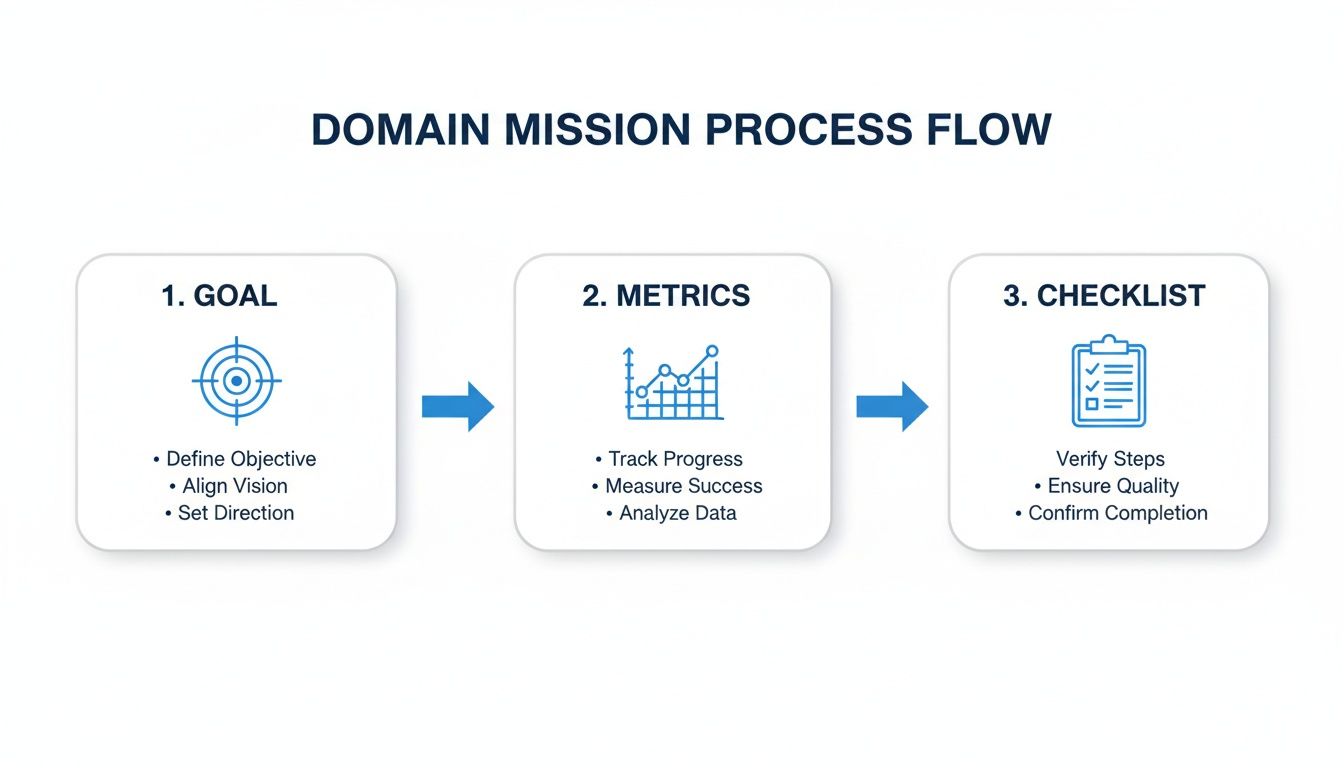
This Goal > Metrics > Checklist framework is the backbone of every successful domain hunt I've ever been on. It keeps you focused on what actually matters.
The Initial Vetting Process
Once you've got a shortlist of promising domains, it's time to put on your detective hat. This is where you dig into a domain's past to make sure it's as good as its metrics suggest. A high Domain Authority means nothing if it was built on a foundation of pure spam.
Your two best friends for this stage are a solid SEO tool (like Ahrefs or Semrush) and the Wayback Machine.
Analyze the Backlink Profile: First, pop the domain into your SEO tool and look at its referring domains. Are the links coming from real, relevant websites in your niche? Or are they from spammy foreign-language forums and sketchy PBNs? Pay close attention to the anchor text. If you see thousands of links with exact-match commercial anchors like "buy cheap widgets," just walk away. It's a massive red flag for past manipulation.
Investigate Its Past Life: Next, head over to the Internet Archive's Wayback Machine. This tool is absolutely incredible—it lets you see snapshots of what the website looked like over the years. Was it a legitimate business? A personal blog? Or was it a weird-looking site plastered with casino links, adult content, or pages in a language that makes no sense for the TLD?
Pro Tip: Don't just check the most recent snapshot in the Wayback Machine. I always click through several different years. It's not uncommon for a domain to have been clean for years before being bought and hammered with spam right before it expired. A thorough history check is non-negotiable.
The Final Spam Check
So you've found a domain with decent metrics and a seemingly clean past. There's one final, crucial step: checking to see if Google has kicked it out of its index. A domain that has been de-indexed is essentially worthless from an SEO perspective, as it almost certainly carries a manual penalty.
The test is simple. Go to Google and perform a site: search.
site:yourdomain.com
If you see a list of pages from that domain, you're good to go—it's still in Google's good graces. But if Google returns "Your search - site:yourdomain.com - did not match any documents," it's a dead end. No matter how good the metrics look, a de-indexed domain is a trap you don't want to fall into. For a more detailed breakdown, our guide on choosing the right expired domain finder covers these vetting steps in greater detail.
By combining powerful filtering with this methodical, hands-on vetting process, you can confidently identify high-value domains and avoid the costly mistakes that trip up so many people.
Valuing and Acquiring Your Target Domain
You’ve done the hard work. You've filtered, vetted, and spied on a domain's past life. Now you're staring at a genuine contender, and your trigger finger is getting itchy. But hold on—this is where fortunes are made or lost.
Before you jump into the fray, you need to answer two critical questions: What is this domain actually worth, and what's the smartest way to grab it? Getting this final stage right is the difference between snagging a bargain and wildly overpaying for digital dust. It's time to shift from detective mode to that of a savvy investor.
Placing Your Bet: Backorders vs. Auctions
Once a domain passes your inspection, you have to decide on your acquisition strategy. Generally, you have two main paths, each suited for different types of domains and budgets. Think of it as deciding between setting a trap and entering a bidding war.
Your options usually are:
Placing a Backorder: This is your go-to move for domains that are good but not necessarily A-list celebrities. You pay a service (like DropCatch or NameJet) a fixed fee, usually $60-$80, to try and "catch" the domain the split second it becomes publicly available. If multiple people backorder the same name, it typically goes to a private auction between them. It’s a fantastic, low-cost way to get in the game.
Bidding in an Expired Auction: This is the big league. High-value domains with killer metrics often get scooped up by registrars like GoDaddy and placed into public auctions before they officially drop. This is a direct, competitive environment where the final price is determined purely by demand. You might pay a few hundred or even thousands, but you're bidding on a proven asset.
Choosing between them is a strategic decision. For a domain with a Domain Authority of 20 and a handful of decent links, a backorder is a smart bet. For a DA 45 monster with backlinks from news sites, you'll almost certainly have to fight for it in an auction.
How to Value a Domain Without a Crystal Ball
Valuation is more art than science, but you can create a simple framework to avoid getting swept up in auction fever. Don't just look at the SEO metrics you already checked; now, you need to combine them with brandability and commercial intent. A domain's true worth is a blend of its authority and its potential.
I run every finalist through a quick mental checklist:
- Brandability: Is it short, memorable, and easy to spell? Does it sound like a real brand or a spammy keyword jumble?
CleanCutLawns.comhas intrinsic value;Best-Lawn-Care-Service-247.comdoes not. - Commercial Potential: Does the name contain keywords that suggest buyer intent? A domain like
SolarPanelQuotes.comhas obvious commercial value, making it worth significantly more than a generic one with similar SEO stats. - SEO Metric Floor: Set a baseline value based on its authority. A domain with a Trust Flow of 20+ and links from relevant, authoritative sites is inherently valuable, even if the name itself isn't perfect. This provides a solid foundation for its price.
By combining these factors, you get a much clearer picture. A domain with strong brand appeal, clear commercial viability, and solid SEO metrics is the trifecta—the kind of asset worth paying a premium for.
Don't forget to dig into the site's old content using historical snapshots. Understanding what the site used to be gives you a massive clue about its future potential and audience. We have a whole guide on how to effectively use the Archive.org Wayback Machine that can help you master this part of the valuation process.
Ultimately, bid with your head, not your heart, and stick to the value you've assigned based on your goals.
What to Do With Your New Domain: Putting It to Work for SEO
Alright, you made it through the trenches of domain hunting and vetting. You’ve got a new domain in your portfolio, full of dormant potential. But grabbing the domain is just the starting line; the real race begins when you decide how to unleash its power.
Simply owning the domain isn't where the value is. The magic is in how you channel its existing authority. Think of it like finding a vintage engine in a forgotten garage. You could install it in your project car for a power boost, rebuild it into a showpiece, or sell it to a collector who knows its true worth. Each path is valid, and the same goes for your new domain.
For most folks, there are three main ways to turn that expiring domain into a tangible SEO asset or a quick profit. Let's dig into which one makes the most sense for you.
The Power of the 301 Redirect
This is your go-to move for a quick and direct SEO impact. A 301 redirect is a permanent forwarding instruction that tells search engines, "This old URL has moved for good to this new one." When you do this, you're essentially funneling the old domain's link equity—all that "link juice"—directly to a target page on your primary website.
It’s an incredibly potent tactic. Redirecting a domain with a handful of powerful backlinks to a relevant page on your money site can produce a surprisingly fast jump in rankings. The key is to do it intelligently.
- Keep it Relevant: Redirecting a defunct cat blog to your SaaS company's pricing page is a waste of time. It's a huge red flag for Google. The topics need to align for the authority to pass seamlessly.
- Go Granular: Don’t just blanket-redirect the entire old domain to your homepage. That's the lazy approach. For maximum effect, use a tool like Ahrefs to identify the old domain's most authoritative pages (the ones with the most backlinks) and redirect them individually to the most relevant pages on your site. This surgical method works far better.
A well-planned 301 redirect acts like an authority transfusion for your website. It can breathe life into stagnant content and give your target keywords the nudge they need to climb the search results, often in just a few weeks.
Rebuilding a Niche Authority Site
Sometimes, a domain is just too good to be chopped up for parts. If you’ve landed a domain with a killer brand name, a squeaky-clean history, and deep topical authority, rebuilding it as a standalone website might be the play. This strategy is perfect for launching a new niche affiliate site, a lead-gen machine, or a strong support blog in your private blog network (PBN).
The goal here is to resurrect the site. You're not just starting from scratch; you have a head start. Use the Wayback Machine to see what the old site looked like, which pages were the most popular, and how its content was structured. This gives you an incredible blueprint to work from.
This path obviously takes more work, but the payoff can be massive. A resurrected site can become a valuable, traffic-generating asset that funnels leads, affiliate sales, or powerful links wherever you point them.
The Domain Flip for Profit
Maybe you're not in the business of building websites at all. Maybe your real skill is the thrill of the hunt. If that sounds like you, flipping domains can be a seriously lucrative business. The formula is straightforward: find undervalued expiring domains, snap them up for cheap, and sell them for a healthy profit to SEOs and marketers who need them for the strategies we just discussed.
Flipping successfully comes down to spotting the hidden gems others overlook. You're looking for domains that tick a few specific boxes:
- Brandable & Memorable: Short, catchy, easy-to-spell .coms are always in high demand.
- Commercial Intent: Does the domain name contain keywords that suggest a buyer is looking to spend money?
- Clean Authority: A solid backlink profile makes the domain an easy sell to anyone who understands its SEO value.
Once you acquire a flippable domain, you can "stage" it by putting up a simple landing page that highlights its key metrics (DR, backlink count, etc.) and history. Then, list it on a marketplace like GoDaddy Auctions or Sedo. This little bit of polish helps showcase its value and attract serious buyers, turning your knack for domain hunting into a reliable income stream.
Got Questions? Let's Talk Expiring Domains
Jumping into expiring domains can feel a bit overwhelming at first. It’s a space full of hidden gems and potential pitfalls, so it’s totally normal to have a bunch of questions.
Let’s go through some of the most common ones I hear from people just starting out. Getting these cleared up will help you move forward with confidence and avoid a lot of the common rookie mistakes.
Are Expired Domains Actually Safe for SEO?
This is the million-dollar question, isn't it? The short answer is yes, but only if you do your due diligence. It’s incredibly effective when done right, but you can’t skip the vetting process.
A domain's history is everything. You need to become a bit of a detective. Use tools like the Wayback Machine to see what the site actually looked like, and dig into its backlink profile with a tool like Ahrefs. You're searching for domains that were once legitimate websites—maybe a small business blog, a portfolio, or a dedicated fan site. That's the gold you're looking for.
The Bottom Line: A domain with a clean, relevant history is a powerful asset. If you find any evidence of it being used for spam, a sketchy PBN, or anything that feels off, just walk away. It’s not worth the risk.
What’s the Real Difference Between Backordering and Bidding?
These two terms are often used interchangeably, but they are completely different strategies for snagging a domain.
Backordering: This is like placing a claim. You pay a small, fixed fee to a service that will attempt to register the domain for you the very second it becomes available to the public. If you're the only one with a backorder, you get it. It’s a low-cost, set-it-and-forget-it approach for good-but-not-great domains.
Bidding in an Auction: This is the main event. The most valuable domains usually go to a private auction before they're released to the public. Here, multiple people bid against each other, and the price is set by demand. This is where you go when you’ve found a truly premium domain and are ready to compete for it.
Think of it this way: backordering is a smart play for the majority of domains, while auctions are reserved for the A-list targets that you're willing to invest more in.
How Fast Will a 301 Redirect Actually Work?
Everyone wants instant results, but in SEO, patience is key. The honest answer here is: it depends. Generally, you can expect to see some initial movement within a few weeks to a couple of months. It takes time for Google to recrawl the old URLs, process the 301 redirects, and pass that precious link equity over to your main site.
The speed of the impact really boils down to two things: the authority of the expired domain and how topically relevant it is to your website. I’ve seen strong, highly relevant domains start moving the needle on keywords in as little as 3-4 weeks. A domain with less authority or a weaker topical connection will naturally take more time.
Should I Only Bother with Expired Domains That Still Have Traffic?
This is a huge myth that trips up a lot of newcomers. Chasing domains that still get traffic is like looking for a unicorn. They're incredibly rare, and when you do find one, the competition is fierce.
Don't make traffic your main criteria. Focus on the backlink profile—look for strong metrics from reputable tools and, most importantly, a clean history. You can build new, relevant traffic far more easily than you can build a portfolio of high-authority backlinks from scratch. The links and authority are the foundation; traffic is something you can build on top of it.
Ready to find your own hidden gems? With the right process, you can cut through the noise and spot valuable domains dropping every day. NameSnag has the filters you need to hunt for Expiring domains with solid metrics or grab recently Available domains the moment they drop.
Find Your Perfect Domain
Get access to thousands of high-value expired domains with our AI-powered search.
Start Free Trial